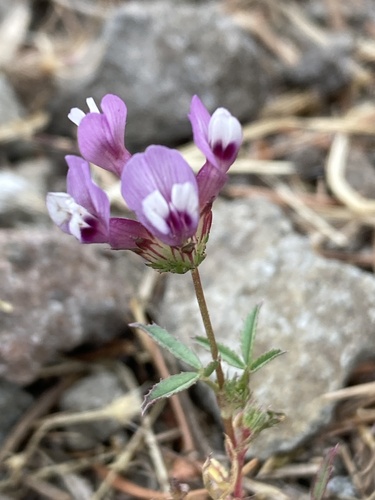
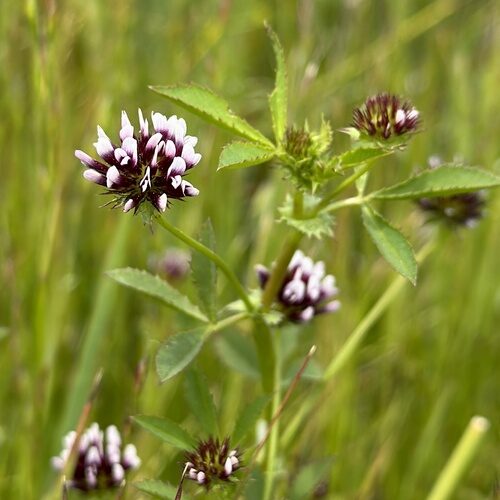
Acacia hockii
De Wild.
White thorn
iNaturalist· cc-by-nc
(c) Odile Weber, some rights reserved (CC BY-NC)
iNaturalist· cc-by-nc
(c) Odile Weber, some rights reserved (CC BY-NC)
iNaturalist· cc-by-nc
(c) Odile Weber, some rights reserved (CC BY-NC)
Description
A shrub or small tree. It grows 5 m tall. There are prickles along the stem. The leaves are twice divided and there are 8-18 pairs of pinnae. There are up to 50 pairs of pinnules on each pinnae. The flowers are yellow. They are in large clusters at the ends of branches. The pods are flattened.
Edible Uses
The inner bark is chewed to quench thirst. Gum and bark are edible parts.
Traditional Uses
The inner bark is chewed to quench thirst.
This uses section is brief — help expand it
Distribution
It is a tropical plant.
Where It Grows
Africa, East Africa, Ethiopia, Kenya,
Synonyms
Also Known As
Kinyua, Muuga
References (3)
- Addis, G., et al, 2013, The Role of Wild and Semi-wild Edible Plants in Household Food Sovereignty in Hamer and Konso Communities, South Ethiopia. Ethnobotany Research and Applications. Vol. 11:251-271
- Mbuvi, M. T. E., et al, 2019, Annonated checklist of plant species of Loita Forest Narok County, Kenya. Int. J. Adv. Res. Biol. Sci. (2019). 6(3): 54-110
- Mutie, F. G., 2020, Conservation of Wild Food Plants and Their Potential for Combatting Food Insecurity in Kenya as Exemplified by the Drylands of Kitui County. Plants 2020, 9, 1017