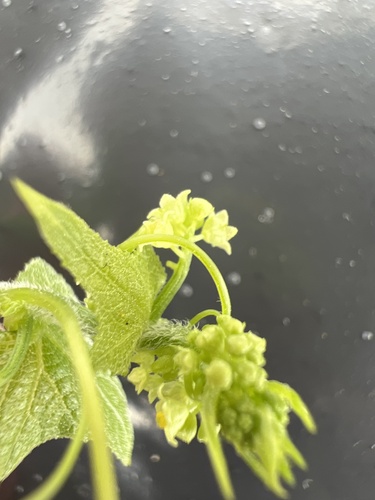
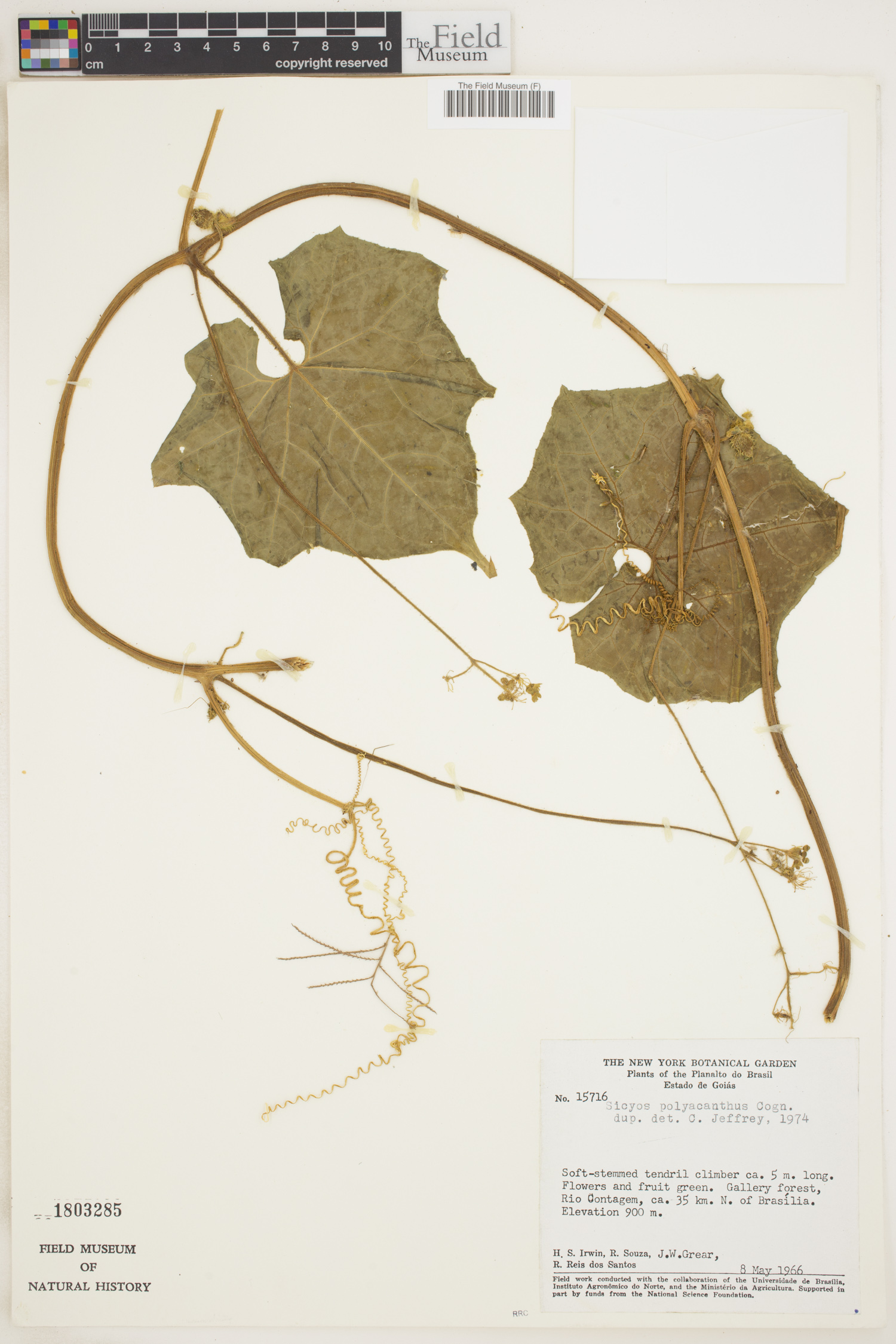
Cucurbita argyrosperma var. callicarpa
L. Merrick & D.M. Bates
Green-stripe cushaw
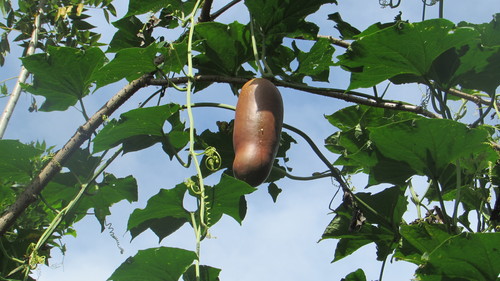
iNaturalist· cc-by-nc
(c) Donají Graham, some rights reserved (CC BY-NC)
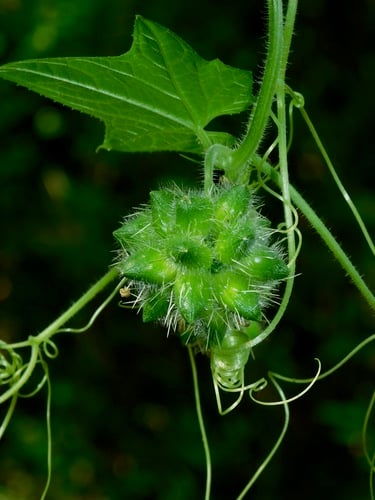
iNaturalist· cc-by-nc
(c) Donají Graham, some rights reserved (CC BY-NC)
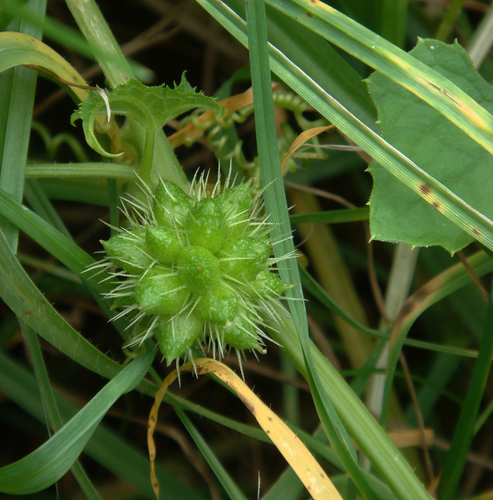
iNaturalist· cc-by-nc
(c) Donají Graham, some rights reserved (CC BY-NC)
Summary
Source: WikipediaCucurbita argyrosperma, commonly known as cushaw, kershaw, or silver-seed gourd, is a species of squash grown most frequently in North and Central America, and believed to originate from southern Mexico. This annual herbaceous plant is cultivated for its nutritional value: its flowers, shoots, and fruits are all harvested, but it is cultivated commonly in its native range for seeds. The species is believed to have originated in Mexico, from its wild sororia form. The reference genome of this species was published in 2019. In precolonial America, archaeological remains have been found as far northward as the Eastern Agricultural Complex. The extant native range of the wild sororia type is from northern Mexico through Central America to Nicaragua, at elevations from sea level to 1,900m. The species epiphet argyrosperma means "silver seeds" in reference to the distinctively-colored seed margins of certain varieties. Cucurbita argyrosperma was formerly known as C. mixta. Historically, some varieties now recognized as C. argyrosperma were assigned to Cucurbita moschata instead. A small number of true C. moschata varieties are still commonly known as cushaws.
Description
A pumpkin family plant. It is a creeping or climbing plant. It can be hairy. The stems are slightly angular. The leaves are oval or heart shaped and 10-30 cm by 15-40 cm. The leaf stalks are 30 cm long. The leaves have triangular lobes. The male flowers are on stalks 10-20 cm long. The female flowers are on short stalks 2-3.5 cm long. The fruit can be short or long and straight or curved. The fruit re 11-50 cm long. The fruit has a hard skin and green stripes. The flesh is white, yellow or orange. The seeds are 15-30 mm long by 8-16 mm wide. They have a smooth white skin.
Edible Uses
The seeds are eaten roasted, toasted, or ground, and used in sauces and stews. The fruit, young stems, and flowers are also edible.
Traditional Uses
The seeds are eaten roasted, toasted or ground. They are used in sauces and stews.
This uses section is brief — help expand it
Known Hazards
Seeds are 39% oil and 44% protein (noting nutritional composition rather than hazard).
Distribution
A subtropical plant. They grow between sea level and 1800 m altitude.
Where It Grows
Argentina, Central America, Mexico, North America, Peru, South America, USA,
Cultivation
Seed are planted at the start of the rainy season.
Production
Fruit for eating can be ready 3 months after sowing. Seed take 5-7 months.
Notes
There are 25 Cucurbita species. Seeds are 39% oil and 44% protein.
Also Known As
Japanese pie pumpkin, White cushaw
References (3)
- Baileya 23:97. 1989
- USDA, ARS, National Genetic Resources Program. Germplasm Resources Information Network - (GRIN). [Online Database] National Germplasm Resources Laboratory, Beltsville, Maryland. Available: www.ars-grin.gov/cgi-bin/npgs/html/econ.pl (10 April 2000)
- Wiersema, J. H. & Leon, B., 2013, World Economic Plants. A Standard Reference CRC Press. 2nd Ed. p 216