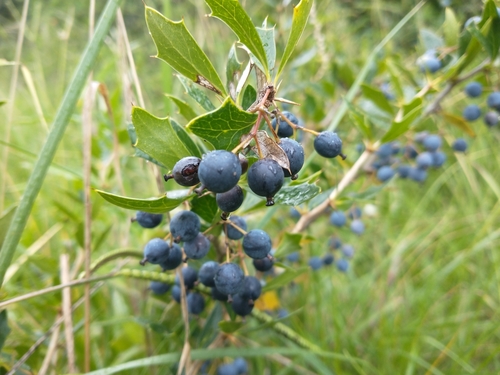
Berberis trifoliolata
Moric.
Currant of Texas
iNaturalist· cc-by-nc
(c) Bryan, some rights reserved (CC BY-NC), uploaded by Bryan
iNaturalist· cc-by
(c) Sam Kieschnick, some rights reserved (CC BY), uploaded by Sam Kieschnick
iNaturalist· cc-by-nc
(c) Linda Jo Conn, some rights reserved (CC BY-NC), uploaded by Linda Jo Conn
Summary
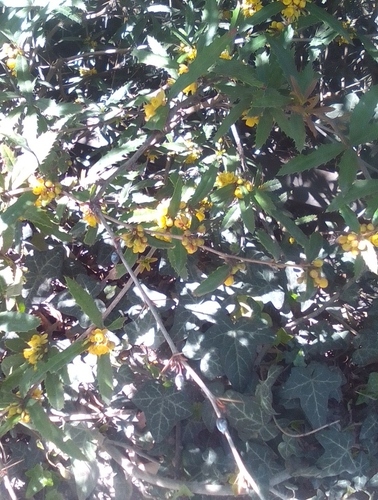
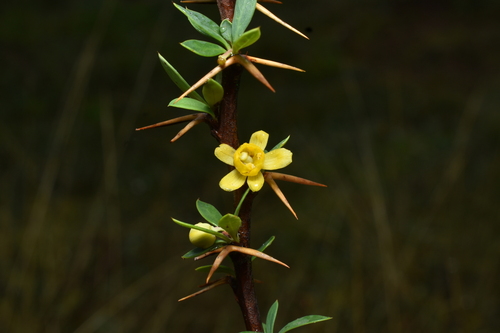
Source: WikipediaBerberis trifoliolata is a species of flowering plant in the family Berberidaceae, in southwestern North America. Common names include agarita, agrito, algerita, currant-of-Texas, wild currant, and chaparral berry. The name Agarita comes from the Spanish verb agarrar, which means "to grab". The ending "-ita" is often added to little things, so agarita means "grabs a little". This was probably said because the bush is a bit scratchy but does not have significant spines. Typical characteristics are grey-green to blue-grey leaves, yellow flowers in February to April and the red berries appearing in May. The most important harvest organ are the berries, though the roots and seeds can also be used.
Description
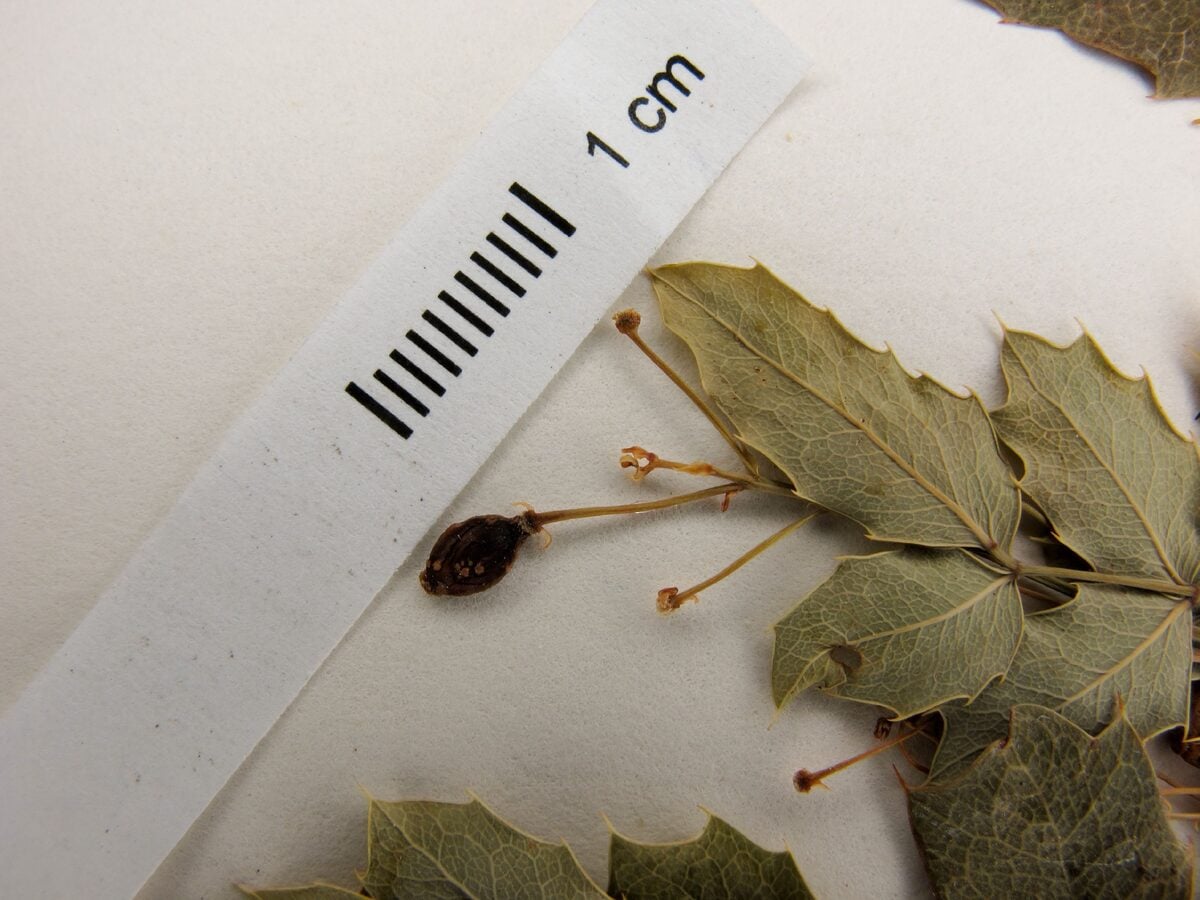
A shrub. It grows from 1.5-3 m tall. The leaves have 3 leaflets. The leaflets are 2.3-5.8 cm long by 0.9-2 cm wide. The fruit are red berries. They are 6-11 mm across.
Edible Uses
The red berries are eaten.
Medicinal Uses
The bright red edible fruits of the agarita can be harvested around late April to early May. The fruits contain a slightly sweet and sour juice; when expelled, the juice can be used to produce an agarita wine or consumed as a fruit juice drink. The berries can also be used for jelly, pie or cobblers; the tart flavor is reported to be pleasant to eat when mixed with sugar. The fruits contain seeds and can be used to germinate new agarita plants, or be roasted as a coffee alternative. However, a high quantity of seeds makes raw consumption difficult. Native Americans of the Apache, Chiricahua, and Mescalero tribes used the fresh and preserved fruit for food, and the wood shavings as a traditional eye medicine and a yellow dye for hides. During early pioneering years, the alkaloid berberine in the agarita roots was used to make a yellow dye. Agarita also has uses in medicine; its medicinal value is created mainly by the alkaloids in the roots, and throughout history, it was used to treat ailments ranging from fevers to stomach troubles and open wounds. It was also used as a laxative by the Ramah Navajo and other groups native to the Pacific Northwest. The roots are known to possess antiseptic qualities and are therefore used to treat wounds, skin or gum problems.
Distribution
It is a subtropical plant.
Where It Grows
Mexico, North America, USA,
Synonyms
Also Known As
Agarito, Agritos, Algarita, Palo amarillo
References (2)
- Piedra-Malagón, E. M. et al, 2022, Edible native plants of the Gulf of Mexico Province. Biodiversity Data Journal 10: e80565 p 14
- Segura, S. et al, 2018, The edible fruit species in Mexico. Genet Resour Crop Evol (2018) 65:1767–1793