Trichosanthes villosa
Blume
wikimedia· cc-by
Wikimedia Commons - Hugo J de Boer, Hanno Schaefer, Mats Thulin and Susanne S Renner (2012) © de Boer et al.; licensee BioMed Central Ltd. 2012 http://bmcevolbiol.biomedcentral.com/articles/10.1186/1471-2148-12-108
gbif· cc0
President and Fellows of Harvard College
gbif· cc0
President and Fellows of Harvard College
Description
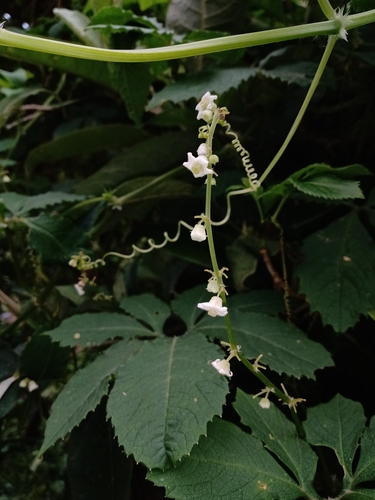
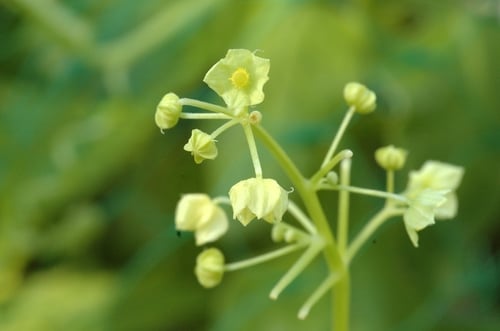
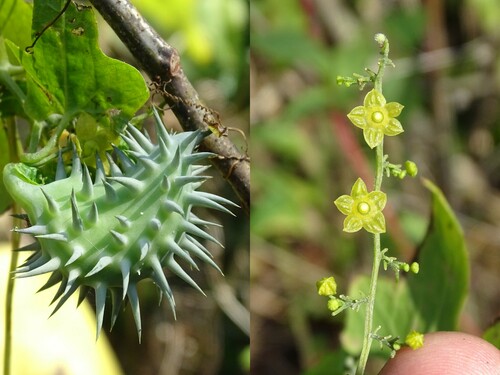
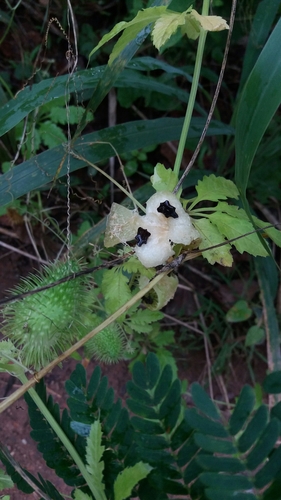
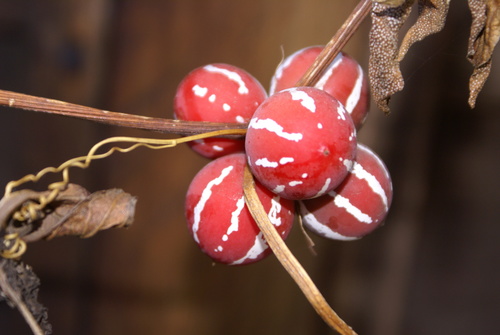
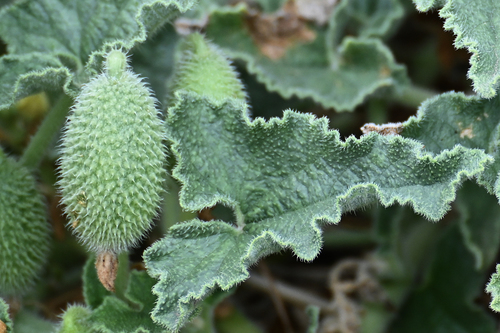
A pumpkin family plant. It is a climber. It can be 10 m long. The stem is slightly grooved. The leaves are broadly oval. The leaves are reddish brown and velvety underneath. The fruit are round and red. They can be 10-13 cm across. The pulp inside the fruit is white.
Edible Uses
Young fruit are boiled before eating, and the leaves are cooked and eaten or used as flavouring.
Traditional Uses
The young fruit are boiled before eating. The leaves are cooked and eaten and used as flavouring.
This uses section is brief — help expand it
Distribution
A tropical plant. It grows at about 900 m altitude in Yunnan in China. It grows in monsoonal rainforest.
Where It Grows
Asia, China, Indochina, Indonesia, Laos, Malaysia, Philippines, SE Asia, Vietnam,
Other Information
Plants are sold in local markets.
Nutrition
| Part | Moisture | kJ | kcal | Protein | Vit A | Vit C | Iron | Zinc |
|---|---|---|---|---|---|---|---|---|
| Fruit | 15.7 | — | — | — | — | 0.04 | — | — |
Synonyms
Also Known As
Do-mo, Mahuola, Mi-mao-gua-lou, Molei, Yaidonggua
References (7)
- Bijdr. 934. 1826
- Hui, Y. H., Handbook of Food Science, Technology, and Engineering. Volume 2. Table 98:2
- Jin, Chen et al, 1999, Ethnobotanical studies on Wild Edible Fruits in Southern Yunnan: Folk Names: Nutritional Value and Uses. Economic Botany 53(1) pp 2-14
- Pham-Hoang Ho, 1999, An Illustrated Flora of Vietnam. Nha Xuat Ban Tre. p 575
- PROSEA No. 8
Show all 7 references Hide references
- World Checklist of Useful Plant Species 2020. Royal Botanic Gardens, Kew
- Xu, You-Kai, et al, 2004, Wild Vegetable Resources and Market Survey in Xishuangbanna, Southwest China. Economic Botany. 58(4): 647-667.