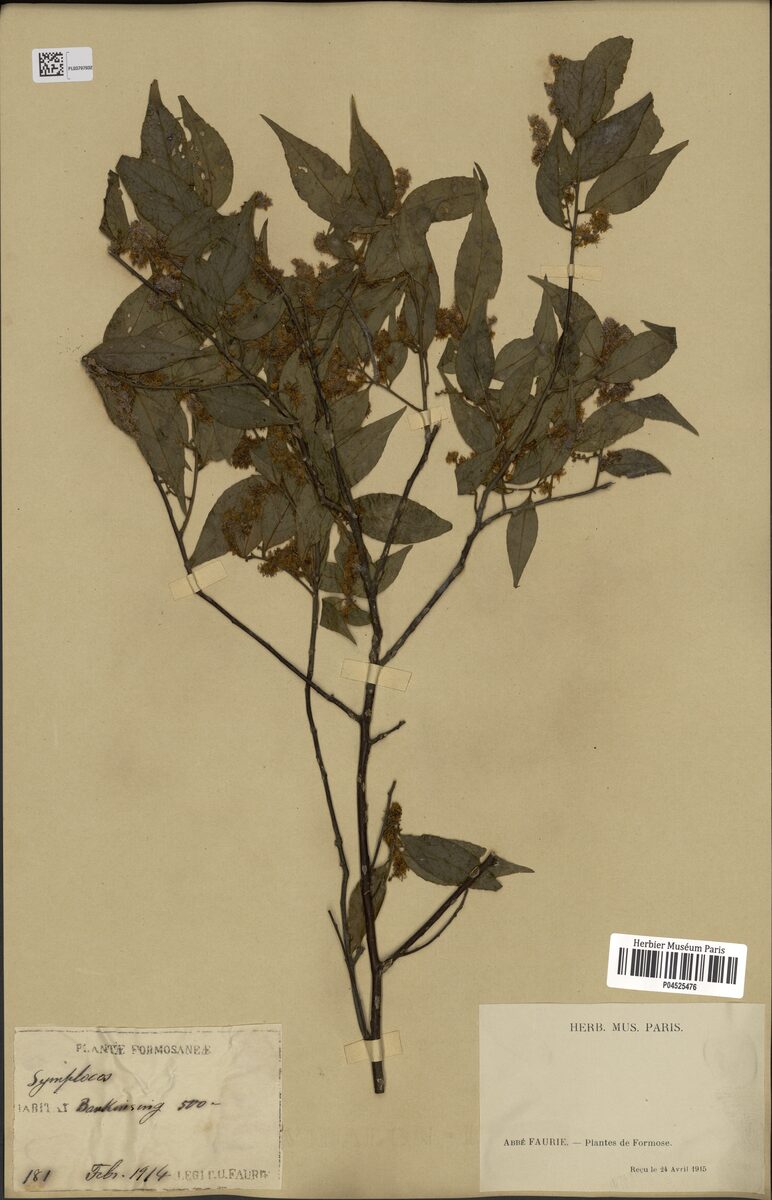
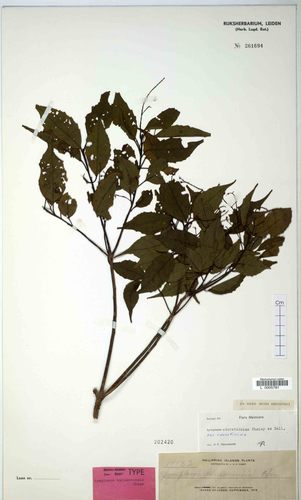
Symplocos cerasifolia
Wall. ex DC.
gbif· cc0
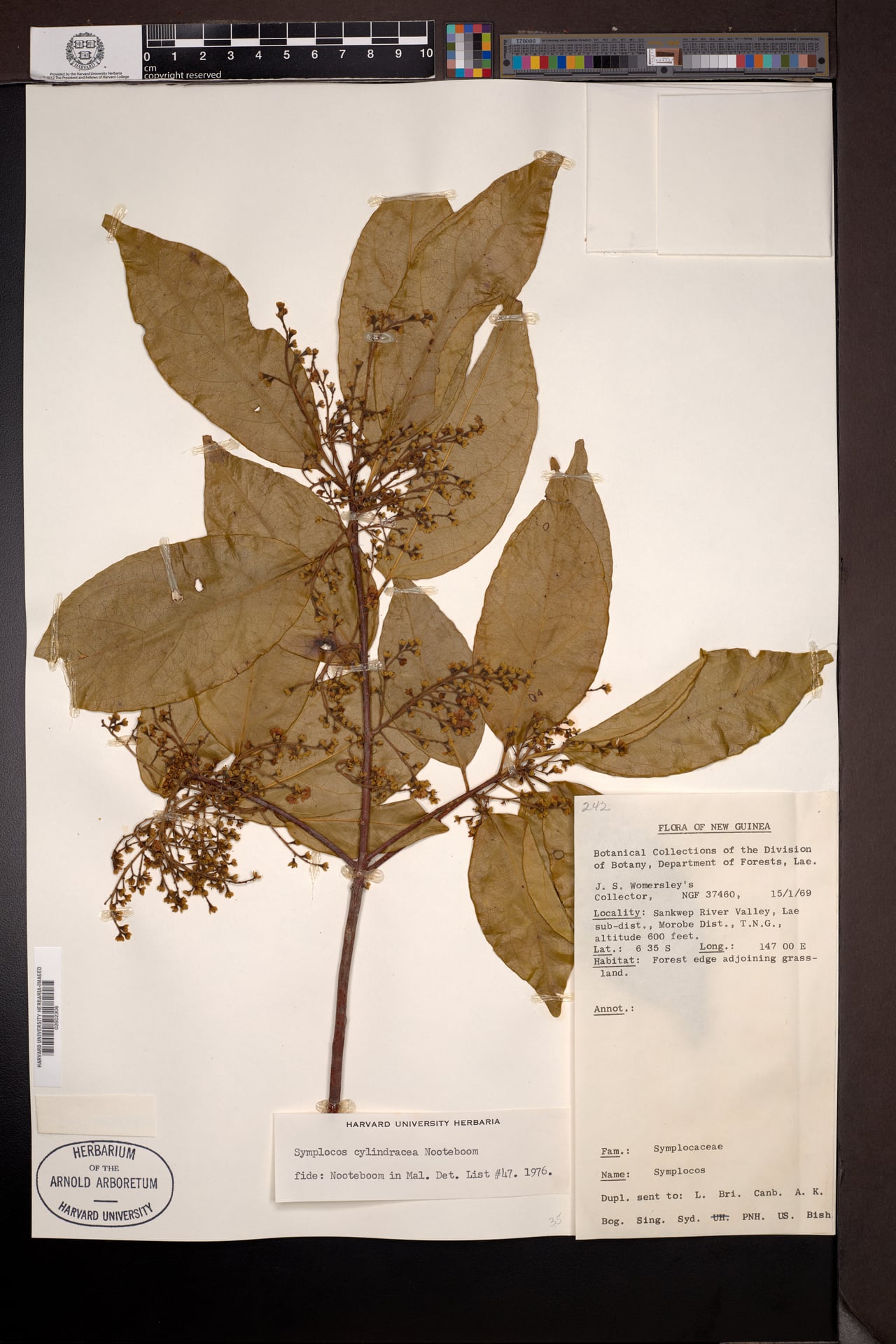
President and Fellows of Harvard College
gbif· cc0
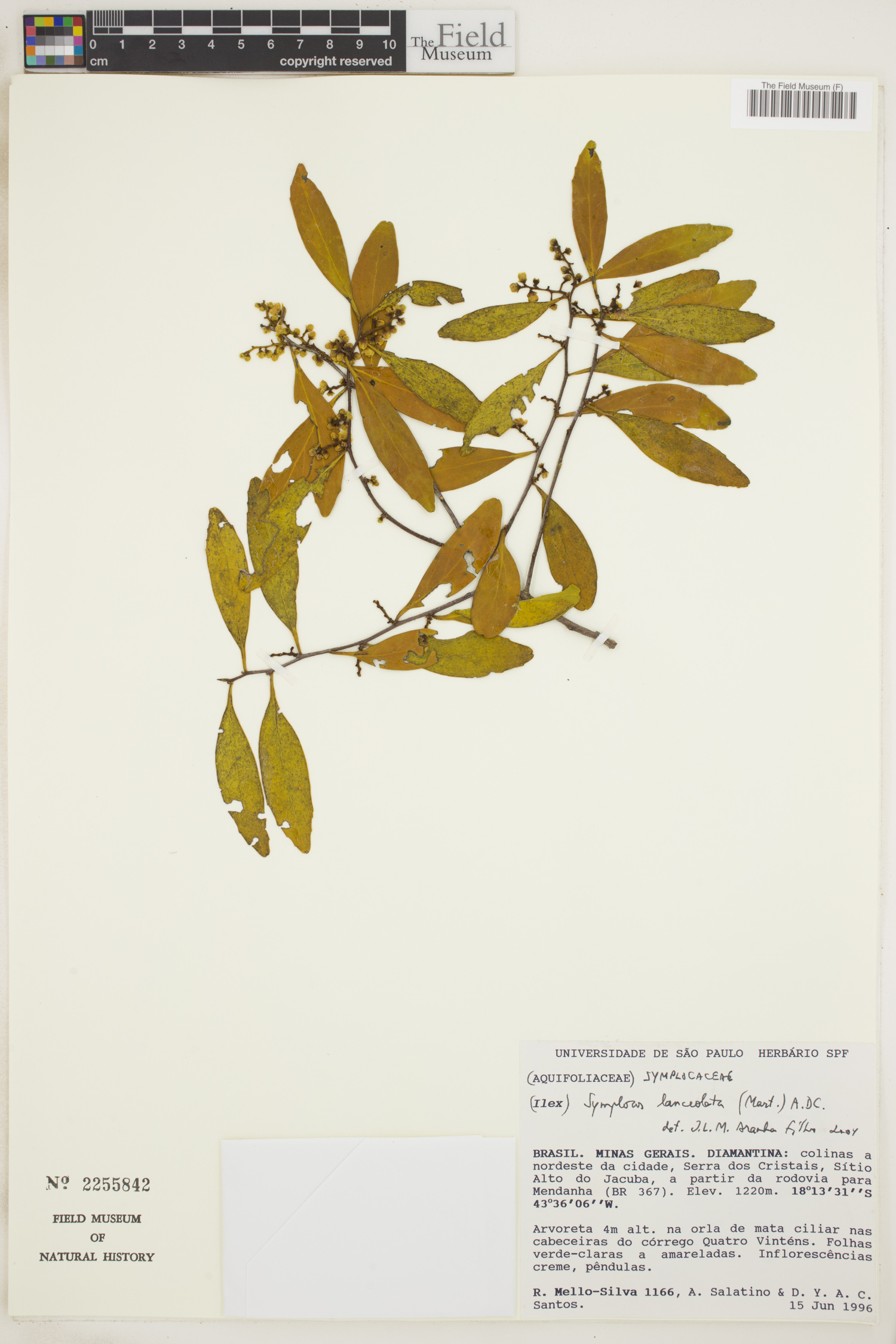
President and Fellows of Harvard College
gbif· cc0
President and Fellows of Harvard College
Summary
Source: WikipediaSymplocos cerasifolia is a plant in the family Symplocaceae, native to Southeast Asia. The specific epithet cerasifolia refers to the leaves' resemblance to those of a cherry tree (Latin: cerasus).
Description
A tree.It grows 20-30 m tall. The trunk can be 20-30 cm across.
This description is brief — help expand it
Distribution
It is a tropical plant. It can grow up to 1,000 m above sea level. It often grows in sandy soils.
Where It Grows
Asia, Indonesia, Papua, Malaysia, Thailand, SE Asia,
Cultivation
The plant is often found in the wild in Kerangas forest - a type of moist, heath forest found on acidic, sandy soils that are low in nutrients, especially nitrogen.
Other Uses
Many species in this genus accumulate aluminium, especially in their leaves and bark. Those species where the leaves turn yellow upon drying contain the largest quantities of aluminiun (up to 4.2% dry weight). Thus many Symplocos species can be used as the source of a yellow dye, and can also be used as a mordant. The bark is used as a mordant in tanning.
Synonyms
Also Known As
Jirak, Madang
References (1)
- World Checklist of Useful Plant Species 2020. Royal Botanic Gardens, Kew