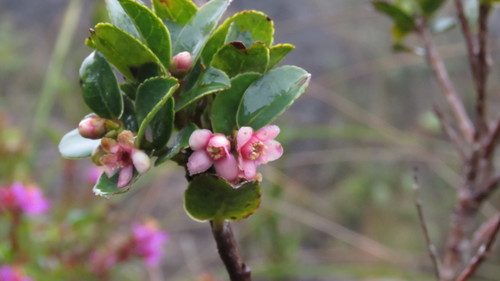
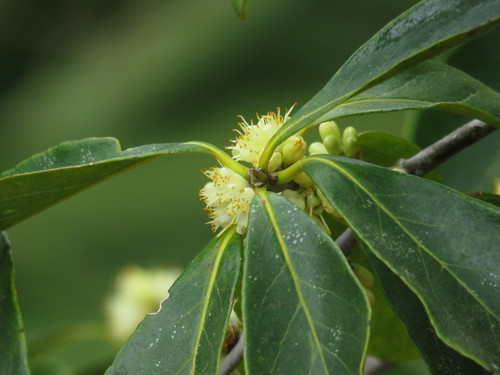
Symplocos odoratissima
(Blume) Choisy ex Zol..
Kisariawan
iNaturalist· cc-by-nc-sa
(c) filibot.web, some rights reserved (CC BY-NC-SA)
gbif· cc0
President and Fellows of Harvard College
Summary
Source: WikipediaSymplocos odoratissima is a tree in the family Symplocaceae, native to Southeast Asia. The specific epithet odoratissima means 'most fragrant', referring to the flowers.
Description
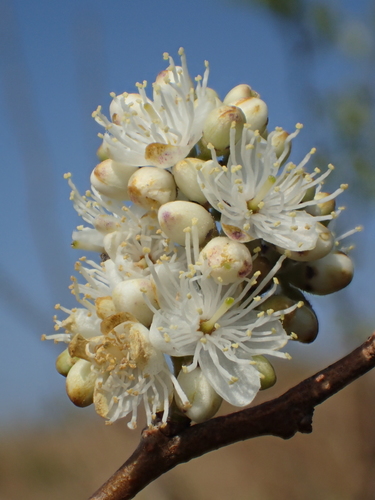
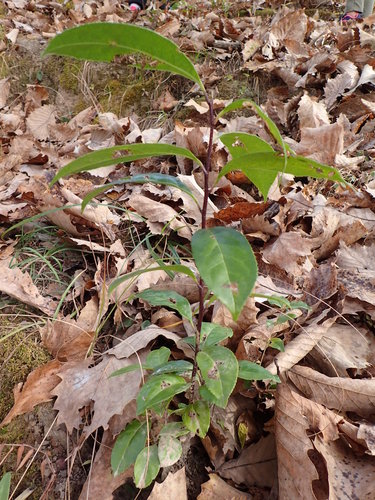
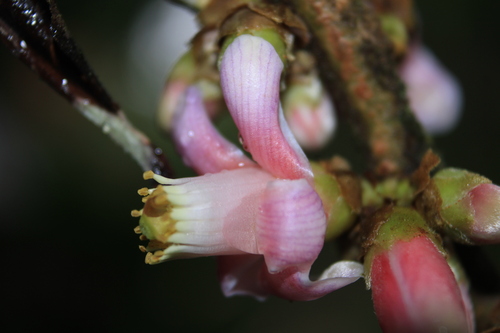
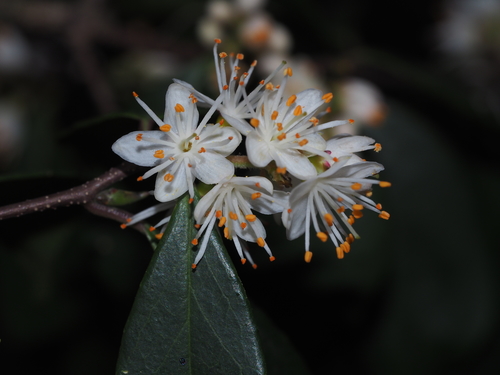
A tree. It can grow 10-25 m tall. The leaves have leaf stalks. The leaves are narrowly oval. The base is acute of wedge shaped. There are teeth along the edge. They are shiny and dark green above and dull pale green underneath. The flowers are in the axils of leaves or near the ends of the branches. They are in groups 5-25 cm long and have a rusty covering.
Edible Uses
Young red leaf-sheaths are eaten.
Traditional Uses
Young red leaf-sheaths are eaten.
This uses section is brief — help expand it
Medicinal Uses
The inner bark is often used in the treatment of thrush - the pounded bark is applied to the gums and decoctions of the bark being drunk. Young leaves are pounded or used in decoctions in the treatment of thrush. The pulped leaves are also applied to the abdomen after birth.
Distribution
A tropical plant. In Indonesia it grows from sea level to 1,200 m above sea level.
Where It Grows
Asia, Indonesia, Malaysia, SE Asia,
Other Uses
Many species in this genus accumulate aluminium, especially in their leaves and bark. Those species where the leaves turn yellow upon drying contain the largest quantities of aluminiun (up to 4.2% dry weight). Thus many Symplocos species can be used as the source of a yellow dye, and can also be used as a mordant.
Notes
There are over 250 Symplocos species.
References (6)
- Burkill, I.H., 1966, A Dictionary of the Economic Products of the Malay Peninsula. Ministry of Agriculture and Cooperatives, Kuala Lumpur, Malaysia. Vol 2 (I-Z) p 2152
- Lembogi Biologi Nasional, 1980, Sayur-sayuran. Balai Pustaka, Jakarta. p 66
- Martin, F.W. & Ruberte, R.M., 1979, Edible Leaves of the Tropics. Antillian College Press, Mayaguez, Puerto Rico. p 221
- Nooteboom 1977, Symplocaceae in Flora Malesiana Series 1 Vol 8(2) p245
- Ochse, J. J. et al, 1931, Vegetables of the Dutch East Indies. Asher reprint. p 696
Show all 6 references Hide references
- World Checklist of Useful Plant Species 2020. Royal Botanic Gardens, Kew