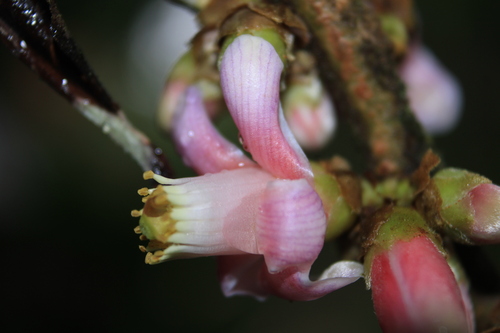
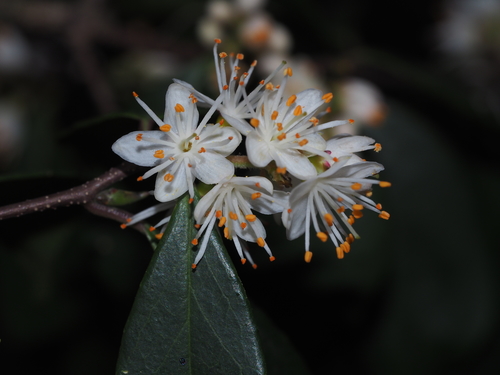
Symplocos pyrifolia
Wall. ex G. Don
iNaturalist· cc-by-nc
(c) Lily Lam, some rights reserved (CC BY-NC), uploaded by Lily Lam
Description
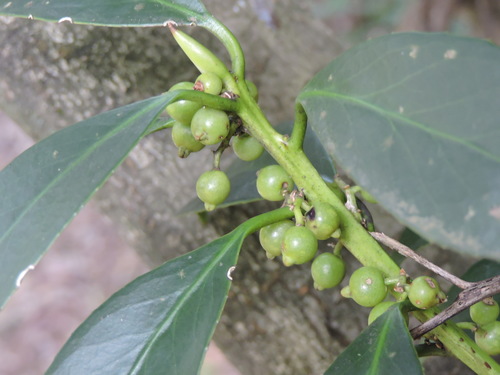
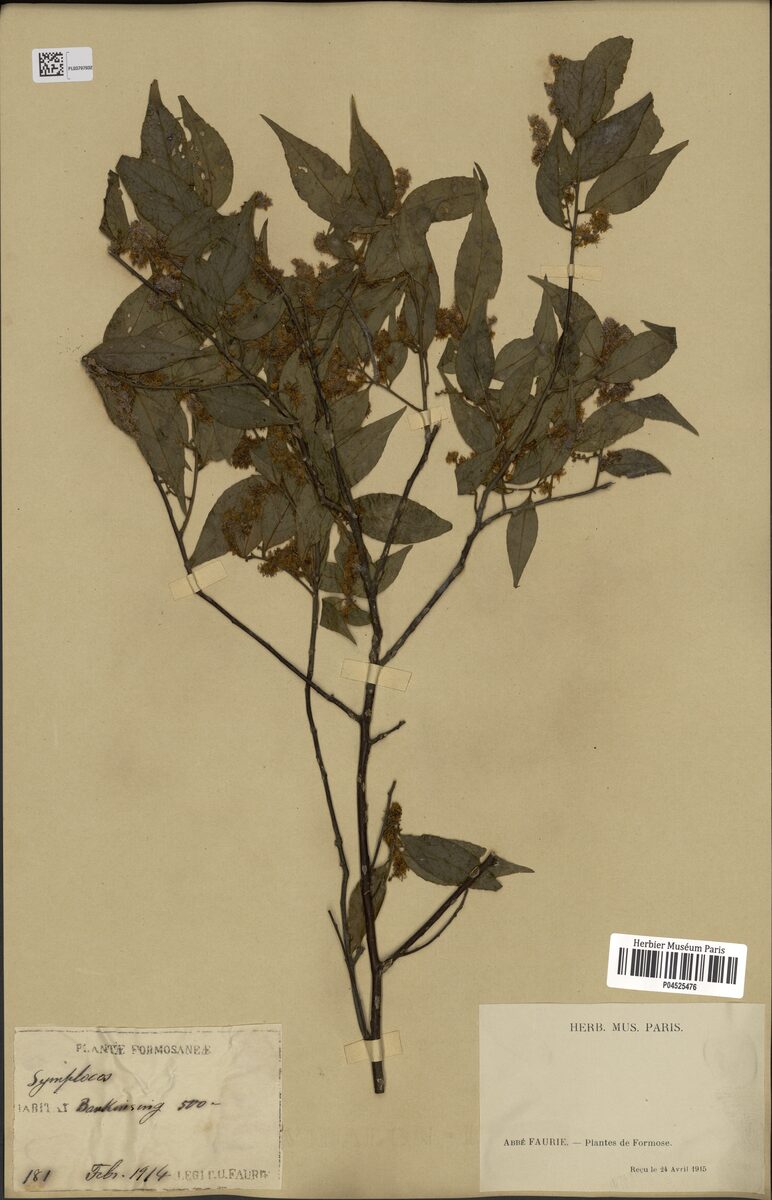
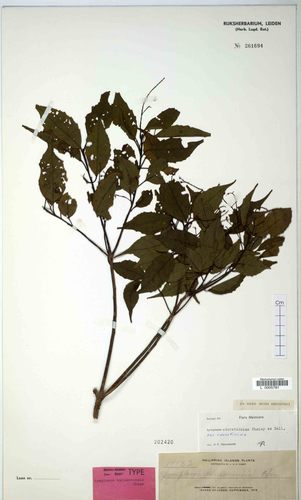
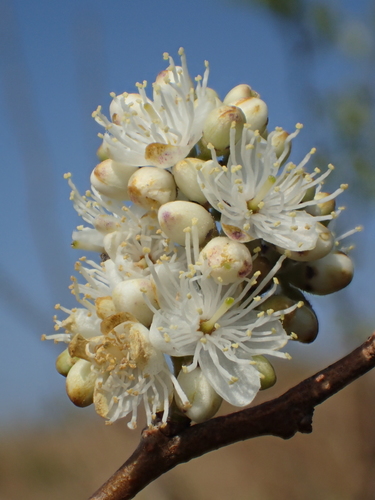
A shrub or small tree. The leaves are narrowly oval and 7-12 cm long by 2-3 cm wide. The fruit are oval and 1 cm across.
This description is brief — help expand it
Edible Uses
The fruit are edible.
Traditional Uses
The fruit are edible.
This uses section is brief — help expand it
Medicinal Uses
The oil from the seed is applied topically as a treatment for burns and boils.
Distribution
It is a temperate plant. It grows in mixed forests between 1,400-2,400 m above sea level in Tibet.
Where It Grows
Asia, Bangladesh, Bhutan, China, Himalayas, India, Nepal, Tibet,
Other Uses
Many species in this genus accumulate aluminium, especially in their leaves and bark. Those species where the leaves turn yellow upon drying contain the largest quantities of aluminiun (up to 4.2% dry weight). Thus many Symplocos species can be used as the source of a yellow dye, and can also be used as a mordant.
Also Known As
Kale kath, Kholme
References (3)
- Dangol, D. R. et al, 2017, Wild Edible Plants in Nepal. Proceedings of 2nd National Workshop on CUAOGR, 2017.
- Gautam, R. S., et al, 2020, Wild Edible Fruits of Nepal. Int. J. Appl. Sci. Biotechnol. Vol 8(3): 289-304
- Uprety, Y., et al, 2012, Diversity of use and local knowledge of wild edible plant resources in Nepal. Journal of Ethnobotany and Ethnomedicine 8:16