Palaquium semaram
H. J. Lam
gbif· cc0
Royal Botanic Garden Edinburgh
gbif· cc0
Royal Botanic Garden Edinburgh
gbif· cc-by
Royal Botanic Gardens, Kew
Description
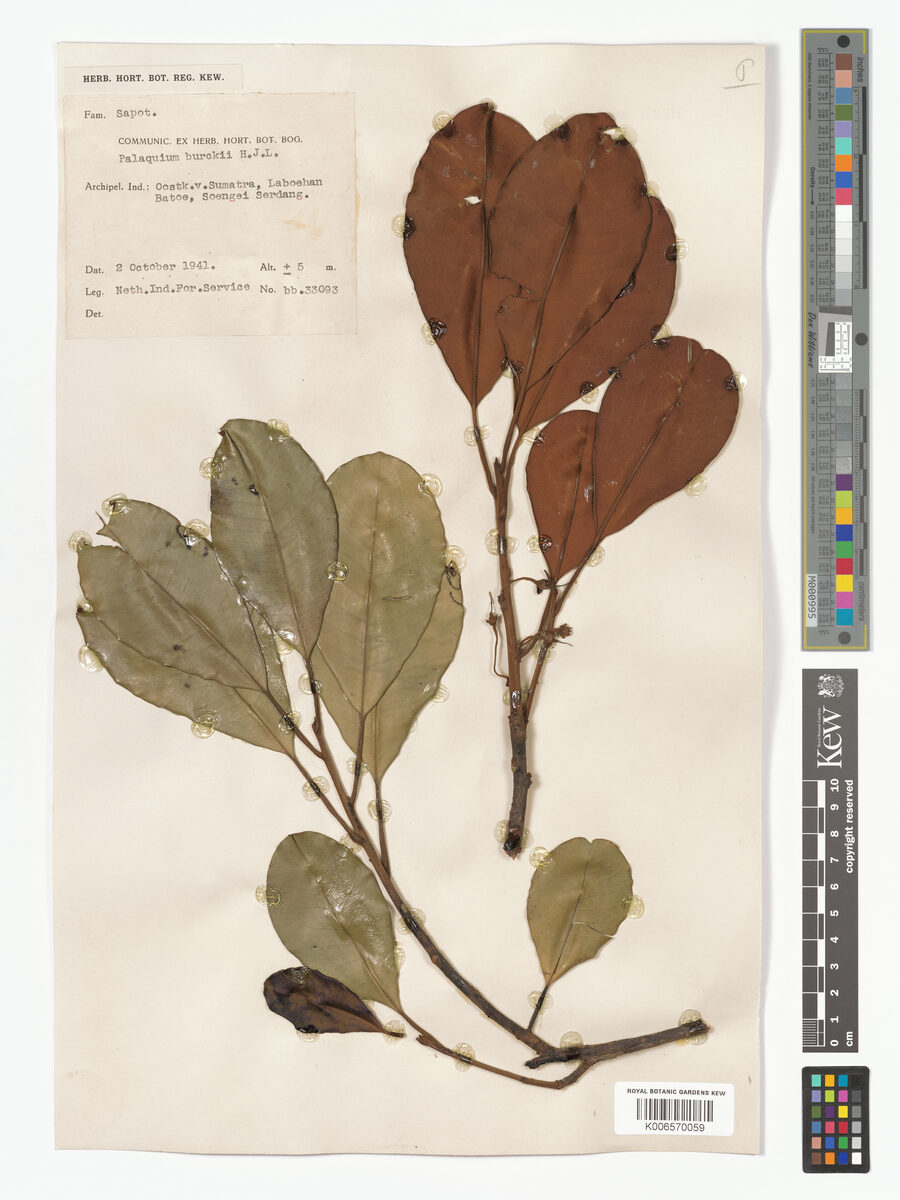
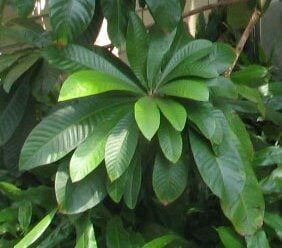
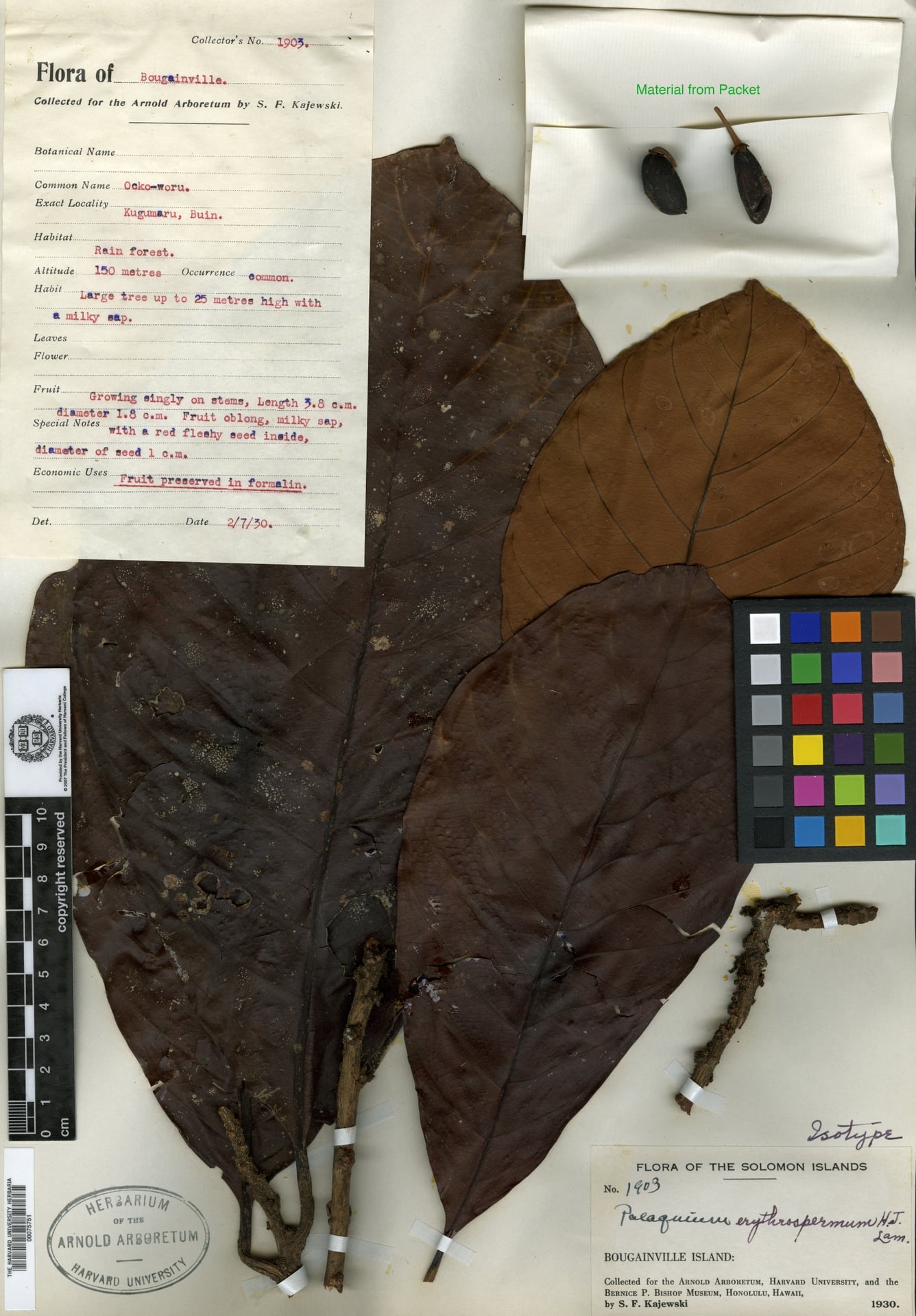
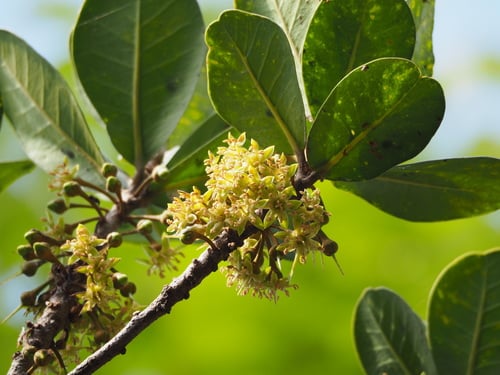
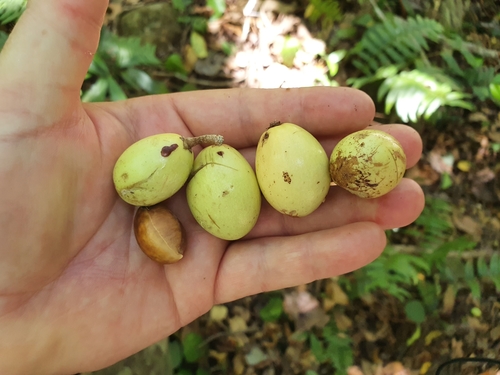
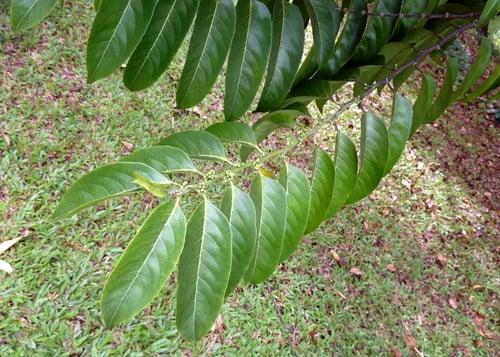
A large tree. It grows 50 m tall. The first branches may be over 25 m above the ground. The trunk is 90 cm across. It has large buttresses. The leaves are densely clustered at the ends of the twigs. The flowers are in clusters of 2-9. The fruit is oval and 2.5-3.5 cm long.
Edible Uses
Oil is extracted from the seeds.
Distribution
It is a tropical plant. It is often in lowland marshy places up to 500 m above sea level.
Where It Grows
Asia, Indonesia, Malaysia, Nicobar, SE Asia,
Other Uses
Wood. We do not have any more specific information on the wood of this species, but it belongs to a group of timbers collectively called 'Nyatoh'. The general description of nyatoh wood is as follows:- The heartwood is a dark pink to a red-brown; it is clearly demarcated from the 4 - 9cm wide band of lighter-coloured sapwood. The texture is medium; the grain straight or interlocked, sometimes wavy. The wood is light in weight, soft to moderately hard; strong, somewhat durable, being resistant to dry wood borers, moderately resistant to fungi but susceptible to termites. It seasons somewhat slowly, with a high risk of checking and distortion; once dry it is stable in service. There is a very variable content of silica according to the species, but in general the wood has a high blunting effect so stellite-tipped and tungsten-carbide tools are recommended; nailing and screwing are good, but require pre-boring; gluing is correct. The wood has a range of applications, including for high class furniture and cabinet making, solid doors, panelling, joinery, parquet flooring, boat decking, light carpentry, turnery, moulding and veneer.
Synonyms
Also Known As
Balam hitam, Balam seminai, Lakis bukit daub kebar, Nyatoh semaram, Semaram
References (2)
- PROSEA
- World Checklist of Useful Plant Species 2020. Royal Botanic Gardens, Kew