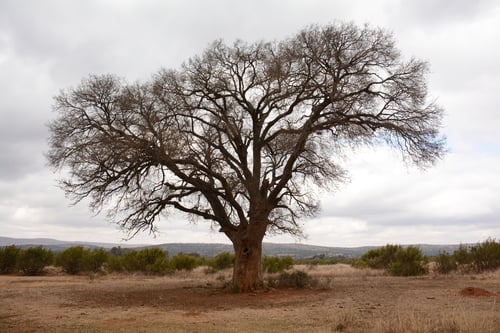
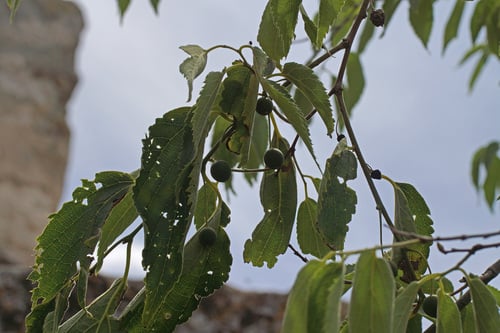
Celtis reticulata
Torr.
Netleaf hackberry
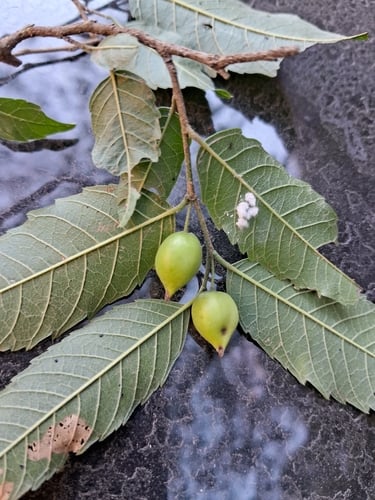
iNaturalist· cc-by-nc
(c) Will Pearce, some rights reserved (CC BY-NC), uploaded by Will Pearce
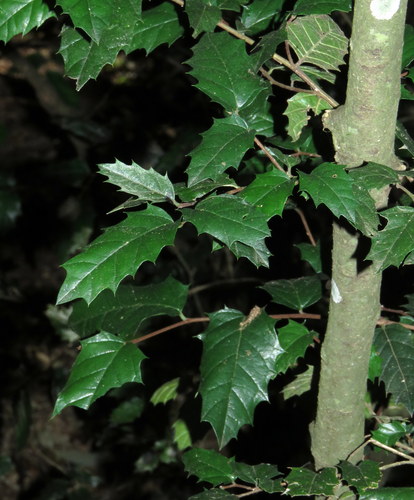
iNaturalist· cc-by-nc-sa
(c) David Bygott, some rights reserved (CC BY-NC-SA)
iNaturalist· cc-by-nc
(c) Ron Stephens, some rights reserved (CC BY-NC), uploaded by Ron Stephens
Summary
Source: WikipediaCeltis reticulata, with common names including netleaf hackberry, western hackberry, Douglas hackberry, netleaf sugar hackberry, palo blanco, and acibuche, is a small- to medium-sized deciduous tree native to western North America.
Description
A deciduous tree reaching 12m in height, growing at a slow rate. Flowers in April with seeds ripening by October. Hermaphroditic and bee-pollinated. Tolerates light sandy and medium loamy soils, preferring well-drained conditions and thriving in nutritionally poor soil. Grows in mildly acidic, neutral, and basic soils. Requires full sun and adapts to both dry and moist conditions with drought tolerance. Hardy to UK zone 6.
Edible Uses
The fruit can be eaten raw or cooked, and is sweet and fleshy. It can also be made into a jelly or used as a seasoning for savoury foods, and can be dried and stored for winter use. Each fruit is about 10mm in diameter with a thin flesh surrounding a single large seed.
Medicinal Uses
The plant has been used in the treatment of indigestion.
Distribution
It is a temperate plant. It grows in the desert.
Where It Grows
Mexico, North America, USA,
Cultivation
Succeeds in any reasonably good soil, preferring a good fertile well-drained loamy soil. Succeeds on dry gravels and on sandy soils. Established plants are very drought resistant. A moderate to slow-growing tree in the wild. It prefers hotter summers and more sunlight than are normally experienced in Britain, so it often does not fully ripen its wood when growing in this country and is then very subject to die-back in winter. Trees can be very long-lived, perhaps to 1000 years. Considered by some botanists to be no more than a sub-species of C. laevigata. Plants in this genus are notably resistant to honey fungus.
Propagation
Seed is best sown as soon as it is ripe in a cold frame. Stored seed should be given 2–3 months of cold stratification before sowing in February or March in a greenhouse. Germination rates are usually good, though stored seed may take 12 months or more to germinate. Seed can be stored for up to 5 years. Prick seedlings out into individual pots as soon as they are large enough to handle. Seedling leaves often show white patches lacking chlorophyll — this is normal, and older plants produce fully green leaves. Grow seedlings on in a cold frame through their first winter, then plant out the following late spring or early summer, with some cold protection during their first winter outdoors. Cuttings can also be used.
Other Uses
A brown or red dye can be obtained from the leaves and branches. The wood is heavy but soft and weak, with no commercial importance. It can be used as firewood.
Synonyms
Also Known As
Almez americano, Granjel, Vainoro
References (4)
- Anderson, B. A., (Rev.) 1996, Desert Plants of Utah. Utah State University Extension p 19
- Pio-Leon, J. F., et al, 2017, Prioritizing Wild Edible Plants of potential new crops based on Deciduous Forest traditional knowledge by a Rancher community. Botanical Sciences 95(1): 47-59
- Segura, S., et al, 2018, The edible fruit species in Mexico. Genet Resour Crop Evol (2018) 65:1767–1793
- Tozer, F., 2007, The Uses of Wild Plants. Green Man Publishing. p 60