Crocus cancellatus
Herbert
Cross-barred crocus
iNaturalist· cc-by-nc
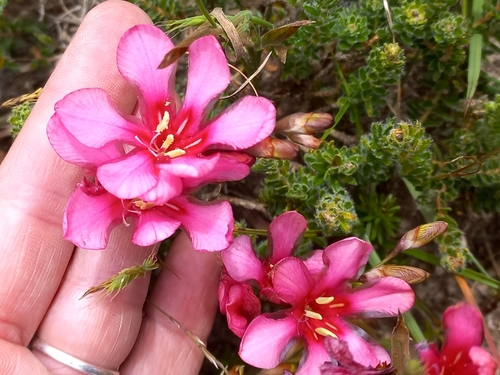
(c) Erica Van Loon, some rights reserved (CC BY-NC), uploaded by Erica Van Loon
iNaturalist· cc-by
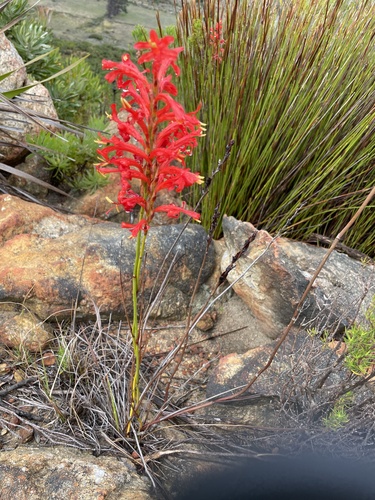
(c) Kostas Zontanos, some rights reserved (CC BY), uploaded by Kostas Zontanos
iNaturalist· cc-by-nc
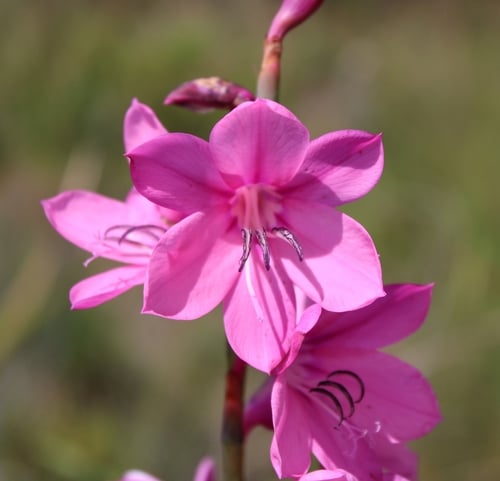
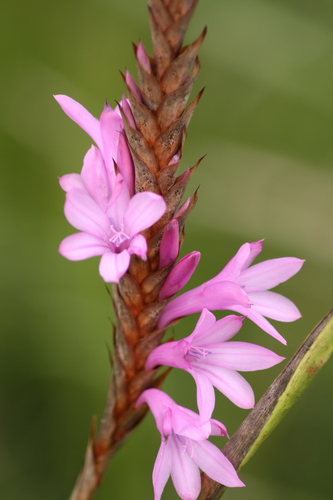
(c) Klavs Nielsen, some rights reserved (CC BY-NC), uploaded by Klavs Nielsen
Summary
Source: WikipediaCrocus cancellatus is a species of flowering plant in the family (biology Iridaceae. It is found from the Balkan Peninsula to Iran. Crocus cancellatus is a corm growing to 0.1 by 0.1 m (3.9 in by 3.9 in). It is hardy to zone (UK) 5 and is not frost tender. It is in flower from September to November, and the seeds ripen from March to May.
Description
A low plant with a corm. It keeps growing from year to year. There are 4-5 leaves and these are grey-green. They are 1-2 mm wide. The leaves are absent at flowering time. The flowers are white to deep lilac-blue. The throat is pale yellow and there can be purple veins on the outside. The flower styles are divided into many pale orange branches.
Edible Uses
The corm is eaten cooked. It is particularly prized as a vegetable when the bulb is just beginning to sprout.
Traditional Uses
The bulb is eaten as a vegetable, after boiling and grilling. It is peeled. The soft seeds are eaten raw.
This uses section is brief — help expand it
Medicinal Uses
None known
Distribution
It is a Mediterranean climate plant. It grows in rocky and stony places.
Where It Grows
Armenia, Australia, Caucasus, Europe, Israel, Jordan, Lebanon, Mediterranean, Middle East, Palestine, Syria, Tasmania, Turkey, Türkiye,
Cultivation
Grows best on a gritty well-drained slope. Plants succeed outdoors if they are given perfect drainage in a warm sunny position, otherwise they are better grown in a bulb frame. Bulbs should be planted 5 - 7cm deep in the soil. June is the best time to do this. This species includes C. edulis, which is a synonym of C. cancellatus damascenus. The corms are sold in local markets in Syria. Plants tend to move considerably from their original planting place because of their means of vegetative reproduction, it is therefore wise not to grow different species in close proximity. The flowers are only open during the day time, closing at night.
Propagation
Sow seed as soon as it is ripe in light sandy soil in pots in a cold frame, or alternatively in a cold frame in early spring. Seed usually germinates freely, so sow thinly; germination occurs within 1–6 months at 18°c. Avoid transplanting seedlings in their first year unless overcrowded, but apply regular liquid feeds to prevent nutrient deficiency. Once the plants die down, divide the small bulbs and plant 2–3 per 8cm pot. Grow on for a further two years in a greenhouse or frame, then plant out into permanent positions when dormant in late summer. Expect 3–4 years from seed to flowering. Clumps can also be divided after the leaves die down in spring, with bulbs replanted directly into permanent positions if desired.
Other Uses
None known
Notes
There are about 85 Crocus species.
Synonyms
Also Known As
Gozenek, Shuhaim
References (8)
- Al-Qura'n, S. A., 2010, Ethnobotanical and Ecological Studies of Wild Edible Plants in Jordan. Libyan Agriculture Research Center Journal International 1(4):231-243
- Blamey, M and Grey-Wilson, C., 2005, Wild flowers of the Mediterranean. A & C Black London. p 499
- Ertug, F, Yenen Bitkiler. Resimli Türkiye Florası -I- Flora of Turkey - Ethnobotany supplement
- Facciola, S., 1998, Cornucopia 2: a Source Book of Edible Plants. Kampong Publications, p 122
- Hedrick, U.P., 1919, (Ed.), Sturtevant's edible plants of the world. p 228
Show all 8 references Hide references
- Hibbert, M., 2002, The Aussie Plant Finder 2002, Florilegium. p 76
- Plants for a Future database, The Field, Penpol, Lostwithiel, Cornwall, PL22 0NG, UK. http://www.scs.leeds.ac.uk/pfaf/
- World Checklist of Useful Plant Species 2020. Royal Botanic Gardens, Kew