Dianella ensifolia
(L.) Redoute
Cerulean flax-lily, Umbrella dracaena
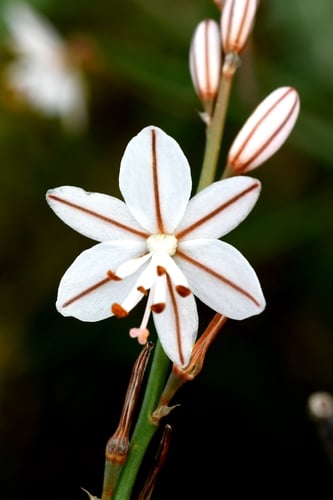
iNaturalist· cc0
no rights reserved, uploaded by 葉子
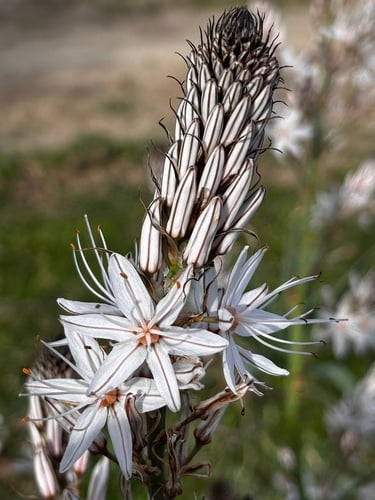
iNaturalist· cc0
no rights reserved, uploaded by 葉子
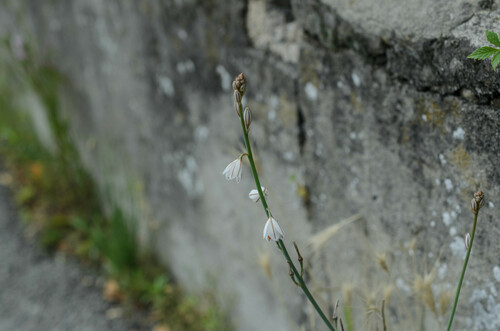
iNaturalist· cc-by-nc
(c) venus5026, some rights reserved (CC BY-NC), uploaded by venus5026
Summary
Source: WikipediaDianella ensifolia is a flowering plant, of the family Asphodelaceae. It is native to southern China, India, Japan, Madagascar, Malesia, the Pacific Islands, Singapore, Sri Lanka, Taiwan, and tropical Asia. Its common names include umbrella dracaena, common dianella, siak-siak, and flax lily.
Description
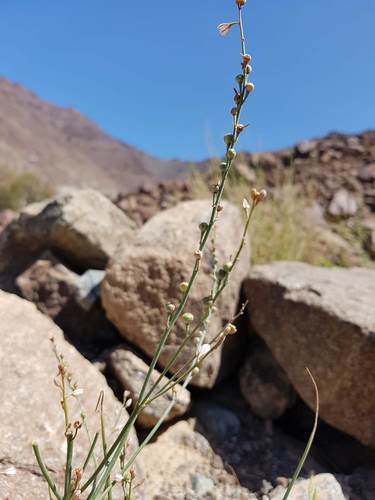
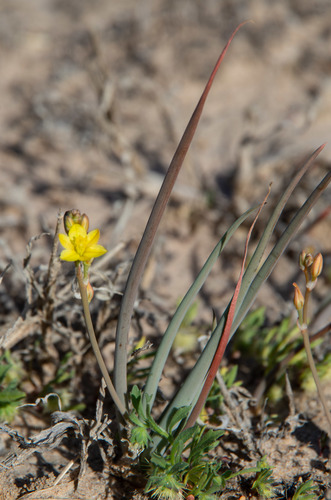
It has a creeping rhizome 5-8 mm thick. The leaves are sword shaped and 30-80 cm long by 1-2.5 cm wide. They narrow at both ends. The flower panicle has loose branches and the flowers are at the end. They can be white, yellow or purple. The fruit are deep blue berries 8 mm across.
Medicinal Uses
In 2020 essential oil of the D. ensifolia was chemically analyzed, and tested for its antibacterial, antioxidant, and cytotoxic properties. The main components of the plant essential oil were identified as allo-aromadendrene (7.3%), Geranylacetone (6.2%), Hexahydrofarnesyl acetone (4.4%), Longifolene (4.2%), and β-caryophyllene (4.0%). When examined individually, these compounds exhibit potent antimicrobial activity, cytotoxic activity, the potential to inhibit cell growth and proliferation, and in-vivo protective effects against juglone-induced oxidative stress in roundworm. The essential oil was investigated further for its antibacterial activity, and it was determined that it effectively inhibited the growth of numerous bacterial strains, including Bacillus subtilis ATCC 6633 and Staphylococcus aureus ATCC 6538. This effect was associated with the compounds geranylacetone, hexahydrofarnesyl acetone, longifolene, and β-caryophyllene, found in the essential oil. The cytotoxicity of the essential oil was also examined against liver hepatocellular cells, and human breast adenocarcinoma cell line. The essential oil of the D. ensifolia displayed a dose-dependent effect on both tumor cell lines. This may be contributed to the reported tumor motility inhibition, and tumor aggression inhibition of β-caryophyllene. A study conducted in 2010 screened plant extracts for antioxidants, and determined that the extract of Dianella ensifolia was both a strong antioxidant, and an agent that could be used to reduce skin hyperpigmentation. The extract of Dianella ensifolia, 1-(2,4-dihydrophenyl)-3-(2,4- dimethoxy-3-methylphenyl) propane (DP), was found to inhibit a free radical, which is linked to hyperpigmentation, and ultraviolet-C induced lipid oxidation. The extract from the plant was then tested against two pharmaceutical topical treatments. It was concluded that the plant extract, containing DP, had an increased rate of fading compared to the other treatments containing hydroquinone.
Known Hazards
The plant is considered poisonous in China, and cattle are said to die from eating it.
Distribution
It is a temperate plant.
Where It Grows
Asia, China, North America, USA,
Cultivation
Succeeds in tropical and subtropical climates. Grows best in a sunny position. Succeeds in any moderately fertile soil. The plant has a long flowering season, sometimes flowering all year round].
Propagation
Seed - pre-soak for 24 hours in lukewarm water and then sow in individual containers, placing 3 - 4 seeds in a pot. Germination usually takes place within 1 - 3 months at 25°c. When large enough to handle, thin the seedlings to the best one or two and then grow on until large enough to plant out. Division as the plants come into growth. Larger clumps can be replanted direct into their permanent positions, though it is best to pot up smaller clumps and grow them on until they are rooting well.
Other Uses
The juice from the berries is a source of a pale blue dye. The above report is somewhat suspect. It is listed for the species D. nemorosa, which is a synonym of this species. It goes on to say that the dye is used by Hawaiians, but the plant is not native to Hawaii. It further quotes D. sandwicensis as a synonym for this species, whereas D. sandwicensis is a recognised species that is found in Hawaii. It is therefore likely that this report really refers to D. sandwicensis. The pounded fresh rhizome, mixed with rice, is roasted and used for killing mice and rats. The aromatic rhizomes and roots are ingredients in cosmetics and perfume. The leaves are boiled and used for fumigations (incense).
Synonyms
References (1)
- World Checklist of Useful Plant Species 2020. Royal Botanic Gardens, Kew