Dianella pavopennacea
R. J. F. Hend.
Flax lilies, Blue Flax lily, Blue Berry Lily
iNaturalist· cc-by-nc-sa
(c) Anne Roberts, some rights reserved (CC BY-NC-SA)
iNaturalist· cc-by-nc
(c) meeshell1411, some rights reserved (CC BY-NC)
iNaturalist· cc-by-nc
(c) Jenny Emeny, some rights reserved (CC BY-NC), uploaded by Jenny Emeny
gbif· cc-by
GBIF
gbif· cc-by
Royal Botanic Gardens, Kew
gbif· cc-by
Royal Botanic Gardens, Kew
Description
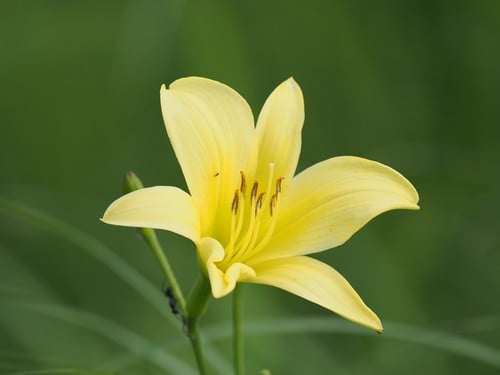
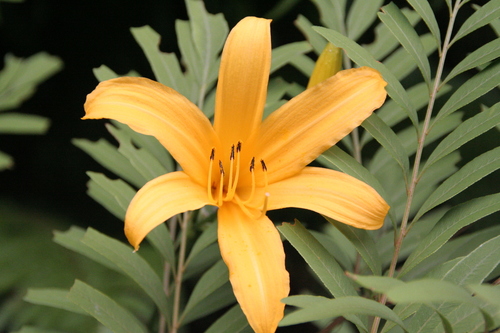
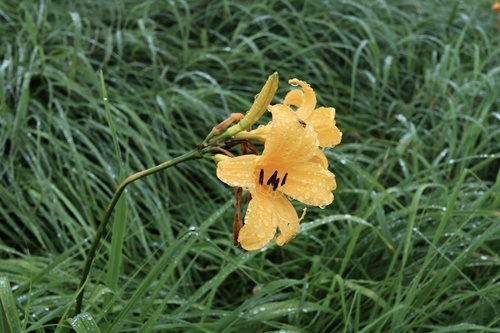
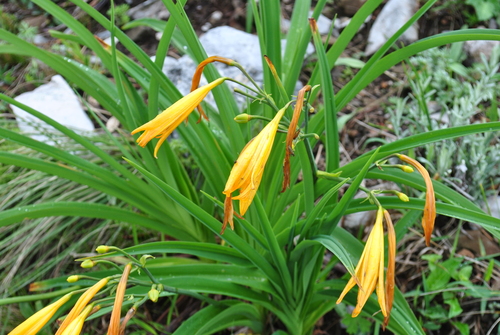
A lily. It grows 1.2 m high. It forms tufts. The leaves are simple and have small teeth along the edge. The leaves are 30-55 cm long by 1-2 cm wide. The midrib has teeth on the under side. There is a sheath at the base. It is 5-8 cm long. The flowers are in branched clusters in the axils of the leaves. The flowers have 6 blue tepals. They are 4-7 mm long. The fruit is a blue berry. It is 5-8 mm long. There are several shiny black seeds. These are 3-4 mm long.
Edible Uses
The fruit, rhizomes, and roots are edible.
Distribution
A tropical plant. It grows in vine thickets and open woodland. In tropical Queensland it grows from sea level to 450 m altitude.
Where It Grows
Australia*,
Notes
There are about 20-30 Dianella species. Also put in the family Hemerocallidaceae.
References (4)
- Cooper, W. and Cooper, W., 2004, Fruits of the Australian Tropical Rainforest. Nokomis Editions, Victoria, Australia. p 396
- Low, T., 1991, Wild Food Plants of Australia. Australian Nature FieldGuide, Angus & Robertson. p 113
- Scarth-Johnson, V., 2000, National Treasures. Flowering Plants of Cooktown and Northern Australia. Vera Scarth-Johnson Gallery Association. Cooktown, Australia. p 171
- Williams, K.A.W., 1999, Native Plants of Queensland Volume 4. Keith A.W. Williams North Ipswich, Australia. p 154