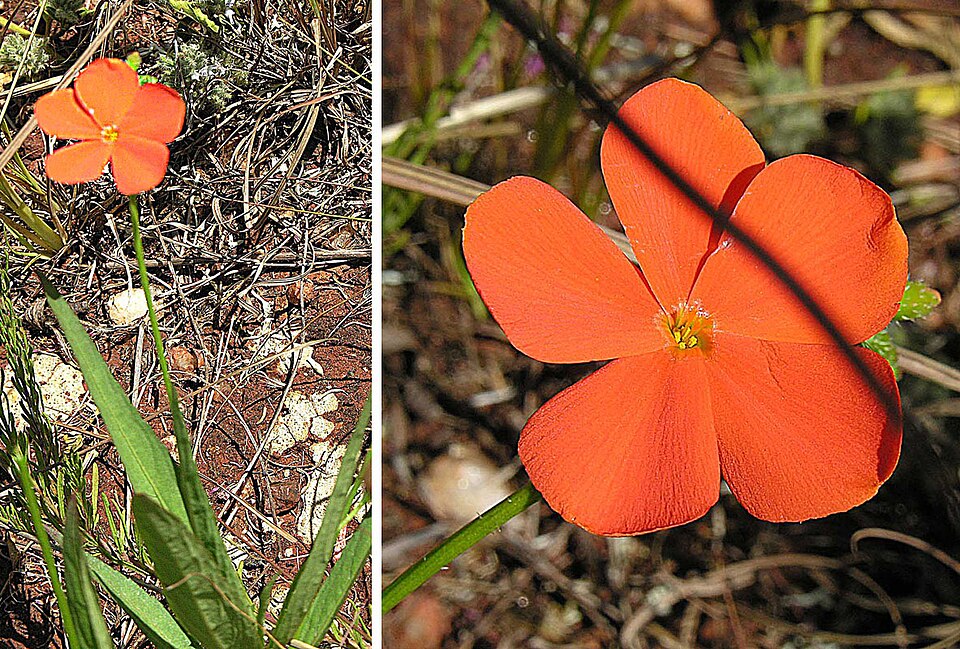
Adenia heterophylla
(Blume) Koord.
Lacewing Vine
iNaturalist· cc-by-nc
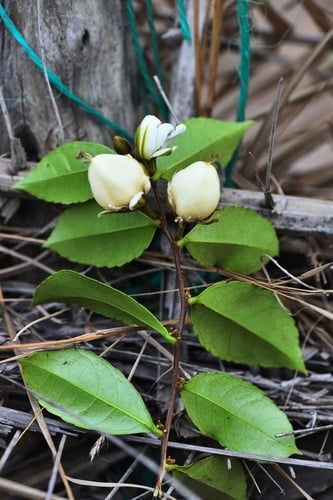
(c) Cheongweei Gan, some rights reserved (CC BY-NC), uploaded by Cheongweei Gan
iNaturalist· cc-by-nc
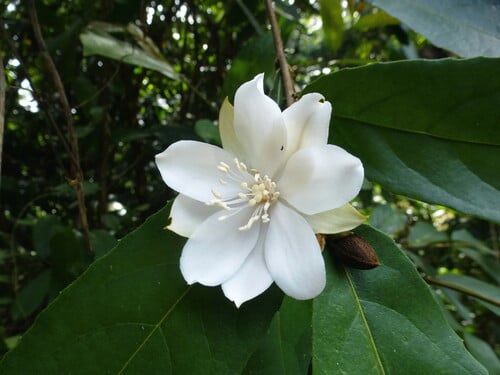
(c) Graham Bell, some rights reserved (CC BY-NC), uploaded by Graham Bell
iNaturalist· cc-by-nc
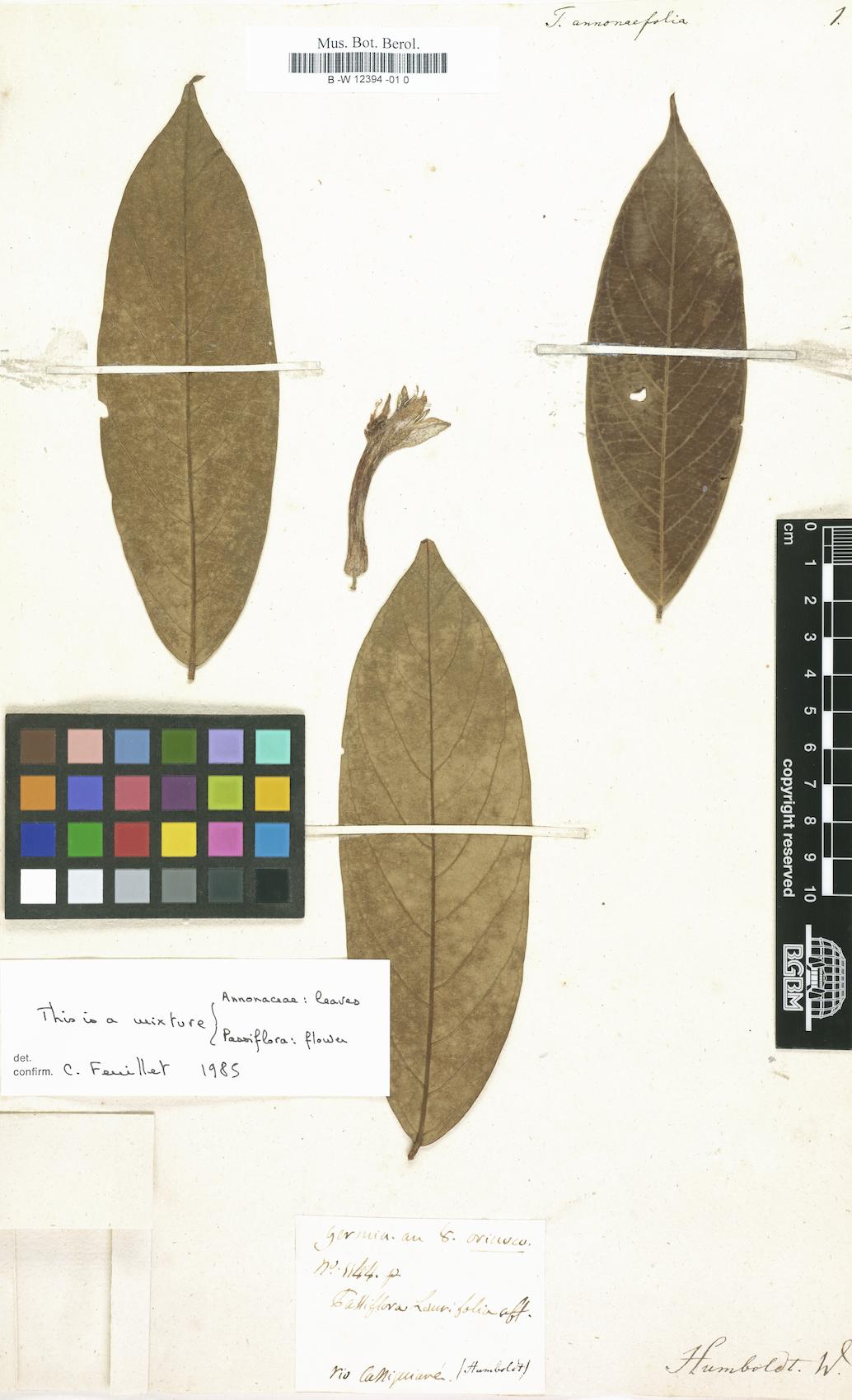
(c) Cheongweei Gan, some rights reserved (CC BY-NC), uploaded by Cheongweei Gan
Summary
Source: WikipediaAdenia heterophylla, commonly known in Australia as the lacewing vine, is a climbing plant in the family Passifloraceae. It has a broad distribution spanning the equator, from the south eastern corner of China, through Indochina and Malesia, to northern Australia. In Australia it serves as a food plant for larvae of the glasswing, red lacewing and cruiser butterflies.
Description
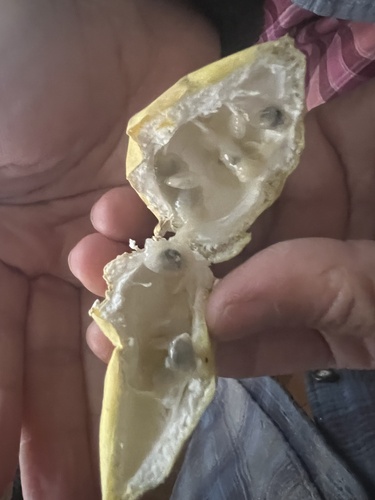
A slender climber. It grows to 20-30 m long. The stem is square. The leaves are heart shaped tapering to the tip. They are bright green and shiny. There are a few teeth along the edge of the leaf. The leaf is 10-15 cm long by 5-10 cm wide. They have 3 pairs of side veins and a pair of glands at the base of the leaf blade. The plant has long tendrils with a thick hook at the end. The flowers are of one sex but male and female flowers occur on the same plant. The male flower clusters has up to 40 flowers. The female has 1-4 flowers. The flowers are small, green and 0.8 cm across. The fruit is a capsule and narrows towards both ends. It hangs from the vine. It is bright red and turns purple. The fruit is 8 cm long by 3 cm wide. It splits into 3. There are many seeds and they are covered with a white pulp. They occur in rows and are grey.
Edible Uses
The ripe fruit is eaten whole, including the skin and seeds, which contain white pulp covering grey seeds arranged in rows.
Traditional Uses
The fruit is eaten when ripe. (The whole fruit including skin and seeds.) The seeds inhibit trypsin unless heated. CAUTION: Most Adenia are poisonous.
Known Hazards
Seeds inhibit trypsin unless heated; most Adenia species are poisonous, and this species should be approached with caution.
Distribution
It is a tropical plant. It occurs in low hills in rainforest and monsoon scrub. In tropical Queensland it grows from sea level to 300 m altitude. It prefers semi shade. It is very sensitive to frost. In XTBG Yunnan.
Where It Grows
Andamans, Asia, Australia, Cambodia, China, India, Indochina, Indonesia, Laos, Malaysia, Pacific, Papua New Guinea, PNG, Philippines, Philippines, SE Asia, Solomon Islands, Thailand, Vietnam,
Cultivation
It can be grown from seed. It may be best to ferment the seeds inside the fruit before planting. Stem cuttings can be used. Plants need regular pruning because they grow vigorously.
Other Information
It is not known if it is used for food in Papua New Guinea.
Notes
The leaves are favourites for some attractive butterflies. There are 95 Adenia species. They are common in the semiarid regions of Africa.
Synonyms
References (22)
- Ambasta S.P. (Ed.), 2000, The Useful Plants of India. CSIR India. p 14
- Arora, R. K., 2014, Diversity in Underutilized Plant Species - An Asia-Pacific Perspective. Bioversity International. p 56
- Borrell, O.W., 1989, An Annotated Checklist of the Flora of Kairiru Island, New Guinea. Marcellin College, Victoria Australia. p 117, 209
- Cooper, W. and Cooper, W., 2004, Fruits of the Australian Tropical Rainforest. Nokomis Editions, Victoria, Australia. p 390
- de Wilde, 1972, Passifloraceae, Flora Malesiana, Ser. 1. Vol. 7 (2) p 424
Show all 22 references Hide references
- Elliot, W.R., & Jones, D.L., 1982, Encyclopedia of Australian Plants suitable for cultivation. Vol 2. Lothian. p 156
- Flora of Australia, Volume 8, Lecythidales to Batales, Australian Government Publishing Service, Canberra (1982) p 148
- French, B.R., 2010, Food Plants of Solomon Islands. A Compendium. Food Plants International Inc. p 292
- Jackes, B.R., 2001, Plants of the Tropics. Rainforest to Heath. An Identification Guide. James Cook University. p 72
- Jones, D.L. & Gray, B., 1977, Australian Climbing Plants. Reed. p 73
- Jones D, L, 1986, Ornamental Rainforest Plants in Australia, Reed Books, p 283
- Kenneally, K.E., Edinger, D. C., and Willing T., 1996, Broome and Beyond, Plants and People of the Dampier Peninsula, Kimberley, Western Australia. Department of Conservation and Land Management. p 164
- Lord, E.E., & Willis, J.H., 1999, Shrubs and Trees for Australian gardens. Lothian. p 321
- Paczkowska, G . & Chapman, A.R., 2000, The Western Australian Flora. A Descriptive Catalogue. Western Australian Herbarium. p 454
- Peekel, P.G., 1984, (Translation E.E.Henty), Flora of the Bismarck Archipelago for Naturalists, Division of Botany, Lae, PNG. p 385, 386
- Pham-Hoang Ho, 1999, An Illustrated Flora of Vietnam. Nha Xuat Ban Tre. p 561
- Plants of Papua New Guinea LAE herbarium record
- Townsend, K., 1994, Across the Top. Gardening with Australian Plants in the tropics. Society for Growing Australian Plants, Townsville Branch Inc. p 71
- Wheeler, J.R.(ed.), 1992, Flora of the Kimberley Region. CALM, Western Australian Herbarium, p 244
- Wightman, G. M. & Andrews, M.R., 1989, Plants of Northern Territory Monsoon Vine Forests (Vol 1). Conservation Commission of Northern Territory. p 114
- World Checklist of Useful Plant Species 2020. Royal Botanic Gardens, Kew
- Yunupinu Banjgul, Laklak Yunupinu-Marika, et al. 1995, Rirratjinu Ethnobotany: Aboriginal Plant Use from Yirrkala, Arnhem Land, Australia. Northern Territory Botanical Bulletin No 21. Parks and Wildlife Commission of the Northern Territory. p 16