Passiflora aurantia
G. Forst.
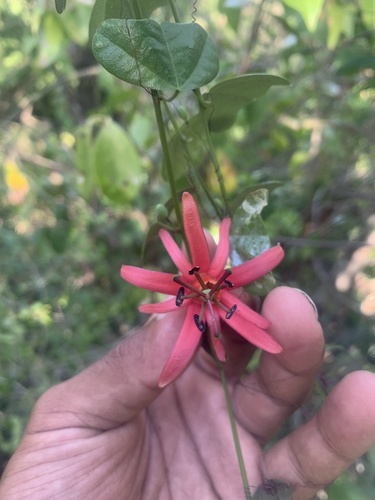
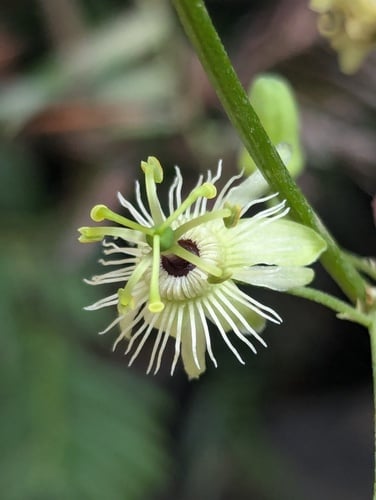
Red Passion Flower, Pink passionflower
iNaturalist· cc-by-nc
(c) laurenhues, some rights reserved (CC BY-NC), uploaded by laurenhues
iNaturalist· cc-by-nc
(c) toohey-forest-wildlife, some rights reserved (CC BY-NC), uploaded by toohey-forest-wildlife
iNaturalist· cc-by-nc
(c) laurenhues, some rights reserved (CC BY-NC), uploaded by laurenhues
Summary
Source: WikipediaPassiflora aurantia, the orange-petaled passion flower, is a species in the family Passifloraceae which produces edible but not particularly palatable fruit. It is native to New Caledonia and Australia.
Description
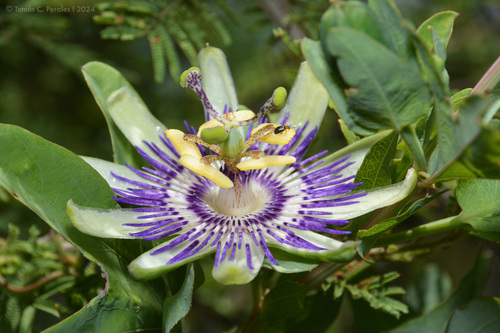
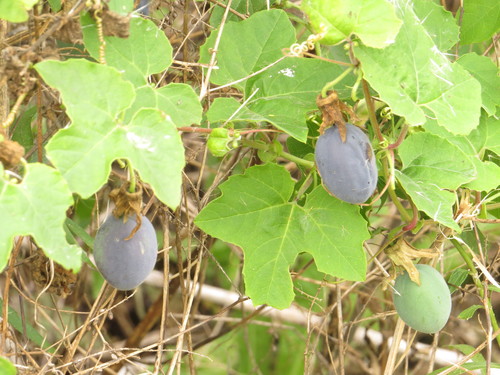
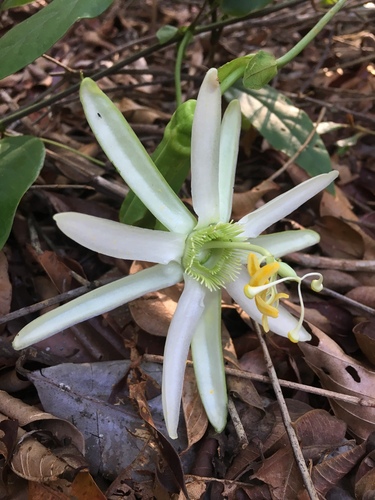
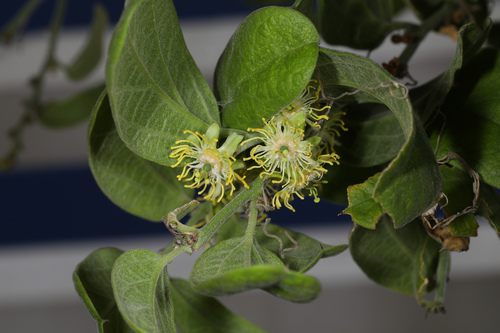
A climber which climbs by tendrils. It is slender with wiry stems. The leaves are small. They are 2-10 cm long by 2-8 cm wide. They are deep green. The leaves have 3 lobes. The flowers are 11 cm across. The flowers are white when they open but turn red. The fruit are 3-5 cm long by 2-4.5 cm wide. The are almost round and pale green. They become purplish when ripe.
Edible Uses
Fruit - raw[397. Not especially palatable. Insipid. The pulp surrounding the seeds is eaten. The ellipsoid, purplish fruit is around 30 - 50mm in diameter.
Traditional Uses
Radke says fruit not edible.
This uses section is brief — help expand it
Known Hazards
The fruit are reported as not edible.
Distribution
A tropical plant. It grows in coastal scrub and on the edge of rainforests. It grows in acidic soils and sands. It can grow in tropical, subtropical and warm temperate regions. It needs well drained soils. It does best with light shade. They can stand some frost.
Where It Grows
American Samoa, Australia*, Fiji, New Caledonia, Norfolk Island, Pacific, Papua New Guinea, PNG, Samoa, Tonga, Vanuatu,
Cultivation
Plants can be grown from seed or cuttings.
Production
It grows rapidly. It is short lived.
Notes
There are about 400 Passiflora species.
Synonyms
Also Known As
Norfolk Island Passionfruit, Blunt-leaved passionfruit
References (16)
- Cooper, W. and Cooper, W., 2004, Fruits of the Australian Tropical Rainforest. Nokomis Editions, Victoria, Australia. p 390
- Flora of Australia Volume 49, Oceanic Islands 1, Australian Government Publishing Service, Canberra. (1994) p 126
- Greig, D., 1996, Flowering Natives for Home Gardens. Angus & Robertson. p 279
- Hinton, B & B., 1982, A Wilderness in Bloom. Wildflowers of tropical Australia. p 31
- Jackes, B.R., 2001, Plants of the Tropics. Rainforest to Heath. An Identification Guide. James Cook University. p 72
Show all 16 references Hide references
- Lavelle, M., 2008, Wild Flowers of Australia and Oceania. Southwater. p 79
- Leiper, G & Houser, J., Mutooroo. Plant Use by Australian Aboriginal People. Assembly press, Queensland.
- Lord, E.E., & Willis, J.H., 1999, Shrubs and Trees for Australian gardens. Lothian. p 324
- Melzer, R. & Plumb, J., 2011, Plants of Capricornia. Belgamba, Rockhampton. p 385
- Nicholson, N & H., 1996, Australian Rainforest Plants 2, Terania Rainforest Publishing. NSW. p 47
- Parham, B. E. V., 1972, Plants of Samoa. New Zealand Department of Scientific and Industrial Research. Information Series. No. 85 p 99 (As Passiflora samoensis)
- Radke, P & A, Sankowsky, G & N., 1993, Growing Australian Tropical Plants. Frith & Frith, Australia. p 50
- Ratcliffe D & P., 1987, Australian Native Plants for Indoors. Little Hills press. p 112
- Scarth-Johnson, V., 2000, National Treasures. Flowering Plants of Cooktown and Northern Australia. Vera Scarth-Johnson Gallery Association. Cooktown, Australia. p 137
- Townsend, K., 1994, Across the Top. Gardening with Australian Plants in the tropics. Society for Growing Australian Plants, Townsville Branch Inc. p 310
- Townsend, K., 1999, Field Guide to Plants of the Dry Tropics. Society for Growing Australian Plants, Townsville Branch Inc. p 142