Crataegus songarica
C. Koch
Dzhungarskei hawthorn
iNaturalist· cc-by-sa
(c) Kudaibergen Amirekul, some rights reserved (CC BY-SA), uploaded by Kudaibergen Amirekul
iNaturalist· cc-by-nc
(c) MRN, some rights reserved (CC BY-NC)
Summary
Source: WikipediaCrataegus songarica is a species of flowering plant in the family Rosaceae. It is an Asian hawthorn with black fruit that is sometimes used medicinally. It is closely related to Crataegus ambigua, a species that has red fruit.
Description
A large shrub or small tree. It has many trunks. These are 5-9 cm across. The bark is reddish-grey. It splits and peels off in thin strips. The leaves are widely oval and slightly hairy. There are 5-9 unequal lobes. The base is wedge shaped. There are 28-35 flowers in a group. The flowers are 1.8 cm across. They have densely hairy stalks. The fruit are widely oval. They are 1.3 cm long by 1 cm wide. They are dark red with orange, sweet flesh. They are edible. Each fruit has 2-3 seeds.
Edible Uses
The fruit are eaten raw and used for drinks; they are especially popular with children.
Traditional Uses
They are used for drinks.
This uses section is brief — help expand it
Medicinal Uses
The fruit are used in traditional medicine and are rich in ascorbic acid (31–108 mg/100 g) and vitamin A (380–680 mg/100 g).
Distribution
Temperate. In Kazakhstan it grows on rocky slopes in the middle mountain regions. In western China it grows between 500-2,000 m above sea level.
Where It Grows
Afghanistan, Asia, Central Asia, China, Himalayas, Iran, Kazakhstan, Kyrgyzstan, Middle East, Pakistan, Tajikistan,
Cultivation
Plants can be grown from seed. The seed need cold treatment. Plants can also be grafted.
Production
In western China plants flower in May and fruit in July.
Other Information
The fruit are especially eaten by children.
Notes
There are 200 or more Crataegus species. It is also used in medicine. The fruit are rich in ascorbic acid 31-108 mg/100 g and Vit A 380-680 mg / 100 g fruit.
Also Known As
Chochina, Cocina, Pingyath
References (9)
- Dzhangaliev, A. D., et al, 2003, The Wild Fruit and Nut Plants of Kazakhstan, Horticultural Reviews, Vol. 29. pp 305-371
- Flora of China. www.eFloras.org Volume 9
- Haj, F., et al, 2012, Species Diversity and Ethno Botanical Classes of the Flora of Allai Valley District Battagram Pakistan. International Journal of Plant Research 2012, 2(4): 111-123
- Khan, D. & Shaukat, S.S., 2006, The Fruits of Pakistan: Diversity, Distribution, Trends of Production and Use. Int. J. Biol. Biotech., 3(3):463-499
- Nisar, M., et al, 2009, Nutritional levels of Indigofera gerardiana Wall. and Crataegus songrica K. Koch. Pakistan J. Botany 41(3):1359-1361
Show all 9 references Hide references
- Plants for a Future database, The Field, Penpol, Lostwithiel, Cornwall, PL22 0NG, UK. http://www.scs.leeds.ac.uk/pfaf/
- Rana, P. K., et al, 2014, Uses of Local Plant Biodiversity among the Tribal Communities of Pangi Valley of District Chamba in Cold Desert Himalaya, India. The Scientific World Journal. Volume 2014, Article ID 753289, 15 pages
- Verh. Vereines Befourd. Gartenbaues Koenigl. Preuss. Staatenser. 2, 1:287. 1853
- Zhang, Y. et al, 2020, Characteristics and utilization of plant diversity and resources in Central Asia. Regional Sustainability. Elsevier. p 6
More from Rosaceae
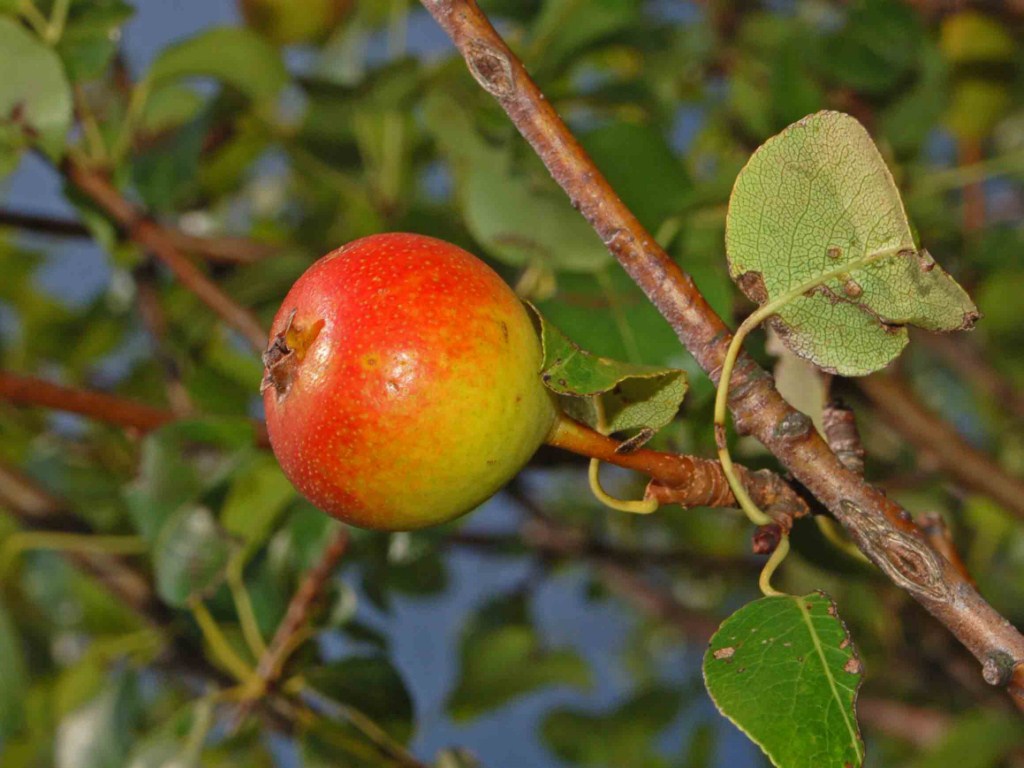
Pyrus pyraster
Wild pear
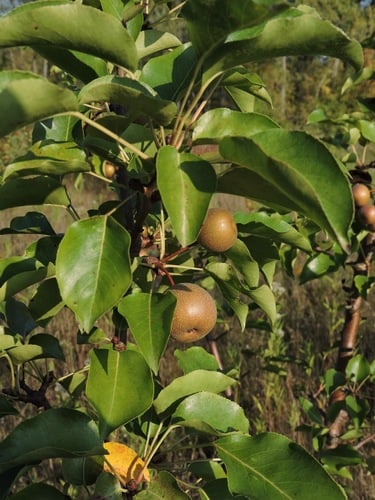
Pyrus pyrifolia
Asian pear, Chinese pear, Nashi, Sand plum, Sand pear
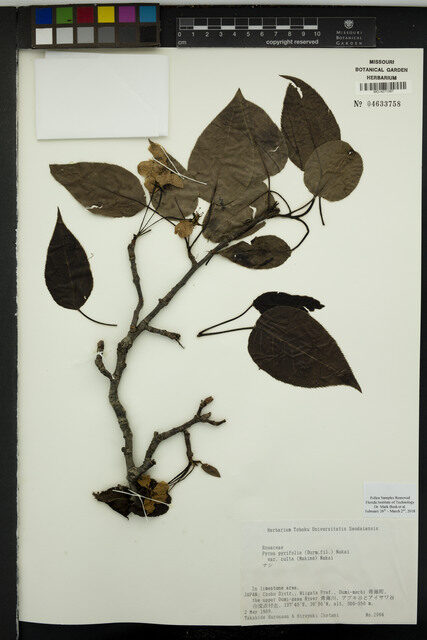
Pyrus pyrifolia culta - (Makino.)Nakai.
Asian Pear
Pyrus pyrifolia var. culta
Asian pear, Chinese pear, Japanese pear, Nashi, Oriental pear, Sand pear, Nashpati, Berikai
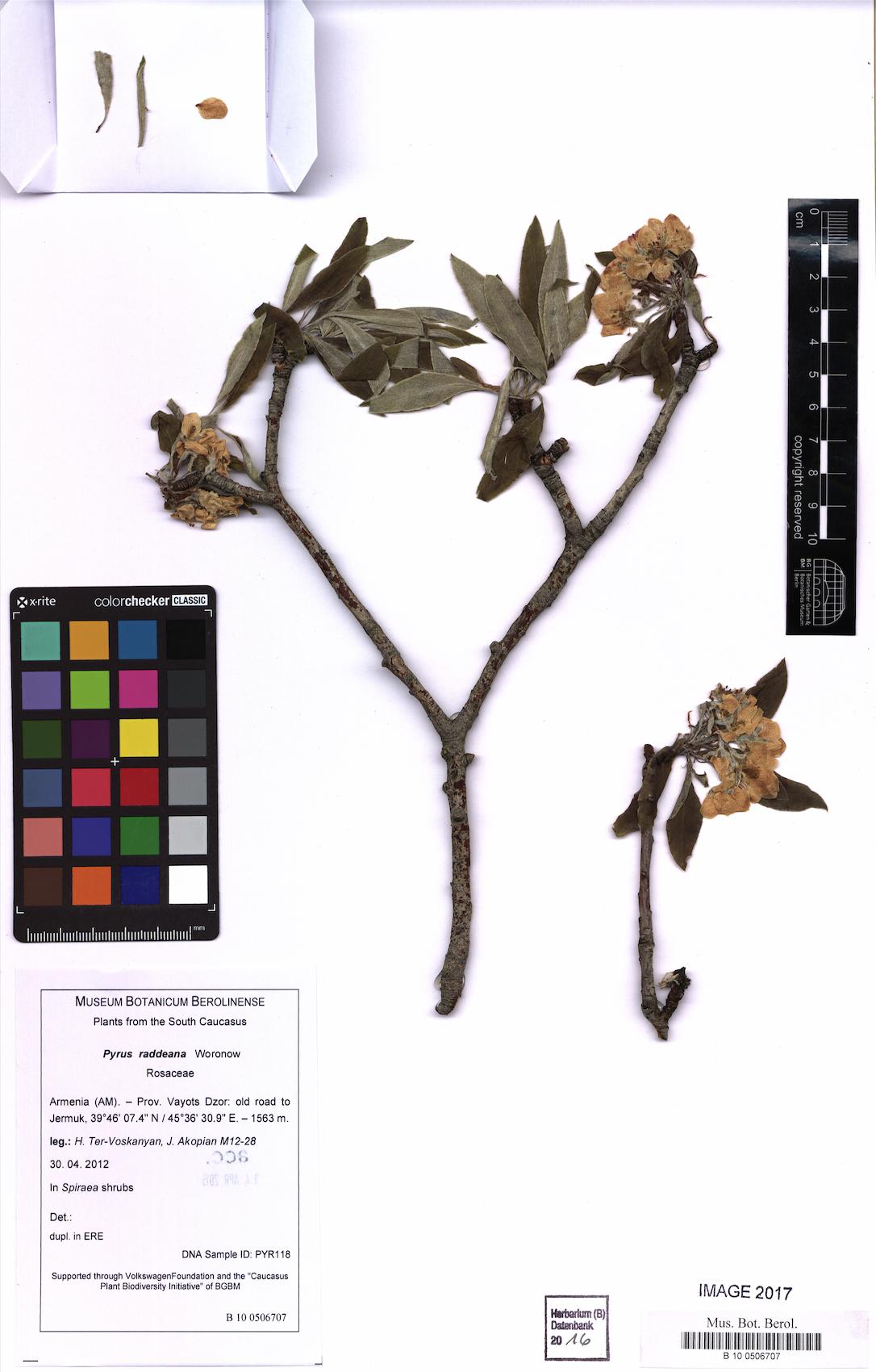
Pyrus raddeana
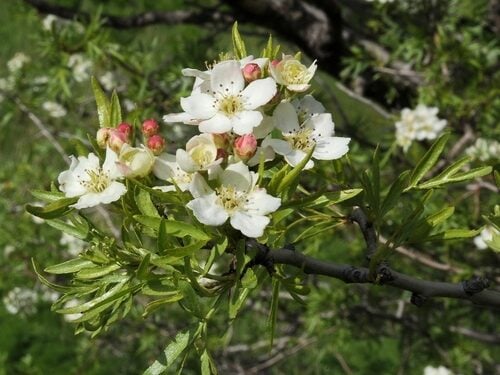
Pyrus regelii
Regel's pear