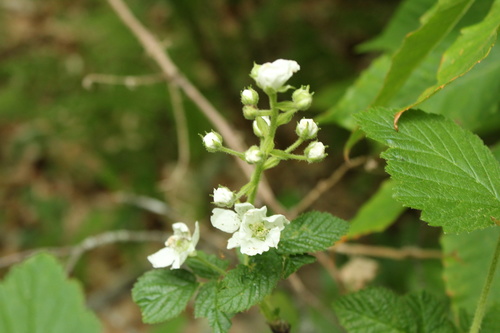
Sanguisorba minor subsp. balearica
(Bourg. ex Nyman) Munoz Garm. & C. Navarro
gbif· cc-by-nc
Богданович Светлана
gbif· cc-by-nc
Богданович Светлана
gbif· cc-by-nc
Anna
Summary
Source: WikipediaSanguisorba minor, the salad burnet, garden burnet, small burnet, burnet (also used for Sanguisorba generally), pimpernelle, Toper's plant, and burnet-bloodwort, is an edible perennial herbaceous plant in the family Rosaceae. It has ferny, toothed-leaf foliage; the unusual crimson, spherical flower clusters rise well above the leaves on thin stems. It generally grows to 25–55 cm tall (moisture-dependent; as short as 2 cm in dry areas). The large, long (sometimes 1m/3-foot), taproots store water, making it drought-tolerant. It is evergreen to semi-evergreen; in warmer climates grows all year around, and in cold climates it stays green until heavy snow cover occurs. Plants may live over 20 years, though 7-12 is more usual; it lives longer if sometimes permitted to set seed. Burnet flowers in early summer. Subspecies include muricata, minor, and mongolii (the last from the Mediterranean).
Description
A herb.
This description is brief — help expand it
Edible Uses
Young burnet leaves are used as an ingredient in salads, dressings, sauces, summer drinks, and in claret. It is also used to flavour vinegar, butter, and cream cheese. It has a flavor described as "mildly cucumber, a bit tart, a little hot" and is considered interchangeable with mint leaves in some recipes, depending on the intended effect. Typically, the youngest leaves are used, as they tend to become bitter as they age; old leaves are cut back to encourage new growth. Salad burnet was called a favorite herb by Francis Bacon, was brought to the New World with the first English colonists, and was given special mention by Thomas Jefferson. It declined in popularity as a kitchen herb, but as of 2022, is becoming more popular again, for food and as an ornamental.
Medicinal Uses
Salad burnet has in the past been used medicinally in Europe to control bleeding. Salad burnet has the same medicinal qualities as medicinal burnet (Sanguisorba officinalis). It was used as a tea to relieve diarrhea in the past.
Distribution
It is a Mediterranean climate plant.
Where It Grows
Europe, Italy, Spain,
Synonyms
Also Known As
Pampinella, Queixalets
References (2)
- Bonet, M. A. & Valles, J., 2002, Use of non-crop food vascular plants in Montseny biosphere reserve (Catalonia, Iberian Peninsula). International Journal of Food Sciences and Nutrition (2002) 53, 225–248 (As Sanguisorba minor subsp. muricata NB some confusion over authorities.)
- Nimis, P. L., et al, 2015, A guide to the vascular plants of the temporary ponds of Sardinia (Italy) p 163 (As Poterium sanguisorba subsp. balearicum)