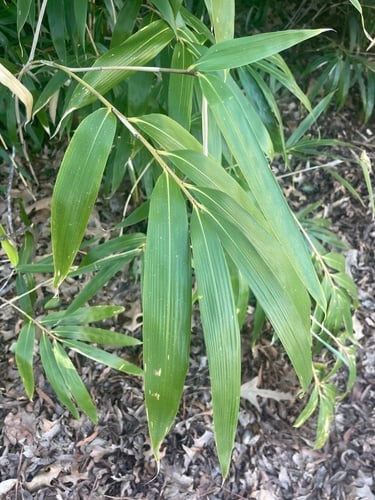
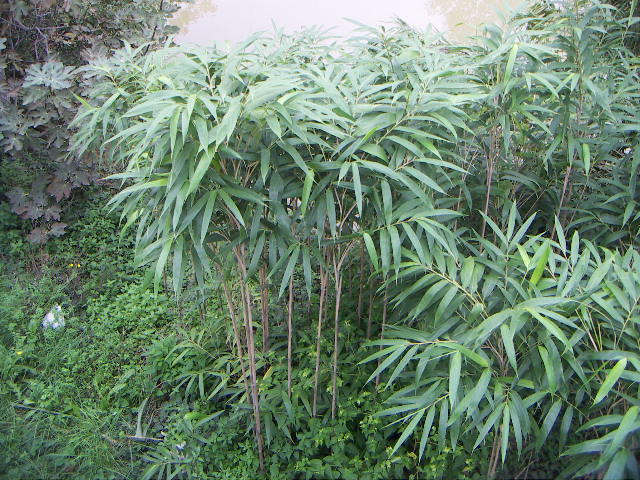
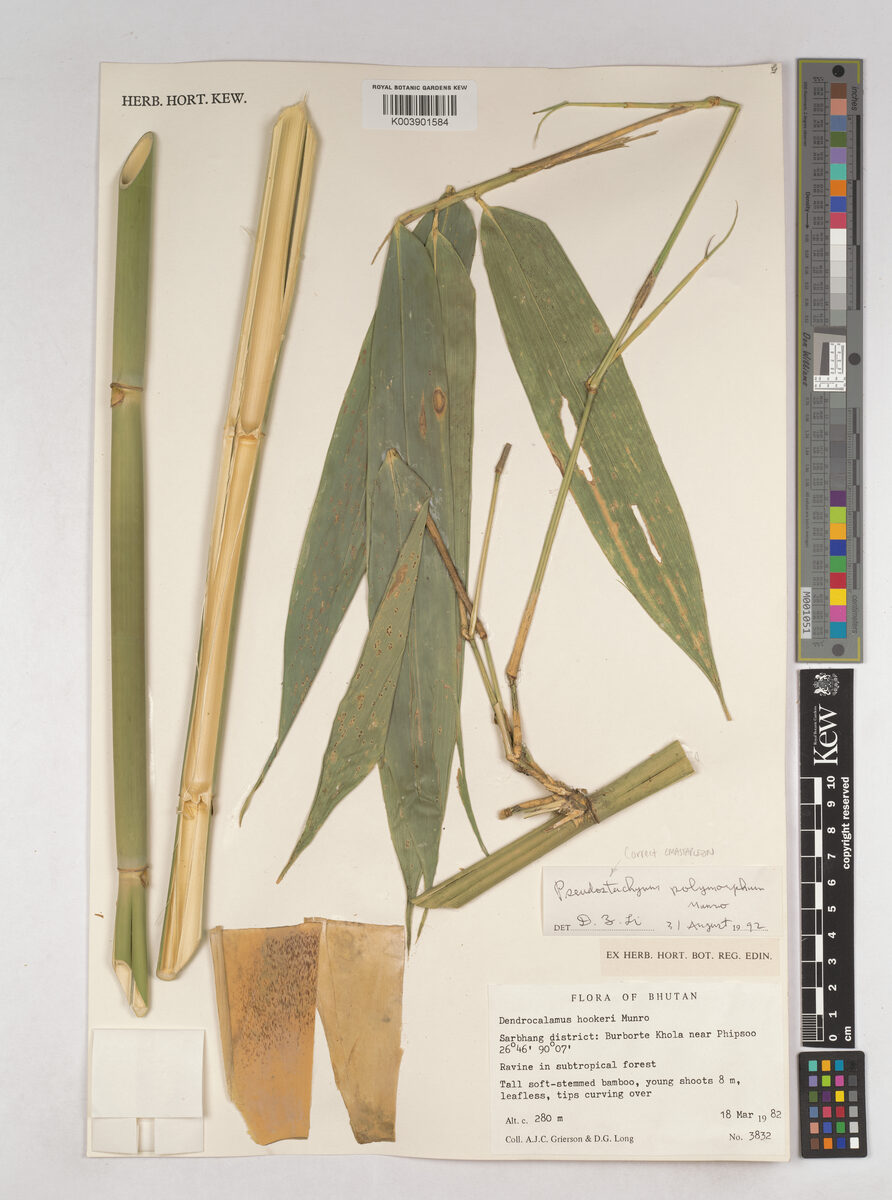
Gigantochloa rostrata
K. M. Wong
wikimedia· cc0
Wikimedia Commons - Daderot
gbif· cc0
President and Fellows of Harvard College
gbif· cc0
President and Fellows of Harvard College
Description
A tropical bamboo (Poaceae) that grows at elevations between 1,050-2,000 m.
This description is brief — help expand it
Edible Uses
The shoots are eaten.
Distribution
It is a tropical plant. It grows between 1,050-2,000 m above sea level.
Where It Grows
Asia, India, Malaysia, SE Asia,
Cultivation
Good growth of this species is observed in brown forest soils having less oxides and also in lighter textured soils in areas of high rainfall. A three year felling cycle has been generally recommended for the species. Bamboos have an interesting method of growth. Each plant produces a number of new stems annually - these stems grow to their maximum height in their first year of growth, subsequent growth in the stem being limited to the production of new side branches and leaves. In the case of some mature tropical species the new stem could be as much as 30 metres tall, with daily increases in height of 30cm or more during their peak growth time. This makes them some of the fastest-growing species in the world. Bamboos in general are usually monocarpic, living for many years before flowering, then flowering and seeding profusely for a period of 1 - 3 years before usually dying. Bamboos in general are usually monocarpic, living for many years before flowering, then flowering and seeding profusely for a period of 1 - 3 years before usually dying. This pattern can vary - sometimes flowering is sporadic, with plants flowering annually and not dying; at other times it is gregarious with all the plants in a specific species coming into flower at the same time. Both gregarious and sporadic flowering have been reported for this species. A flowering cycle of 30 - 50 years has been reported.
Propagation
Seed - sow in a semi-shaded position in a nursery seedbed or in containers. Around 39% germination has been observed within 1 - 9 days. Easily propagated by culm cuttings.
Other Uses
The culms are used whole for building huts and are split for making baskets. They are also used as a raw material, providing pulp for the paper industry.
Synonyms
References (1)
- Dagar, J. C., (Ed.), Agroforestry Systems in India: Livelihood Security & Ecosystem Services. p 77