Panicum subalbidum
Kunth
Elbow buffalo grass
iNaturalist· cc0
no rights reserved, uploaded by Bat
iNaturalist· cc-by-nc
(c) David Rabehevitra, some rights reserved (CC BY-NC)
iNaturalist· cc-by-nc
(c) David Rabehevitra, some rights reserved (CC BY-NC)
Description
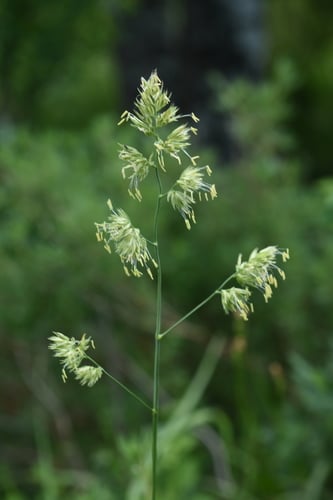
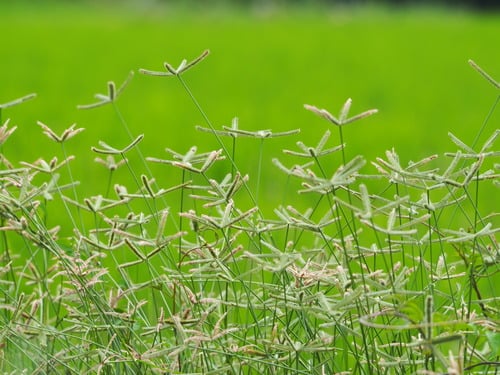
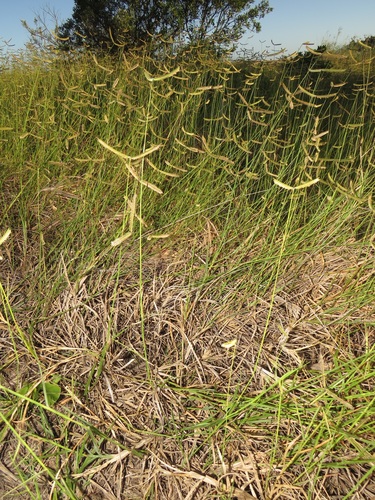
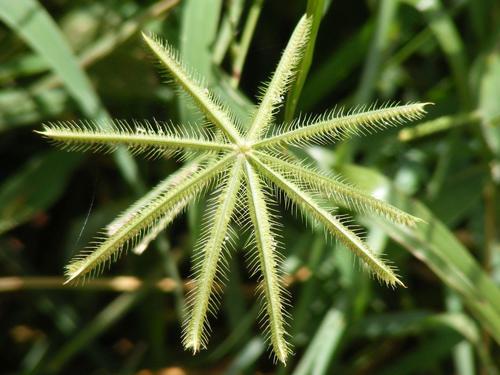
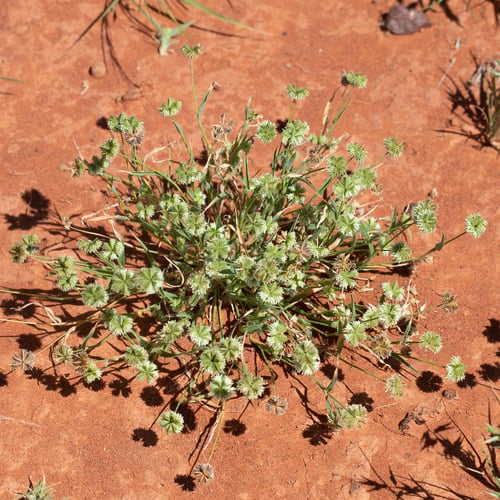
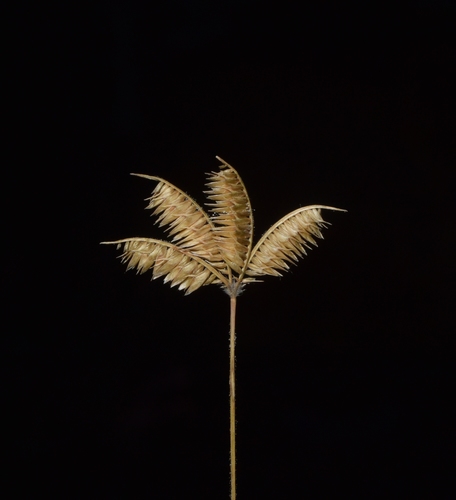
A grass. It has an irregular growth. It can grow 2 m high. The stems are rather thick. They are often bent down at the base. The leaves are broad and flat. The flowering shoots are much branched. They are narrow and erect. The spikelets are small and pointed. They are green.
Edible Uses
The seeds are eaten as a cereal, though this is occasional use.
Distribution
A tropical plant. It grows in hot arid regions. It can be in poorly drained soil. It grows between 3-3,400 m above sea level. It can grow in arid places.
Where It Grows
Africa, Angola, Botswana, Burkina Faso, Central Africa, Central African Republic, CAR, Congo, Côte d'Ivoire, East Africa, Eswatini, Gambia, Ghana, Guinea, Guinée, Guinea-Bissau, Ivory Coast, Kenya, Malawi, Mali, Mauritania, Mozambique, Namibia, Niger, Nigeria, Sahel, Senegal, Sierra Leone, South Africa, Southern Africa, Sudan, Swaziland, Tanzania, Uganda, West Africa, Zambia, Zimbabwe,
Other Information
It is an occasional food.
Notes
There are about 500 Panicum species. It is a serious pest in rice paddies. It has a C4 pathway.
Synonyms
Also Known As
Mudja
References (14)
- Abbiw, D.K., 1990, Useful Plants of Ghana. West African uses of wild and cultivated plants. Intermediate Technology Publications and the Royal Botanic Gardens, Kew. p 26
- Burkill, H. M., 1985, The useful plants of west tropical Africa, Vol. 2. Kew.
- Dalziel, J. M., 1937, The Useful plants of west tropical Africa. Crown Agents for the Colonies London.
- Fox, F. W. & Young, M. E. N., 1982, Food from the Veld. Delta Books. p 302
- Gallagher, D. E., 2010, Farming beyond the escarpment: Society, Environment, and Mobility in Precolonial Southeastern Burkina Faso. PhD University of Michigan.
Show all 14 references Hide references
- Jardin, C., 1970, List of Foods Used In Africa, FAO Nutrition Information Document Series No 2. p 5
- Long, C., 2005, Swaziland's Flora - siSwati names and Uses http://www.sntc.org.sz/flora/
- National Research Council, 1996, Lost crops of Africa. Volume 1 grains, p 259
- Peters, C. R., O'Brien, E. M., and Drummond, R.B., 1992, Edible Wild plants of Sub-saharan Africa. Kew. p 25
- Revis. gramin. 397, t. 112. 1831
- Royal Botanic Gardens, Kew (1999). Survey of Economic Plants for Arid and Semi-Arid Lands (SEPASAL) database. Published on the Internet; http://www.rbgkew.org.uk/ceb/sepasal/internet [Accessed 3rd June 2011]
- Swaziland's Flora Database http://www.sntc.org.sz/flora
- World Checklist of Useful Plant Species 2020. Royal Botanic Gardens, Kew
- van Wyk, Be, & Gericke, N., 2007, People's plants. A Guide to Useful Plants of Southern Africa. Briza. p 10