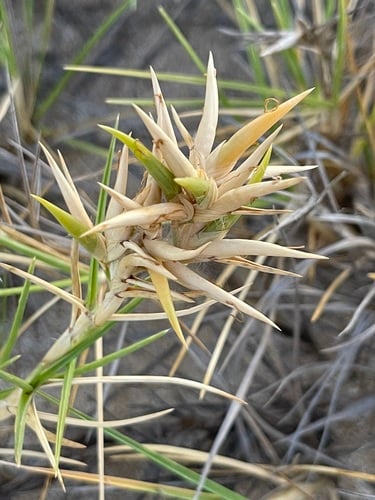
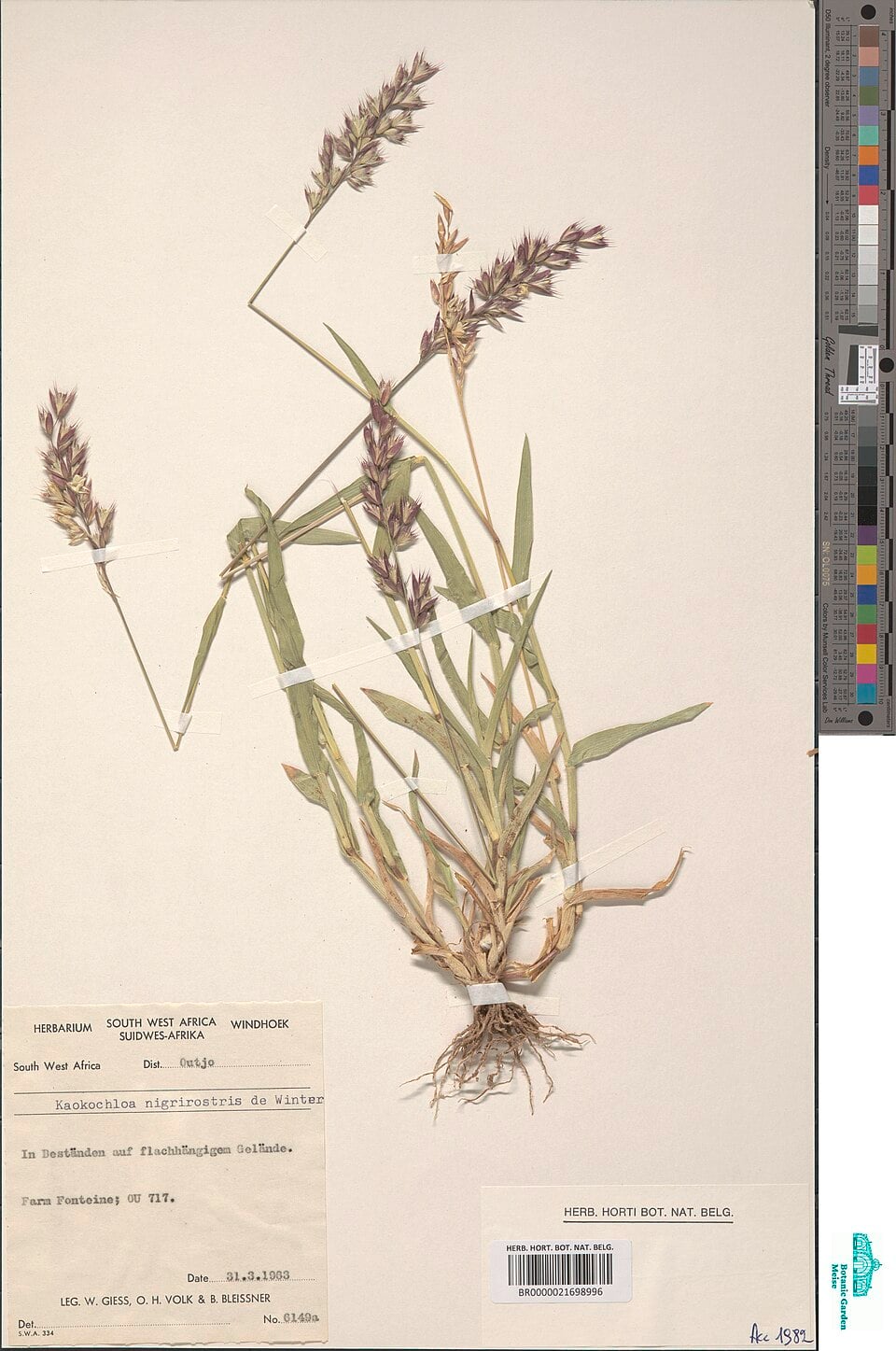
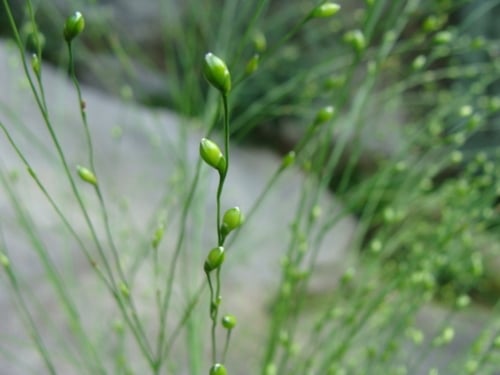
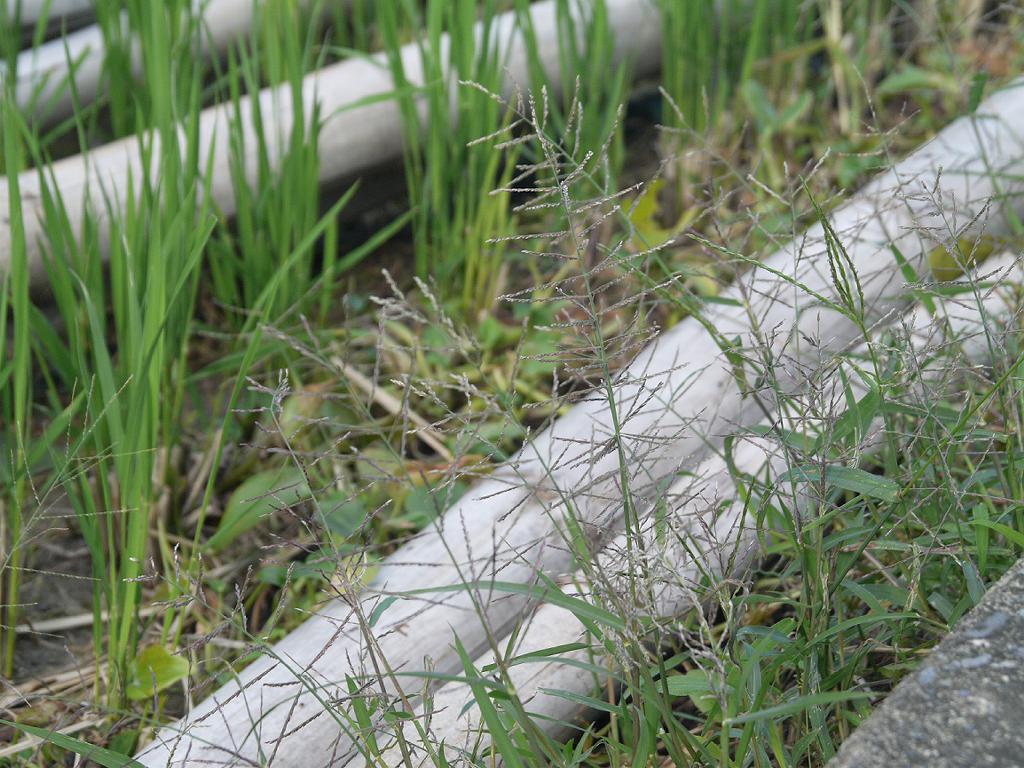
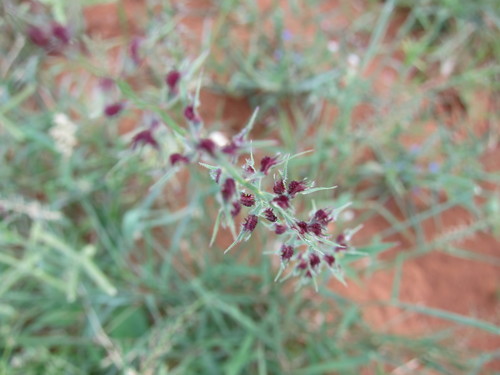
Panicum sumatrense
Roth. ex Roem & Schult.
Little millet, Blue panic, Indian millet
iNaturalist· cc-by-nc
(c) Chuangzao, some rights reserved (CC BY-NC), uploaded by Chuangzao
iNaturalist· cc-by-nc
(c) Aniruddha Singhamahapatra, some rights reserved (CC BY-NC), uploaded by Aniruddha Singhamahapatra
Summary
Source: WikipediaPanicum sumatrense, known as little millet, is a species of millet in the family Poaceae.
Description
A millet grass. It can be erect or lie over. It is a grass which grows each year from seed. It can be 2 m tall. Plants which lie over can form roots at the nodes. The stem is strongly branched. There can be 46 erect flowering branches. Erect plants only produce 26 flowering shoots. The leaf blade is narrow and 56 cm long by 21 mm wide. The flowering heads can be open or compact. They are 50 cm long. They can have 14-52 branches. The spikelet is sword shaped and 2.5 mm long. The seed is shiny white to almost black.
Edible Uses
Little millet is cooked like rice. Sometimes the millet is also milled and baked. The protein content of the grain is 7.7%.
Traditional Uses
The grain is cooked and eaten like rice. It can be ground into flour for bread.
This uses section is brief — help expand it
Distribution
A tropical plant. It can tolerate drought. It can produce in poor soil. It is cultivated between 300-1000 m altitude. The annual average rainfall is 950-1200 mm.
Where It Grows
Asia, China, Himalayas, India, Indochina, Indonesia, Japan, Malaysia, Myanmar, Nepal, Northeastern India, Pacific, Pakistan, Philippines, SE Asia, Sikkim, Sri Lanka, Taiwan, Thailand, Tibet, Vietnam,
Cultivation
It is often grown in mixed plantings with foxtail millet, sorghum or pearl millet.
Production
Plants can take 2.5-5 months to mature. Plants are harvested withy sickles then threshed and the grains removed by pounding. A yield of 200-600 kg/ha is average. In Rajasthan in India the seed are available August to November.
Other Information
It is an important cereal in the Eastern Ghats of India. It is cultivated.
Notes
There are about 500 Panicum species.
Synonyms
Also Known As
Gadro, Gondula, Gundli, Heen-meneri, K(ee) sumatra, Kungu, Kungu, Kutki, Sama, Samai, Samalu, Sava, Shame, Shavan, Suan, Suniva
References (19)
- Ambasta, S.P. (Ed.), 2000, The Useful Plants of India. CSIR India. p 426
- Arora, R. K., 2014, Diversity in Underutilized Plant Species - An Asia-Pacific Perspective. Bioversity International. p 17
- Burkill, I.H., 1966, A Dictionary of the Economic Products of the Malay Peninsula. Ministry of Agriculture and Cooperatives, Kuala Lumpur, Malaysia. Vol 2 (I-Z) p 1685 (As Panicum miliare)
- Flora of Pakistan. www.eFloras.org
- Globally Important Agricultural Heritage Systems (GIAHS) Application. Fao ca3178 en
Show all 19 references Hide references
- INFOODSUpdatedFGU-list.xls
- Kiple, K.F. & Ornelas, K.C., (eds), 2000, The Cambridge World History of Food. CUP p 117
- Macmillan, H.F. (Revised Barlow, H.S., et al), 1991, Tropical Planting and Gardening. Sixth edition. Malayan Nature Society. Kuala Lumpur. p 353 (As Panicum miliare)
- Mal, B., S., et al, (Eds), 2010, Minor Millets in South Asia. Bioversity.
- Mishra, S. & Chaudhury, S. S., 2012, Ethnobotanical flora used by four major tribes of Koraput, Odisha, India. Genetic Resources Crop Evolution 59:793-804
- Peduruhewa, P. S., et al, 2021, Potential of Underutilized Wild Edible Plants as the Food for the Future – A Review. Journal of Food Security, Vol. 9, No. 4, 136-147
- PROSEA (Plant Resources of South East Asia) handbook Volume 10 Cereals. p 153
- Purseglove, J.W., 1972, Tropical Crops. Monocotyledons. Longmans p 201
- J. J. Roemer & J. A. Schultes, Syst. veg. 2:434. 1817
- Singh, V. and Singh, P., 1981, Edible Wild Plants of Eastern Rajasthan. J. Econ. Tax. Bot. Vol 2 pp 197-207 (As Panicum miliare)
- USDA, ARS, National Genetic Resources Program. Germplasm Resources Information Network - (GRIN). [Online Database] National Germplasm Resources Laboratory, Beltsville, Maryland. Available: www.ars-grin.gov/cgi-bin/npgs/html/econ.pl (10 April 2000)
- Wiersema, J. H. & Leon, B., 2013, World Economic Plants. A Standard Reference CRC Press. 2nd Ed. p 492
- World Checklist of Useful Plant Species 2020. Royal Botanic Gardens, Kew
- Zeven, A. C. & de West, J. M. J., 1982, Dictionary of cultivated plants and their regions of diversity. Wageningen. p 74