Adenanthera abrosperma
F. Muell.
iNaturalist· cc-by-nc
(c) Ian Cowan, some rights reserved (CC BY-NC), uploaded by Ian Cowan
iNaturalist· cc-by-nc
(c) Ian Cowan, some rights reserved (CC BY-NC), uploaded by Ian Cowan
iNaturalist· cc-by
(c) coenobita, some rights reserved (CC BY), uploaded by coenobita
Description
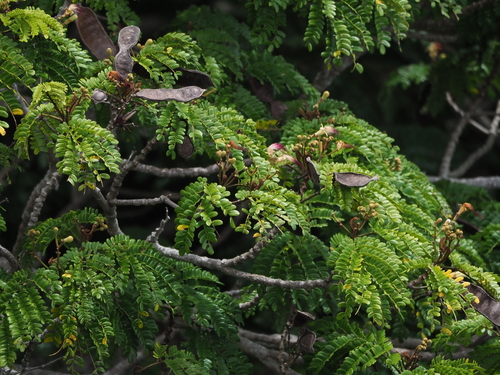
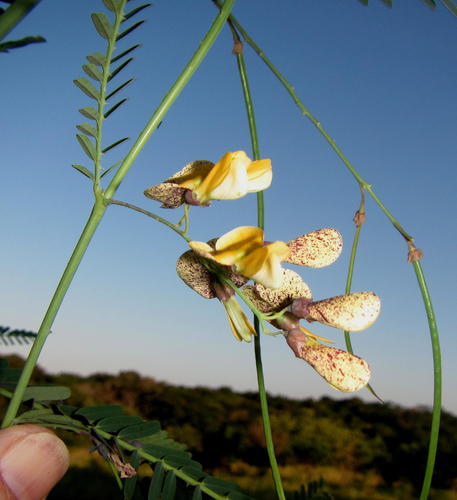
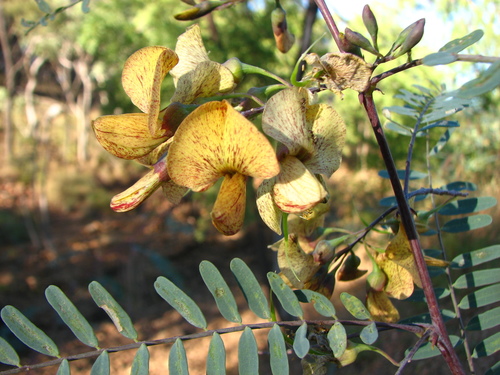
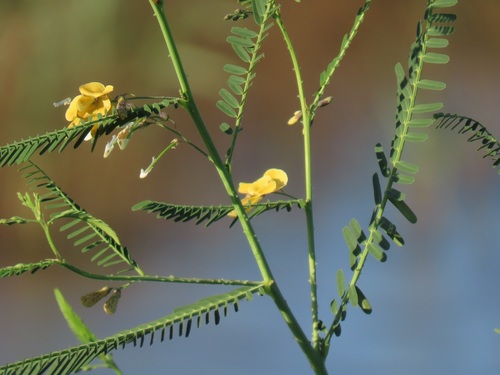
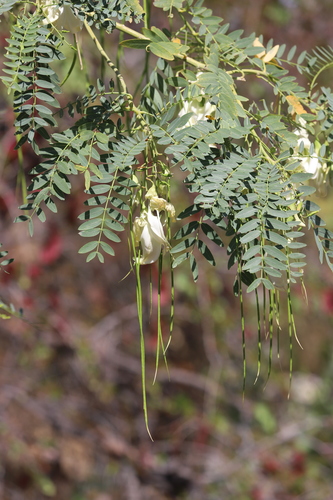
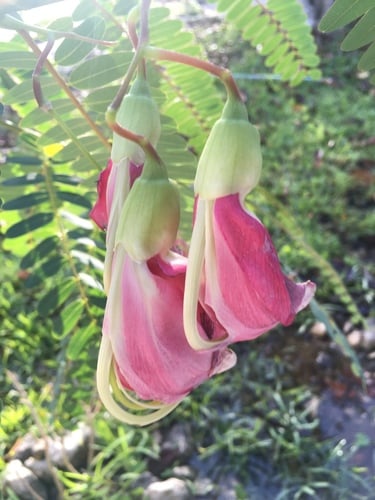
A medium sized tree. It grows 5-15 m high. It loses its leaves during the year. The leaves are twice divided. They are 4-6 cm long. There are about 6 segments 6-10 cm long with leaflets 1.5-2 cm long. There is a notch at the tip. The flowers are cream or white. They are about 0.5 cm across. They are borne in clusters. The fruit are straight pods. These are 10-12 cm long by 2 cm wide. The seeds are red and black.
Edible Uses
The seeds are roasted, shelled, and eaten with rice.
Traditional Uses
The seeds are roasted and shelled and eaten with rice.
This uses section is brief — help expand it
Distribution
It is a tropical plant. It grows in open forest. It needs full sun and a well-drained soil.
Where It Grows
Australia*,
Cultivation
Plants can be grown from seed.
Notes
There are 12 Adenanthera species in tropical Asia. Also as Mimosaceae.
Also Known As
Oon-doo, Rokowara
References (11)
- Bailey, F. M., 1913, Comprehensive Catalogue of Queensland Plants. Queensland Government. p 154
- Bircher, A. G. & Bircher, W. H., 2000, Encyclopedia of Fruit Trees and Edible Flowering Plants in Egypt and the Subtropics. AUC Press. p 10 (As Adenanthera atrosperma)
- Burkill, I.H., 1966, A Dictionary of the Economic Products of the Malay Peninsula. Ministry of Agriculture and Cooperatives, Kuala Lumpur, Malaysia. Vol 1 (A-H) p 45 (As Adenanthera atrosperma)
- Cherikoff V. & Isaacs, J., The Bush Food Handbook. How to gather, grow, process and cook Australian Wild Foods. Ti Tree Press, Australia p 198
- Cribb, A.B. & J.W., 1976, Wild Food in Australia, Fontana. p 103
Show all 11 references Hide references
- Elliot, W.R., & Jones, D.L., 1982, Encyclopedia of Australian Plants suitable for cultivation. Vol 2. Lothian. p 151
- Flora of Australia Volume 12, Mimosaceae (excl. Acacia) Caesalpiniaceae. Melbourne: CSIRO Australia (1998) p 3, 5
- Hedrick, U.P., 1919, (Ed.), Sturtevant's edible plants of the world. p 26
- Lazarides, M. & Hince, B., 1993, Handbook of Economic Plants of Australia, CSIRO. p 9
- Townsend, K., 1994, Across the Top. Gardening with Australian Plants in the tropics. Society for Growing Australian Plants, Townsville Branch Inc. p 70
- World Checklist of Useful Plant Species 2020. Royal Botanic Gardens, Kew