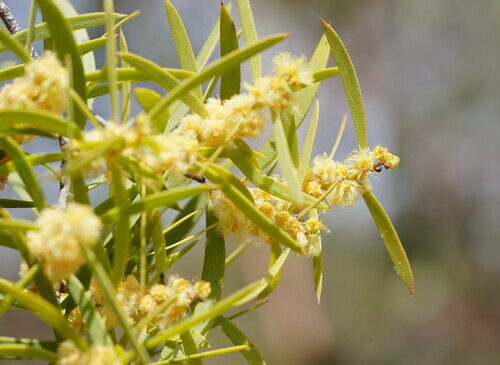
Psoralidium tenuiflorum - (Pursh) A.N.Egan & Reveal
(Pursh) A.N.Egan & Reveal
Slender Scurfy Pea
gbif· cc-by-nc
Desert Botanical Garden Herbarium (DES-)
gbif· cc-by-nc
University of New Mexico Herbarium (UNM-Vascular Plants)
gbif· cc-by-nc
Texas Lutheran University Herbarium (TLU-TLU)
Description
Psoralidium tenuiflorum is a PERENNIAL growing to 1 m (3ft 3in) by 0.2 m (0ft 8in) at a fast rate. See above for USDA hardiness. It is hardy to UK zone 8 and is not frost tender. The flowers are pollinated by Insects. It is noted for attracting wildlife. Suitable for: light (sandy), medium (loamy) and heavy (clay) soils, prefers well-drained soil and can grow in nutritionally poor soil. Suitable pH: mildly acid, neutral and basic (mildly alkaline) soils. It cannot grow in the shade. It prefers dry or moist soil and can tolerate drought.
Edible Uses
Root - raw or cooked. It can also be dried, ground into a powder and used in soups or with cereals for making bread etc. One report says that this species does not have a tuberous root. The plant (part not specified) is used as an ingredient of an intoxicant beverage made from mescal (Agave species). The slimflower scurfpea (Psoralidium tenuiflorum) is a perennial member of the bean family native to central and western North America. The only part reported to be edible is the root. These roots are white with brown skins, which can be peeled to slightly improve the flavor. Although small—typically 4–7 mm thick and 70–120 mm long—they are surprisingly sweet and aromatic, with a flavor combining notes of potato, licorice, and a characteristic scurfpea sweetness. The woody texture does not soften with cooking, yet the roots impart a distinctive and hearty flavor when simmered as a broth or used as a base in soups and stews. They can also be gnawed despite their firmness. Because of their small size and limited availability, slimflower scurfpea roots were not a major food resource for Native Americans, though they remain a fine example of a traditional wild plant food.
Medicinal Uses
A compound decoction of the roots is used as a treatment for TB. An infusion of the roots is taken to relieve headaches. An infusion of the plant is drunk, or the leaves are smoked, as a treatment for influenza.
Known Hazards
Although no specific mention of toxicity for this species has been found, at least some members of this genus are known to contain furanocoumarins, particularly psoralen and angelicin. These compounds can be found in low concentrations in many common foods including citrus fruirs, celery, parsley and parsnips. Ingestion or skin application of these compounds in larger quantities can cause skin photosensitization followed by hyperpigmentation.
Distribution
Central and suthern N. America - Montana to Wisconsin, south to Arizona, Texas and Missisippi
Where It Grows
Native to: Arizona, Colorado, Illinois, Iowa, Kentucky, Mexico Northeast, Mexico Northwest, Minnesota, Mississippi, Missouri, Montana, New Mexico, North Dakota, Ohio, Texas, Utah, West Virginia, Wyoming.
Cultivation
Succeeds in an ordinary garden soil. Requires a well-drained soil in a sunny position. Plants are very intolerant of root disturbance, they are best planted out into their permanent positions whilst still small. This species has a symbiotic relationship with certain soil bacteria, these bacteria form nodules on the roots and fix atmospheric nitrogen. Some of this nitrogen is utilized by the growing plant but some can also be used by other plants growing nearby. This species is adapted to dry, open habitats across its native range, and based on its distribution, it is likely suited to USDA Hardiness Zones 6–9. It is not known to be invasive or aggressive, and does not show weedy tendencies outside its natural environments.
Propagation
Pre-soak the seed for 24 hours in warm water and then sow in early to mid-spring in a greenhouse. To avoid root disturbance, either sow the seed in individual pots or pot up the young seedlings as soon as possible. Grow them in the pots until planted out in their final positions. It is usually impossible to transplant this species without fatal damage to the root. Division in spring. With great care since the plant resents root disturbance. It is virtually impossible to divide this species successfully.
Other Uses
The plant is a good soil stabilizer in sandy soils in its natural environment. Other Uses: A smudge made from plant stems can be used as a fumigant to repel mosquitoes. The plant tops can be fashioned into garlands for use as hats to protect from the sun on hot days.
Synonyms
Also Known As
Slimflower scurfpea