Polygala myrtifolia
L.
Myrtle leaf milkwort
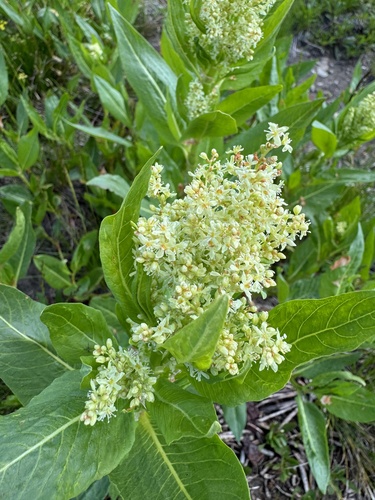
iNaturalist· cc-by
(c) Jeremy Gilmore, some rights reserved (CC BY), uploaded by Jeremy Gilmore
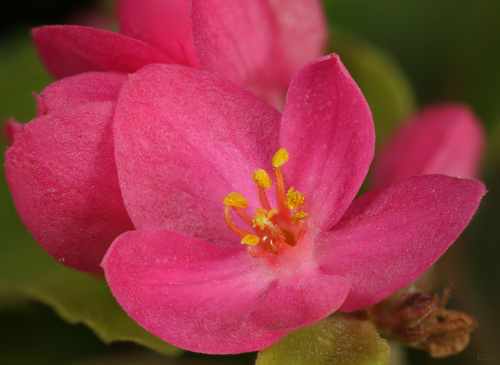
iNaturalist· cc-by
(c) RAP, some rights reserved (CC BY), uploaded by RAP
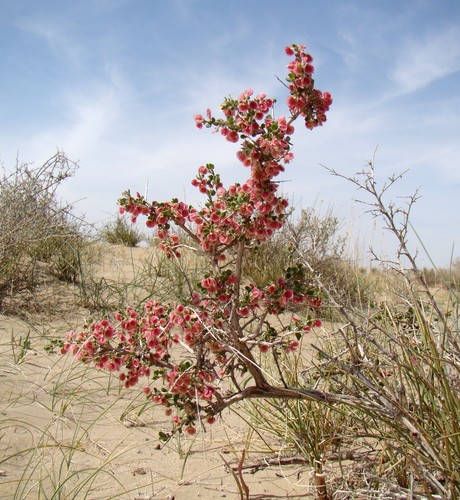
iNaturalist· cc-by
(c) Shaun Swanepoel, some rights reserved (CC BY), uploaded by Shaun Swanepoel
Summary
Source: WikipediaPolygala myrtifolia, the myrtle-leaf milkwort, is an evergreen 2–4 m tall South African shrub or small tree found along the southern and south-eastern coasts, from near Clanwilliam in the Western Cape to KwaZulu-Natal. It is a fast-growing pioneer plant, a typical fynbos component, and may be found on dunes, rocky places, along forest margins, beside streams, and in open grassland. It belongs to the milkwort family of Polygalaceae. The thin, oval, mucronate leaves, 25–50 mm long and up to 13 mm wide, are arranged alternately and have entire margins – some forms of P. myrtifolia have thin, needle-like leaves. The attractive mauve sweetpea-like flowers, which close at night, may also be pink, crimson or white, and have a characteristic brush-like tuft protruding from the keel. For pollination an intricate piston mechanism is used. The fruit is an oval, brown, dehiscent capsule which is narrowly winged. The species is often cultivated in South African gardens.
Description
A sprawling shrub. It grows 2 m tall. The young parts can be velvety. The leaves point upwards and are narrow with edges the curl back. The flowers are large and in short groups at the ends of the branches. They are purple and the side petals have 2 lobes. The lower lobe is longer.
Edible Uses
The flower nectar is eaten as a snack and is especially popular with children, who suck it directly from the flowers.
Traditional Uses
The nectar of the flowers is eaten as a snack.
This uses section is brief — help expand it
Medicinal Uses
The species is noted for its antibacterial and antifungal properties. Research conducted by the University of KwaZulu Natal found that aqueous extracts of P. myrtifolia proved effective against Candida albicans.
Distribution
It is a subtropical plant. It grows on rocky slopes.
Where It Grows
Africa, Australia, South Africa*, Southern Africa, St Helena, Tasmania,
Other Information
The flowers are especially sucked by children.
Also Known As
Septemberblom, Septemberbossie
References (3)
- De Vynk, J. C., et al, 2016, Indigenous edible plant use by contemporary Khoe-San descendants of South Africa's Cape South Coast. South African Journal of Botany. 102 (2016) 60-69
- Ruiters-Welcome, A. K., 2019, Food plants of southern Africa. Ph.D. thesis. Univ. of Johannesburg p 91
- Welcome, A. K. & Van Wyk, B.-E., 2019, An inventory and analysis of the food plants of southern Africa. South African Journal of Botany 122 (2019) 136–179