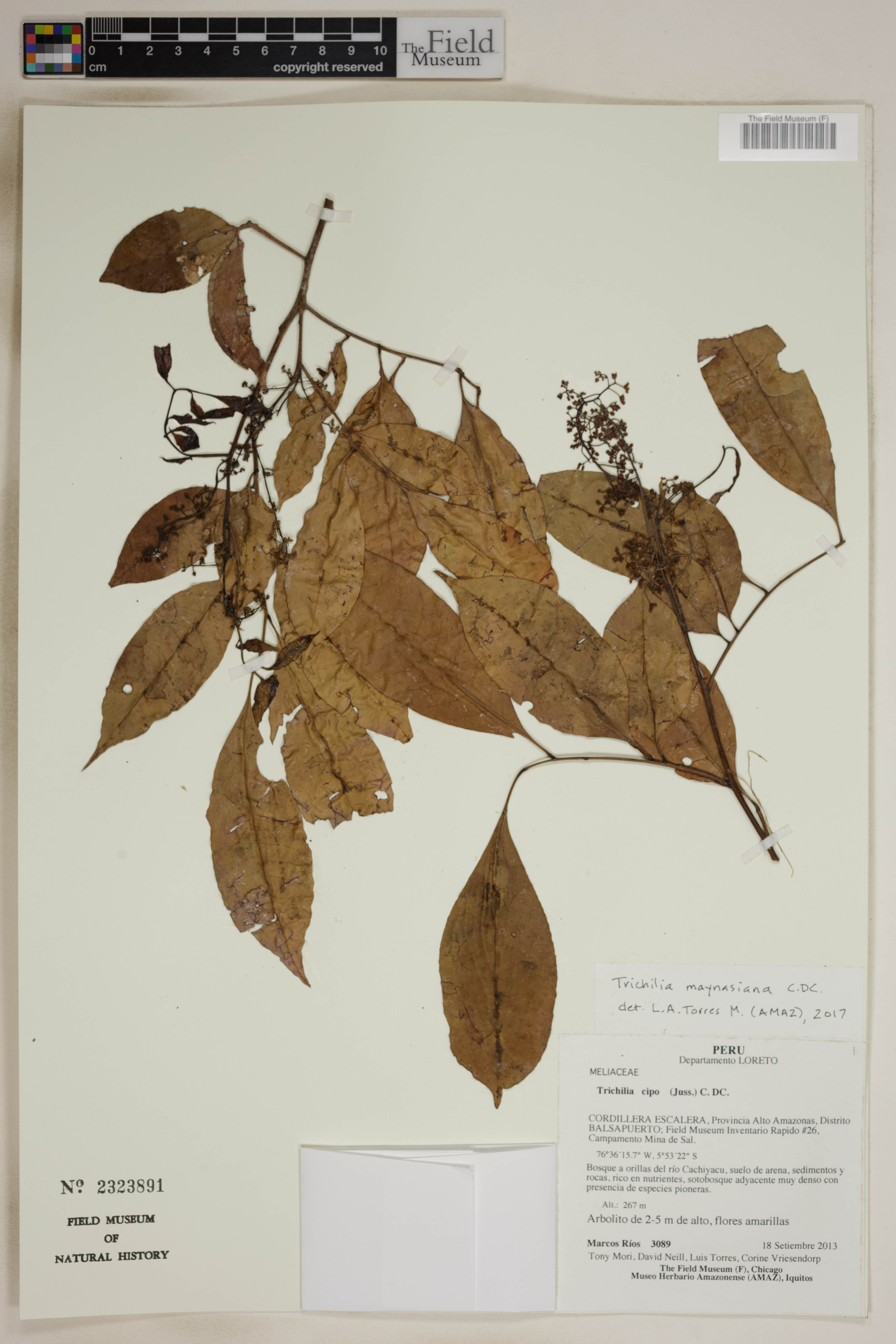
Aglaia foveolata
Pannell
gbif· cc-by-nc
D. M. Le : Field Museum of Natural History - Botany Department
gbif· cc0
President and Fellows of Harvard College
gbif· cc0
President and Fellows of Harvard College
Summary
Source: WikipediaAglaia foveolata is a species of tropical tree in the family Meliaceae. This plant occurs in Brunei, Indonesia, and Malaysia. It produces edible fruit. The bark contains silvestrol which is a potent inhibitor of ebola virus and Zika Virus replication.
Description
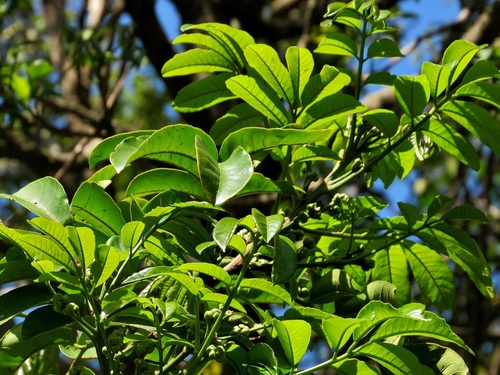
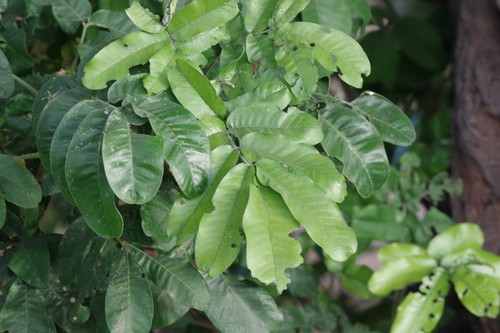
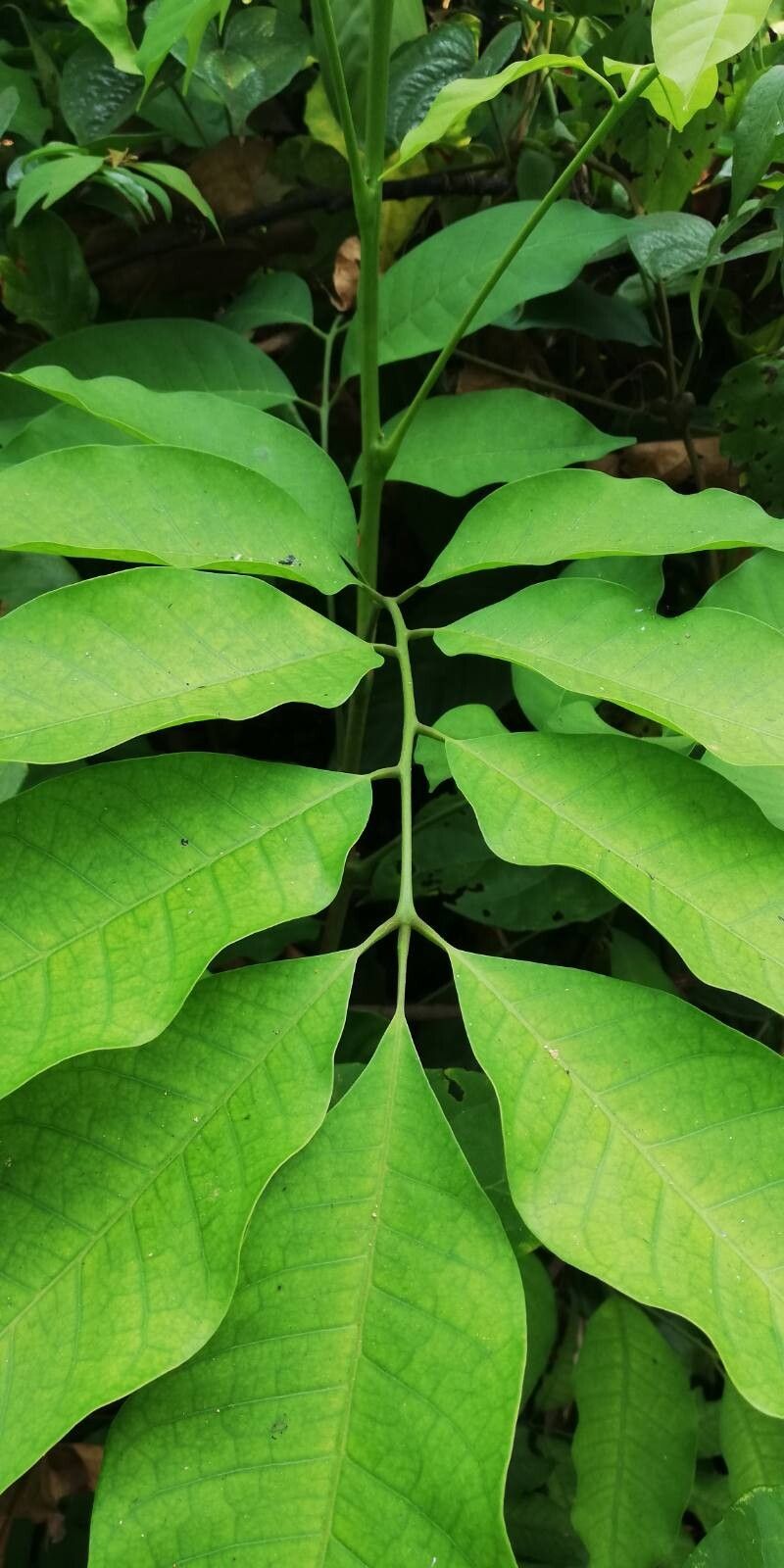
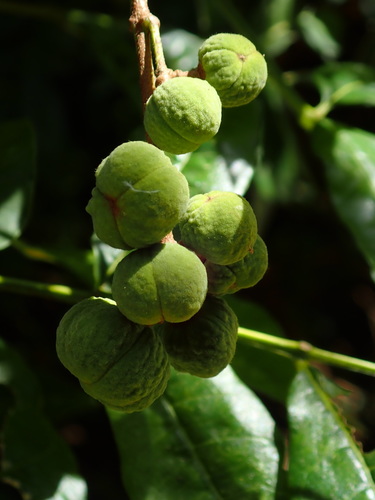
An evergreen tree. The crown is dense and feathery. It grows 20 m tall. The trunk can be 60 cm across. It has buttresses 75 cm high. Plants are separately male and female. The fruit are orange to brown and 2.5 cm long. They contain 2 seeds.
Edible Uses
The fruit has a sweet flavour. The report does not specifically say that the fruit is edible, but in general all sweet-tasting fruits in this genus should be edible. The subglobose, purple, brown, orange or yellow fruits are up to 25mm long, containing up to 2 seeds which can each be covered with a thin, sweet-tasting layer of flesh.
Traditional Uses
The fleshy layer around the seeds is edible.
This uses section is brief — help expand it
Medicinal Uses
The genus 'Aglaia' is the only source of the group of about 50 known representatives of compounds that bear a unique cyclopenta[b]tetrahydrobenzofuran skeleton. These compounds are more commonly called rocaglate or rocaglamide derivatives, or flavaglines, and most have been found to have potent insecticidal properties, antifungal, antiviral, antibacterial or anthelmintic bioactivity. Several of them exhibit pronounced cytotoxic activity against a range of human cancers. Since the first representative in this group was only discovered in 1982, this is one of the few recent examples of a completely new class of plant secondary metabolites of biological promise (see B. G. Wang et al., Biochem. Syst. Ecol. 32: 1223-1226. 2004; L.W. Chaidir et al., J. Nat. Prod. 64: 1216-1220. 2001).
Known Hazards
This is an at risk species.
Distribution
It is a tropical plant. It grows in dense forests and near swamps and rivers. It grows up to 1,000 m above sea level.
Where It Grows
Asia, Brunei, Indonesia, Malaysia, SE Asia,
Cultivation
A dioecious species, both male and female forms need to be grown if fruit and seed are required.
Other Uses
The genus 'Aglaia' is the only source of the group of about 50 known representatives of compounds that bear a unique cyclopenta[b]tetrahydrobenzofuran skeleton. These compounds are more commonly called rocaglate or rocaglamide derivatives, or flavaglines, and most have been found to have potent insecticidal properties, antifungal, antiviral, antibacterial or anthelmintic bioactivity. Several of them exhibit pronounced cytotoxic activity against a range of human cancers. Since the first representative in this group was only discovered in 1982, this is one of the few recent examples of a completely new class of plant secondary metabolites of biological promise (see B. G. Wang et al., Biochem. Syst. Ecol. 32: 1223-1226. 2004; L.W. Chaidir et al., J. Nat. Prod. 64: 1216-1220. 2001). The heartwood is brown or reddish-brown; the sapwood yellowish-brown.
Notes
The bark contains silvestrol a potent inhibitor of ebola virus. Also the leaves. Also Corona virus. It is an at risk species.
References (7)
- Edwards, R. B. et al, 2006, Silvestrol, a Rocaglate Derivative from the Indonesian Plant Aglaia foveolata, Has Significant Bcl-2- and p53-Independent Anti-Tumor Activity against Chronic Lymphocytic Leukemia Cells. Blood (2006) 108 (11): 2600.
- Glitscher, M., et al, 2018, Inhibition of Hepatitis E Virus Spread by the Natural Compound Silvestrol. Viruses 10(6) 2018 Jun 2
- Kim, S., et al, 2007, Silvestrol, a Potential Anticancer Rocaglate Derivative from Aglaia foveolata, Induces Apoptosis in LNCaP Cells through the Mitochondrial/Apoptosome Pathway without Activation of Executioner Caspase-3 or -7. Anticancer Res. 2007 Jul-Aug; 27(4B: 2175-2183
- Muller, C., et al, 2020, Comparison of Broad-Spectrum Antiviral Activities of the Synthetic Rocaglate CR-31-B (-) and the eIF4A-inhibitor Silvestrol. Antiviral Res. 175, 104706
- Pan, L., et al, 2014, Rocaglamide, Silvestrol and Structurally Related Bioactive Compounds from Aglaia Species. Nat Prod Rep. 2014 July 11; 31(7): 924–939
Show all 7 references Hide references
- Salim, A. A., 2007, Constituents of the Leaves and Stem Bark of Aglaia foveolata. Tetrahedron. 2007 Aug 13; 63(33): 7926–7934.
- Silvestrol - Wikipedia