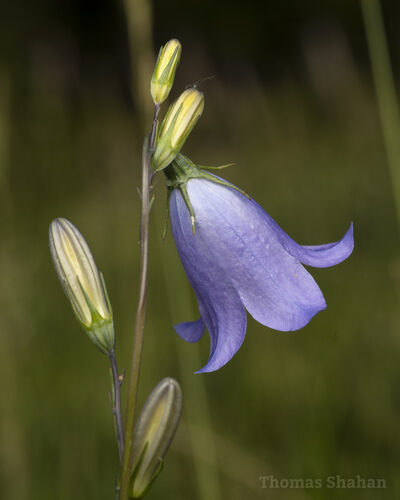
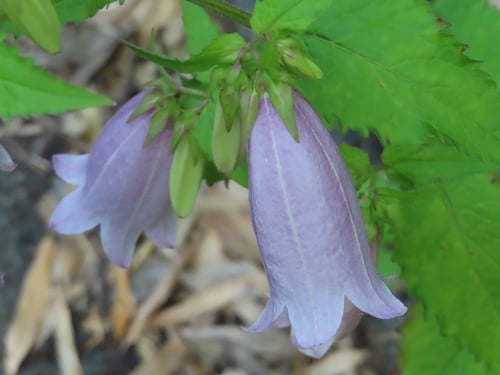
Codonopsis convolvulacea
Kurz
iNaturalist· cc-by-nc
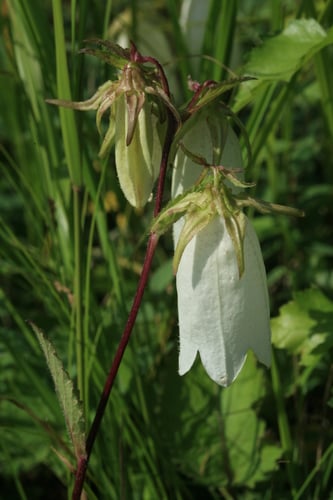
(c) youling, some rights reserved (CC BY-NC)
iNaturalist· cc-by-nc
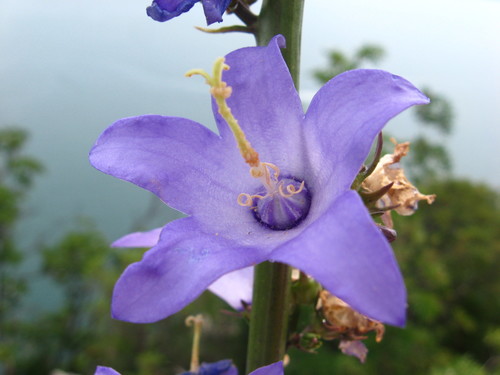
(c) youling, some rights reserved (CC BY-NC)
iNaturalist· cc-by-nc
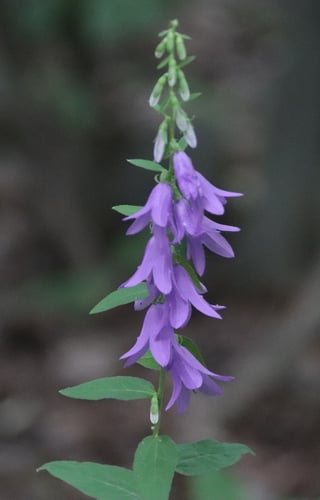
(c) 桃子, some rights reserved (CC BY-NC)
Description
A twining herb. The stems are 1 m long and they have a few branches. It has tuberous roots that are round or oval and 2.5-5 cm long by 1-1.5 cm wide. The leaves are alternate or opposite. The leaf blades are narrow and sword shaped to oval. They are 2-10 cm long by 0.4-3.5 cm wide. The base is wedge shaped or rounded. The edges can be smooth or with rounded teeth. The flowers occur singly on the edges of branches. They are bell shaped and blue of purple. There are many brown, oblong seeds.
Edible Uses
Codonopsis lanceolata (Korean: deodeok) is used as a food in Korean cuisine.
Traditional Uses
The roots are boiled and eaten as a vegetable.
This uses section is brief — help expand it
Medicinal Uses
Codonopsis pilosula (Chinese: 党参; pinyin: dǎngshēn) is an important medicinal herb in traditional Chinese medicine.
Distribution
It is a temperate plant. In the Himalayas it grows between 2,200-4,200 m above sea level.
Where It Grows
Asia, Bhutan, China, Himalayas, Myanmar, Nepal, Northeastern India, Sikkim, SE Asia, Tibet,
Synonyms
Also Known As
Kulduma, Puldonyen, Trikyi metok
References (1)
- Ghimire, S. K., et al, 2008, Non-Timber Forest Products of Nepal Himalaya. WWF Nepal p 31