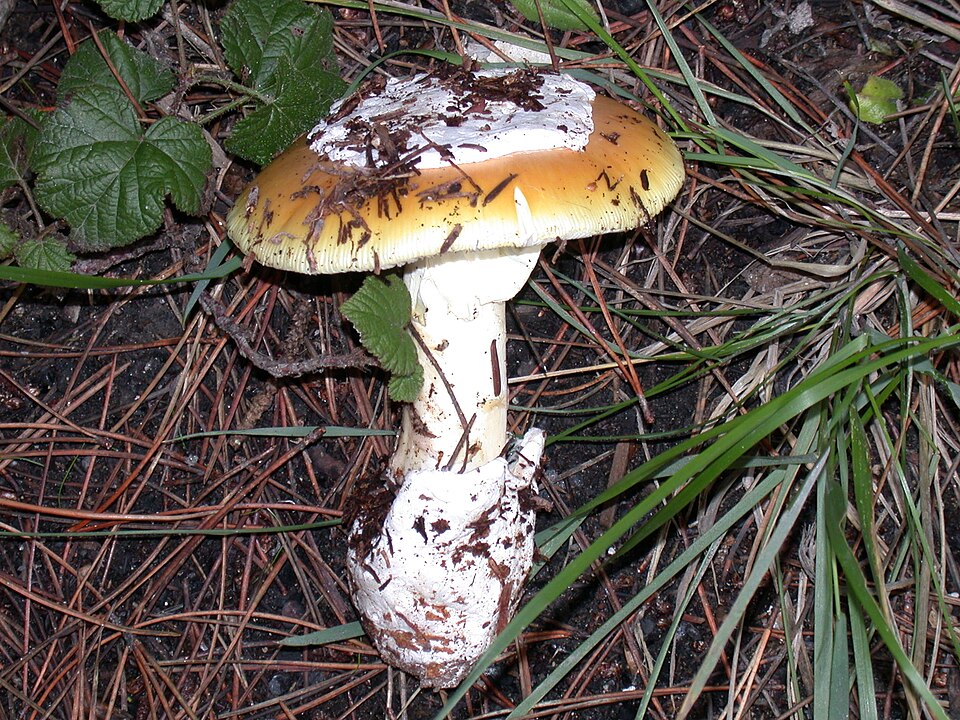
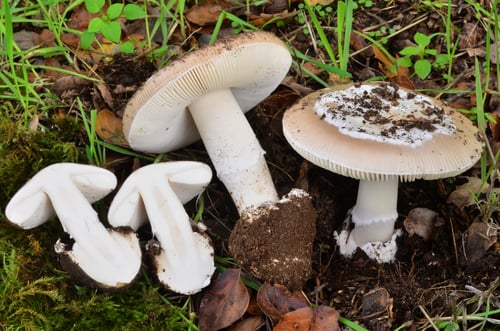
Amanita casearea
(Scop.) Pers.
Caesar's mushroom
Amanitaceae Edible: Mushroom, Fungus
No photos yet for Amanita casearea
Sign in to contribute a photoDescription
A temperate mushroom in the Amanitaceae family, popular and sold in local markets.
This description is brief — help expand it
Edible Uses
The mushroom fungus is consumed.
Distribution
It is a temperate plant.
Where It Grows
Andorra, Asia, Bulgaria, Central America, China, Europe, Georgia, Guatemala, Italy, Mediterranean, Mexico, Nepal, Turkey, Türkiye,
Other Information
It is sold in local markets. It is popular.
Synonyms
Agaricus caesareus Scop.
Also Known As
Amarillo, Chiwiscoyo, Cozahuitl y tecomate, Dhar shyamo, Niq'vi, Tzitelquda, Yema, Yemita
References (9)
- Bussman, R. W., et al, 2016, A comparative ethnobotany of Khevsureti, Samtskhe-Javakheti, Tusheti, Svaneti, and Racha-Lechkhumi, Republic of Georgia (Sakartvelo), Caucasus. Journal of Ethnobiology and Ethnomedicine (2016) 12:43
- Cortes, L.E.U., et al, 2018, Ethnomycology and mushroom selling in a market from Northwest Puebla, México. Scientia Fungorum vol. 47: 47-55
- Estrada-Martinez, E., et al, 2009, Contribucion al conocimiento etnomicologico de los Hongos Comestibles Silvestres de Mercados Regionales y Comunidades de la Sierra Nevada (Mexico). Intercienca Jan 2009 Vol. 34 No. 1
- Fan, L., et al, The Use of Edible Wild Plants and Fungi in Korean-Chinese Villages. Journal of Environmental Information Science 44-5
- Farfan B., et al, 2007, Mazahua Ethnobotany and Subsistence in the Monarch Butterfly Biosphere Reserve, Mexico. Economic Botany 61(2) pp 173-191
Show all 9 references Hide references
- Pandy, M., et al, 2006, Use of Wild Mushrooms Among the Tamangs of Nepal. Nepal Journal of Science and Technology 7 (2006) 97-104
- Ponce, J. P. M. et al, 2019, Ethnomycological knowledge among Kaqchikel, indigenous Maya people of Guatemalan Highlands. Journal of Ethnobiology and Ethnomedicine (2019) 15:36
- Quinonez-Martinez, M., et al, 2014, Knowledge and use of edible mushrooms in two municipalities of the Sierra Tarahumara, Chihuahua, Mexico. Journal of Ethnobiology and Ethnomedicine 2014, 10:67
- Stoyneva-Gartner, M.P. & Uzunov, B.A., 2015, An Ethnobiological Glance on Globalization Impact on the Traditional Use of Algae and Fungi as Food in Bulgaria. J Nutr Food Sci 2015, 5:5