Crataegus azarolus
L.
Mediterranean medlar, Azarole
iNaturalist· cc-by-nc
(c) Reflectitur Photons, some rights reserved (CC BY-NC)
iNaturalist· cc-by-nc
(c) Reflectitur Photons, some rights reserved (CC BY-NC)
iNaturalist· cc-by-nc
(c) Reflectitur Photons, some rights reserved (CC BY-NC)
Summary
Source: WikipediaCrataegus azarolus is a species of hawthorn known by the common names azarole, azerole (from Arabic: الزُّعرُورَة, romanized: az-zu'rūra) and Mediterranean medlar. It is native to the Mediterranean Basin and is a common plant there, growing on sites comparable to those the European common hawthorn grows on. In the Arab countries it is the most common hawthorn species. When growing in the wild, the azerole bears plentiful crops of haw fruits, which are similar to the haws of the European common hawthorn, but more plump. C. azarolus is often divided into subspecies or varieties, for example Christensen in his monograph uses four varieties: C. azarolus var. azarolus has orange fruit. C. azarolus var. aronia L., has yellowish fruit often with some red tinges C. azarolus var. chlorocarpa (Moris) K.I.Chr. has yellowish fruit C. azarolus var. pontica (K.Koch) K.I.Chr. has yellowish or orange fruit C. azarolus has been used historically for a number of medicinal purposes.
Description
A small tree to 4-10 m high. The tree has thorns. The leaves are divided a bit like fingers on a hand. The flowers are small and white. The flowers have a bad smell which attract midges which are important for fertilisation. Fruit can be 2.5 cm across. They are red or yellow. There are 5 seeds inside. The seeds often cling together.
Edible Uses
The fruit can be eaten raw or used cooked in pies and preserves, and can also be dried for later use. It is highly variable in size and colour, reaching up to 25mm in diameter. In warm temperate climates the fruit develops more sugars, producing a fragrant, sugary pulp with a mildly acid flavour suitable for eating out of hand. In cooler zones it does not develop as fully and is better cooked or used in preserves. The flavour is generally pleasantly acid. Up to five fairly large seeds sit at the centre, and as these tend to fuse together, eating the fruit is much like eating a cherry with a single stone.
Traditional Uses
The fruit can be eaten raw or cooked and used in pies and preserves. They can be dried. They are used for jam. They can be used for marmalade and wines. The flowers can be used in liqueurs. The young buds and leaves are used in salads.
Medicinal Uses
Though no specific research has been recorded for this species, the fruits and flowers of hawthorns broadly are well established in herbal folk medicine as a heart tonic, and modern research supports this. Both fruits and flowers exert a hypotensive effect and act as a gentle, direct heart tonic. They are particularly suited to treating a weak heart accompanied by high blood pressure. Prolonged use is required for effective results, and the plant is typically taken as a tea or tincture.
Distribution
It suits warm temperate areas. When young it needs a well drained moisture retaining soil but once established can grow in very wet soils and survive drought. It grows in areas with an annual rainfall between 400-1,200 mm. It can grow on chalky soils but also heavy clays. Sun is required for good fruit production. It can grow in arid places. Temperate. It suits hardiness zones 6-10.
Where It Grows
Africa, Algeria, Australia, Azerbaijan, Britain, Caucasus, Central Asia, Crete, Cyprus, Egypt, Europe, France, Greece, Iran, Iraq, Israel, Italy, Jordan, Kyrgyzstan, Lebanon, Mediterranean, Middle East, North Africa, Spain, Syria, Tajikistan, Tunisia, Turkey, Türkiye, Turkmenistan, Uzbekistan, Yugoslavia,
Cultivation
A very easily grown plant, it prefers a well-drained moisture retentive loamy soil but is not at all fussy. Once established, it succeeds in excessively moist soils and also tolerates drought. It grows well on a chalk soil and also in heavy clay soils. A position in full sun is best when plants are being grown for their fruit, they also succeed in semi-shade though fruit yields and quality will be lower in such a position. Most members of this genus succeed in exposed positions, they also tolerate atmospheric pollution. The azarole has long been cultivated for its edible fruit in S. Europe, though it is now going out of favour. There are some named varieties. Seedling trees take from 5 - 8 years before they start bearing fruit, though grafted trees will often flower heavily in their third year. The flowers have a foetid smell somewhat like decaying fish. This attracts midges which are the main means of fertilization. When freshly open, the flowers have more pleasant scent with balsamic undertones. Hawthorns in general hybridize freely with other members of the genus. Seedlings should not be left in a seedbed for more than 2 years without being transplanted.
Propagation
Seed is best sown fresh in autumn in a cold frame; some will germinate the following spring, though most will likely take a further year. Stored seed germinates slowly and erratically — warm stratify for 3 months at 15°C, then cold stratify for 3 months at 4°C, after which germination may still take another 18 months. Scarifying before stratification may shorten this period, and fermenting the seed for a few days in its own pulp may also help. Alternatively, harvest seed green — once the embryo is fully formed but before the seedcoat hardens — and sow immediately in a cold frame for possible spring germination. For small quantities, pot seedlings individually as soon as they are large enough to handle and grow on for the first year before planting out in late spring. For larger quantities, sow directly in a protected outdoor seedbed and undercut the roots if plants will remain there for more than two years.
Other Uses
The wood is heavy, hard, tough, and close-grained. It is practical for small items such as tool handles and mallets.
Production
Seedling trees take 5-8 years before bearing fruit. Grafted trees bear well in the third year. Fruit is sweeter in warmer climates.
Other Information
It is cultivated in Mediterranean climates for its fruit.
Notes
There are 200 or more Crataegus species.
Nutrition
| Part | Moisture | kJ | kcal | Protein | Vit A | Vit C | Iron | Zinc |
|---|---|---|---|---|---|---|---|---|
| Fruit | — | — | — | 1.4 | 9.9 | 4.6 | 0.2 | — |
Synonyms
Also Known As
Alic, Azarole, Eastern hawthorns, Geiwzh, Gijok, Givij, Gizran, Goeazh, Goezh, Guhij, Hizran, Medlar, Mosphilia, Muzmuldek, Neapolitan medlar, Spanish pine, Tafirez, Tazarourt, Tefifiha, Za'rur, Zaaroura, Zinebit
References (38)
- Ahmad, S. A. & Askari, A. A., 2015, Ethnobotany of the Hawraman Region of Kurdistan Iraq. Harvard Papers in Botany, Vol. 20, No. 1, 2015, pp. 85–89
- Al-Qura'n, S. A., 2010, Ethnobotanical and Ecological Studies of Wild Edible Plants in Jordan. Libyan Agriculture Research Center Journal International 1(4):231-243
- Arora, R. K., 2014, Diversity in Underutilized Plant Species - An Asia-Pacific Perspective. Bioversity International. p 65
- Bianchini, F., Corbetta, F., and Pistoia, M., 1975, Fruits of the Earth. Cassell. p 136
- Boudraa, S. et al, 2010, Mineral and vitamin composition of fruits of five underexploited species in Algeria: Fruits. Vol. 65:75-84
Show all 38 references Hide references
- Ciftcioglu, C. G., 2015, Sustainable wild-collection of medicinal and edible plants in Lefke region of North Cyprus. Agroforest Syst. Springer
- Della, A., et al, 2006, An ethnobotanical survey of wild edible plants of Paphos and Larnaca countryside of Cyprus. J. Ethnobiol. Ethnomed. 2:34
- Demir, I. & Ayaz, N., 2022, Wild edible plants contributing to the traditional foods of Mardin (Turkey) Province. Indian Journal of Traditional Knowledge Vol 21(3), July 2022, pp 569-582
- Egea, I., et al., 2010, Six Edible Wild fruits as potential Antioxidant Additives or Nutritional Supplements. Plant Foods for Human Nutrition. 65:121-129
- Ertug, F, Yenen Bitkiler. Resimli Türkiye Florası -I- Flora of Turkey - Ethnobotany supplement
- Etherington, K., & Imwold, D., (Eds), 2001, Botanica's Trees & Shrubs. The illustrated A-Z of over 8500 trees and shrubs. Random House, Australia. p 239
- Facciola, S., 1998, Cornucopia 2: a Source Book of Edible Plants. Kampong Publications, p 197
- Flowerdew, B., 2000, Complete Fruit Book. Kyle Cathie Ltd., London. p 180
- Galalaey, A. M. K., et al, 2021, Ethnobotanical study of some wild edible plants in Hujran Bason, Kurdistan Region of Iraq. ZANCO Journal of Pure and Applied Sciences. Salahaddin University-Erbil p 27
- Glowinski, L., 1999, The Complete Book of Fruit Growing in Australia. Lothian. p 43, 44
- Hedrick, U.P., 1919, (Ed.), Sturtevant's edible plants of the world. p 224
- Heywood, V. H. & Zohary, D.,1995, A Catalogue of the Wild Relatives of Cultivated Plants Native to Europe. Flora Mediterranea 5 - 1995, p 394
- Hibbert, M., 2002, The Aussie Plant Finder 2002, Florilegium. p 75
- Jardin, C., 1970, List of Foods Used In Africa, FAO Nutrition Information Document Series No 2.p 131
- John, L., & Stevenson, V., 1979, The Complete Book of Fruit. Angus & Robertson p 67
- Kiple, K.F. & Ornelas, K.C., (eds), 2000, The Cambridge World History of Food. CUP p 1725
- Lord, E.E., & Willis, J.H., 1999, Shrubs and Trees for Australian gardens. Lothian. p 52
- Lyle, S., 2006, Discovering fruit and nuts. Land Links. p 161
- Mraihi, F., 2013, Phenolic Contents and Antioxidant Potential of Crataegus Fruits Grown in Tunisia as determined by DPPH, FRAP and b-Carotent/Lineleic Acid Assay. Journal of Chemistry Volume 2013, Article ID 378264, 6 pages
- Plants for a Future database, The Field, Penpol, Lostwithiel, Cornwall, PL22 0NG, UK. http://www.scs.leeds.ac.uk/pfaf/
- Royal Botanic Gardens, Kew (1999). Survey of Economic Plants for Arid and Semi-Arid Lands (SEPASAL) database. Published on the Internet; http://www.rbgkew.org.uk/ceb/sepasal/internet [Accessed 10th June 2011]
- Ryan, S., 2008, Dicksonia. Rare Plants Manual. Hyland House. p 19
- Sansanelli, S., et al, 2014, Wild food plants traditionall consumed in the area of Bologna (Emilia Romagna region, Italy). Journal of Ethnobiology and Ethnomedicine 10:69
- Sfikas, G., 1984, Trees and shrubs of Greece. Efstathiadis Group. Athens. p 76
- Sp. pl. 1:477. 1753
- Sulamain, N., et al, 2023, The Importance of Becoming Tamed: Wild Food Plants as Possible Novel Crops in Selected Food-Insecure Regions. Horticulturae 2023, 9, 171.
- USDA, ARS, National Genetic Resources Program. Germplasm Resources Information Network - (GRIN). [Online Database] National Germplasm Resources Laboratory, Beltsville, Maryland. Available: www.ars-grin.gov/cgi-bin/npgs/html/econ.pl (10 April 2000)
- van Wyk, B., 2005, Food Plants of the World. An illustrated guide. Timber press. p 237
- Wild Edible Plants in Lebanon. Promoting dietary diversity in poor communities in Lebanon. http://www.wildedibleplants.org/
- World Checklist of Useful Plant Species 2020. Royal Botanic Gardens, Kew
- Yesil, Y., et al, 2019, Wild edible plants in Yeşilli (Mardin-Turkey), a multicultural area. Journal of Ethnobiology and Ethnomedicine (2019) 15:52
- Yesil, Y., et al, 2019, Traditional knowledge of wild edible plants in Hasankeyf (Batman Province, Turkey). Acta Societatis Botanicorum Poloniae. 88(3):3633
- Zeven, A. C. & de West, J. M. J., 1982, Dictionary of cultivated plants and their regions of diversity. Wageningen. p 85, 118
More from Rosaceae
Pygeum turnerianum
Nut tree
Pyracantha angustifolia
Narrow-leaf Firethorn, Orange firethorn
Pyracantha coccinea
Everlasting Thorn, Coral Tree, Scarlet firethorn
Pyracantha crenato-serrata - (Hance.)Rehder.
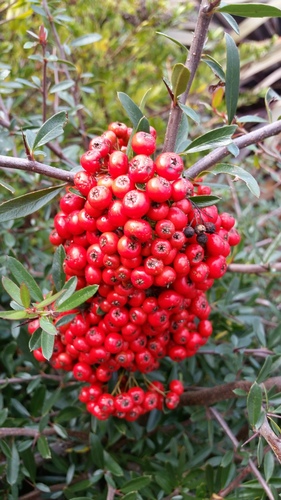
Pyracantha crenatoserrata
Chinese Firethorn
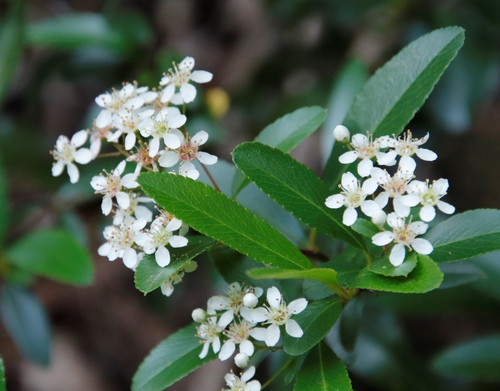
Pyracantha crenulata
Nepal Firethorn, Nepalese white thorn