Crataegus aestivalis
(Walter) Torr. & A. Gray
Mayhaw, May hawthorn, Apple hawthorn, Shining hawthorn
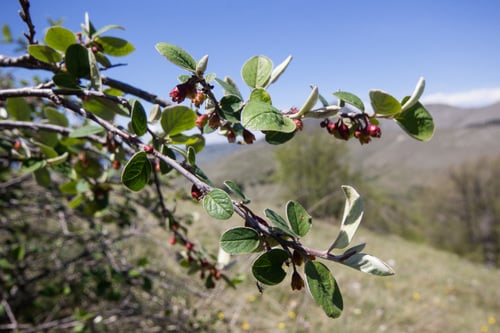
iNaturalist· cc-by-nc
(c) steff_leigh, some rights reserved (CC BY-NC)
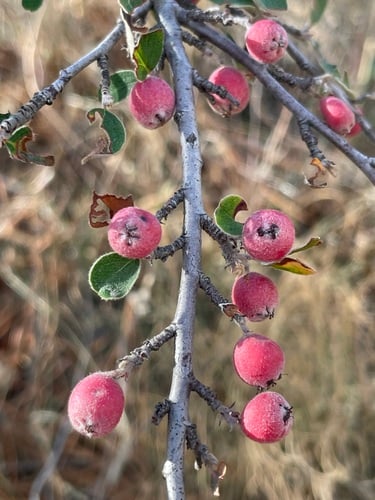
iNaturalist· cc-by-nc
(c) ashely523, some rights reserved (CC BY-NC)
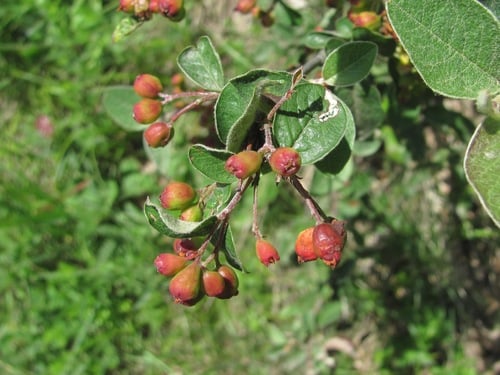
iNaturalist· cc-by-nc
(c) zetch, some rights reserved (CC BY-NC)
Summary
Source: WikipediaCrataegus aestivalis, known as the eastern mayhaw, is a shrub or small tree of the southeastern United States that grows in low-lying or wet areas from eastern Alabama to central Florida and Virginia. It is one of several species of hawthorn with fruits known as "mayhaws", which are harvested for use in making mayhaw jelly, considered a delicacy in many areas of the South. Other species of mayhaws include Crataegus opaca, the western May Hawthorn, which is native from east Texas to Alabama. The jelly is a rosy color, with a delicate flavor. It's sometimes commercially available at farm stands or specialty Southern food stores.
Description
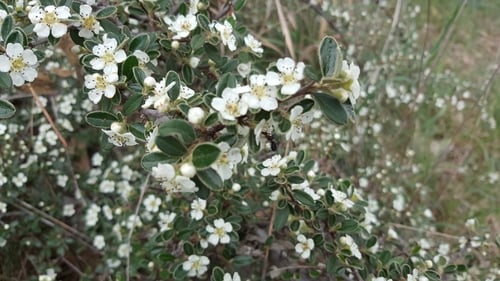
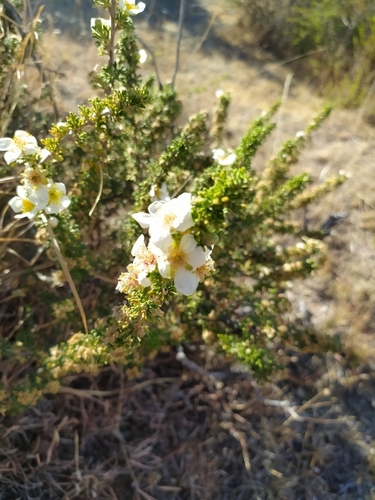
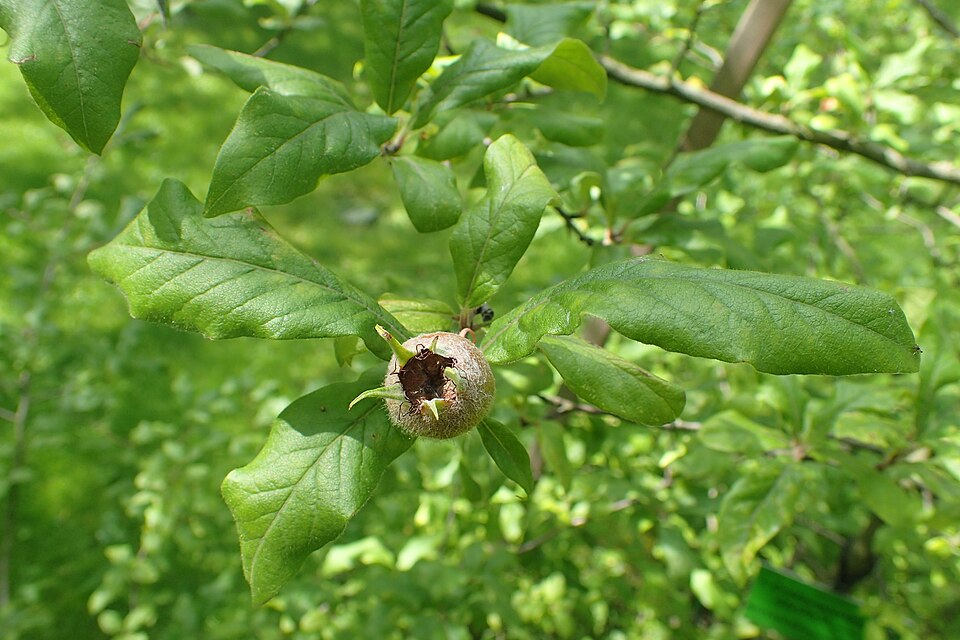
A large shrub or small tree. The crown is rounded and compact. It grows 9 m high. The trunk is 15 cm across. The bark is grey with red-brown inner layers. It becomes cracked and scaly. The leaves are 2.5-5 cm long by 10-19 mm wide. They are narrowly oval. They have a short point at the tip. They narrow gradually to the base. There are coarse teeth above the middle. The leaves are shiny and dark green. They are yellow-green underneath with tufts of hairs near the veins. The flowers are 19 mm wide. They have 5 white petals. There are 15-20 pink stamens. The fruit are large, red and acid. They are 10 mm across. There are some named cultivated varieties.
Edible Uses
The fruit can be eaten raw or cooked and grows up to 2cm in diameter, with a juicy, acid flesh and pleasant flavour. It is widely used and highly valued in parts of southern North America, where it is often gathered in quantity from the wild. Its acidity makes it a favourite for preserves and jellies. The fruit can also be dried for later use. Up to five fairly large seeds occupy the centre, and as these tend to fuse together, eating the fruit is much like eating a cherry with a single stone.
Traditional Uses
The fruit are eaten raw or used for tarts and preserves. They can be stewed, made into jams, marmalades and tarts. The fruit can be dried for later use. The seeds can be boiled or roasted and used as a coffee substitute.
Medicinal Uses
Though no specific research has been recorded for this species, the fruits and flowers of hawthorns broadly are well established in herbal folk medicine as a heart tonic, and modern research supports this. Both fruits and flowers exert a hypotensive effect and act as a gentle, direct heart tonic. They are particularly suited to treating a weak heart accompanied by high blood pressure. Prolonged use is required for effective results, and the plant is typically taken as a tea or tincture.
Distribution
It is a temperate plant. It grows on wet river banks and the edges of swamps. Trees can grow in exposed positions. They are tolerant to wind. They can tolerate pollution. They do best in full sun but can grow in shade. They need 250-500 hours of chilling. They do best in well drained sandy loams. They do best with pH of 6-7 but can tolerate acid and alkaline conditions. They can tolerate waterlogged conditions.
Where It Grows
Australia, North America*, USA,
Cultivation
Plants can be grown from seed. The seed need cold treatment. Plants can also be grafted. They can be grown from cuttings. A spacing of 5-6 m is suitable.
Propagation
Seed is best sown fresh in autumn in a cold frame; some will germinate the following spring, though most will likely take a further year. Stored seed germinates slowly and erratically — warm stratify for 3 months at 15°C, then cold stratify for 3 months at 4°C, after which germination may still take another 18 months. Scarifying before stratification may shorten this period, and fermenting the seed for a few days in its own pulp may also help. Alternatively, harvest seed green — once the embryo is fully formed but before the seedcoat hardens — and sow immediately in a cold frame for possible spring germination. For small quantities, pot seedlings individually as soon as they are large enough to handle and grow on for the first year before planting out in late spring. For larger quantities, sow directly in a protected outdoor seedbed and undercut the roots if plants will remain there for more than two years.
Other Uses
Because it tolerates a wide range of sites, this species is useful for stabilising banks, planting as shelterbelts, and providing protection against wind and water erosion. The wood is heavy, hard, and strong, though not available in sizes large enough for commercial use. It is nonetheless practical for small items such as tool handles and mallets.
Production
Seedlings trees take 5-8 years to fruit. Fruit take 30 days to ripen after fruit are set. There can be 30-60 kg of fruit on one tree in a year. Fruit are harvested when fully ripe.
Notes
There are 200 or more Crataegus species.
Synonyms
References (14)
- Beckstrom-Sternberg, Stephen M., and James A. Duke. "The Foodplant Database." http://probe.nalusda.gov:8300/cgi-bin/browse/foodplantdb.(ACEDB version 4.0 - data version July 1994)
- Facciola, S., 1998, Cornucopia 2: a Source Book of Edible Plants. Kampong Publications, p 196
- Fl. N. Amer. 1:468. 1840
- Glowinski, L., 1999, The Complete Book of Fruit Growing in Australia. Lothian. p 45
- Hedrick, U.P., 1919, (Ed.), Sturtevant's edible plants of the world. p 224
Show all 14 references Hide references
- Hibbert, M., 2002, The Aussie Plant Finder 2002, Florilegium. p 75
- Little, E.L., 1980, National Audubon Society Field Guide to North American Trees. Alfred A. Knopf. p 462
- Lyle, S., 2006, Discovering fruit and nuts. Land Links. p 162
- Plants for a Future database, The Field, Penpol, Lostwithiel, Cornwall, PL22 0NG, UK. http://www.scs.leeds.ac.uk/pfaf/
- Recher, P, 2001, Fruit Spirit Botanical Gardens Plant Index. www.nrg.com.au/~recher/ seedlist.html p 2
- Tozer, F., 2007, The Uses of Wild Plants. Green Man Publishing. p 73
- USDA, ARS, National Genetic Resources Program. Germplasm Resources Information Network - (GRIN). [Online Database] National Germplasm Resources Laboratory, Beltsville, Maryland. Available: www.ars-grin.gov/cgi-bin/npgs/html/econ.pl (10 April 2000)
- Wiersema, J. H. & Leon, B., 2013, World Economic Plants. A Standard Reference CRC Press. 2nd Ed. p 208
- World Checklist of Useful Plant Species 2020. Royal Botanic Gardens, Kew