Prunus fruticosa
Pall.
European dwarf cherry, European ground cherry
iNaturalist· cc-by
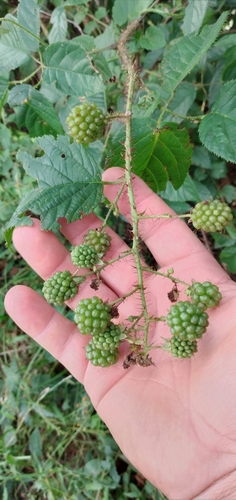
(c) Елена Патерикина, some rights reserved (CC BY), uploaded by Елена Патерикина
iNaturalist· cc-by-nc
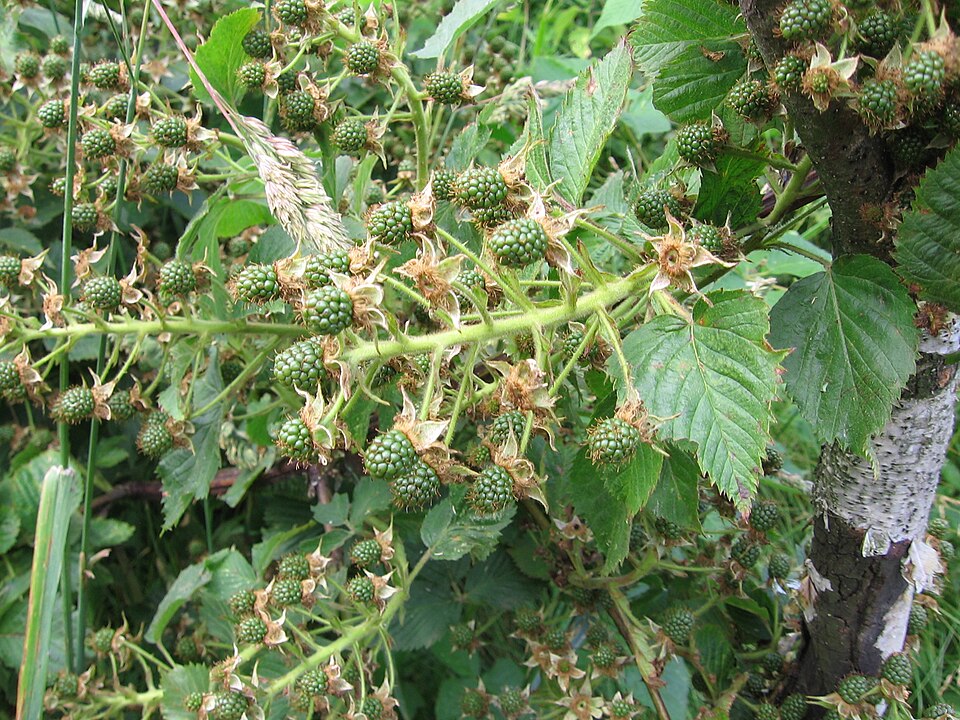
(c) Sebastian J. Dunkl, some rights reserved (CC BY-NC), uploaded by Sebastian J. Dunkl
iNaturalist· cc-by-nc
(c) Václav Dvořák, some rights reserved (CC BY-NC), uploaded by Václav Dvořák
Summary
Source: WikipediaPrunus fruticosa, the European dwarf cherry, dwarf cherry, Mongolian cherry or steppe cherry is a deciduous, xerophytic, winter-hardy, cherry-bearing shrub. It is also called ground cherry and European ground cherry, but is not to be confused with plants in the distinct "Groundcherry" genus of Physalis. Prunus fruticosa is native to central and southeastern Europe, Ukraine, European Russia, the northern Caucasus, Kazakhstan, and the Altai.
Description
A shrub. It grows 1.2 m high and spreads 2.4 m wide. It loses its leaves during the year. The leaves are glossy and green. They are 5 cm long. The flowers are white and have frilly edges. There are 3-4 flowers in a group. The fruit are dark red and cherry like. They are edible.
Edible Uses
The fruit can be eaten raw or cooked and has a cherry-like flavour, though it is very harsh and acid. Its tart taste means it is also well suited to being made into preserves or dried for later use. The fruit is about 15mm in diameter and contains one large seed. The seed can be eaten raw or cooked, but should not be consumed if it is too bitter.
Traditional Uses
The fruit are eaten raw or dried. They can be used for jams, jellies and pies.
This uses section is brief — help expand it
Medicinal Uses
No specific medicinal use has been recorded for this species, but like all members of the genus it contains amygdalin and prunasin, compounds that break down in water to release hydrocyanic acid (cyanide or prussic acid). In small amounts, this highly poisonous substance is said to stimulate respiration, improve digestion, and produce a sense of well-being.
Known Hazards
All Prunus species contain amygdalin and prunasin, which break down in water to form hydrocyanic acid; in small amounts this exceedingly poisonous compound stimulates respiration, improves digestion, and gives sense of well-being.
Distribution
It is a temperate plant. It suits hardiness zones 4-9. Trees can withstand temperatures of -52°C.
Where It Grows
Australia, Austria, Balkans, Belarus, Bulgaria, Canada, Caucasus, Central Asia, Czech, Europe, Germany, Hungary, Italy, Kazakhstan, Lithuania, Mediterranean, Moldova, Mongolia, North America, Poland, Romania, Russia, Siberia, Slovakia, Turkey, Türkiye, Turkmenistan, Ukraine, USA,
Cultivation
Thrives in a well-drained moisture-retentive loamy soil, growing well on limestone. Prefers some lime in the soil but is likely to become chlorotic if too much lime is present. Requires a sunny position. Trees are said to have withstood temperatures down to -45°c in their native habitat. Most members of this genus are shallow-rooted and will produce suckers if the roots are damaged. Plants in this genus are notably susceptible to honey fungus.
Propagation
Seed requires 2–3 months of cold stratification and is best sown in a cold frame as soon as it is ripe. Stored seed should be sown in a cold frame as early in the year as possible and protected from mice. Germination can be slow, sometimes taking 18 months. Prick out seedlings into individual pots when large enough to handle, overwinter in a greenhouse or cold frame, and plant out in late spring or early summer the following year. Cuttings of half-ripe wood with a heel can be taken in July or August in a frame. Softwood cuttings from strongly growing plants can be taken in spring to early summer in a frame. Layering can be done in spring. Suckers can be divided during the dormant season and planted out directly into permanent positions.
Other Uses
A green dye can be obtained from the leaves, and a dark grey to green dye from the fruit.
Notes
There are about 200 Prunus species. It is a tetraploid.
Synonyms
Also Known As
Cires, Ground cherry, Hrastovidna vishna, Mongolian cherry, Steppe cherry, Wild cherry
References (14)
- Cundall, P., (ed.), 2004, Gardening Australia: flora: the gardener's bible. ABC Books. p 1094 (As Prunus fruticosa)
- Ciocarlan, N. & Ghendov, V., 2015, Ethnobotanical and Ecological Studies of Wild Edible Plants from Bugeac Steppe, Republic of Moldova. Journal of EcoAgriTourism. Cailta terra Vol. 11(2):
- Dzhangaliev, A. D., et al, 2003, The Wild Fruit and Nut Plants of Kazakhstan, Horticultural Reviews, Vol. 29. pp 305-371 (As Prunus fruticosa)
- Facciola, S., 1998, Cornucopia 2: a Source Book of Edible Plants. Kampong Publications, p 203 (As Prunus fruticosa)
- Fl. ross. 1:19, t. 8, fig. B. 1784 (As Prunus fruticosa)
Show all 14 references Hide references
- John, L., & Stevenson, V., 1979, The Complete Book of Fruit. Angus & Robertson p 104 (As Prunus fruticosa)
- Kremer, B.P., 1995, Shrubs in the Wild and in Gardens. Barrons. p 149 (As Prunus fruticosa)
- Nedelcheva A., 2013, An ethnobotanical study of wild edible plants in Bulgaria. EurAsian Journal of BioSciences 7, 77-94
- Plants for a Future, The Field, Penpol, Lostwithiel, Cornwall, PL22 0NG, UK. http://www.scs.leeds.ac.uk/pfaf/ (As Prunus fruticosa)
- Tanaka, (As Prunus fruticosa)
- USDA, ARS, National Genetic Resources Program. Germplasm Resources Information Network - (GRIN). [Online Database] National Germplasm Resources Laboratory, Beltsville, Maryland. Available: www.ars-grin.gov/cgi-bin/npgs/html/econ.pl (10 April 2000) (As Prunus fruticosa)
- van Wyk, B., 2005, Food Plants of the World. An illustrated guide. Timber press. p 307 (As Prunus fruticosa)
- Watkins, R., 1979, Cherry, plum, peach, apricot and almond, in Simmonds, N.W., (ed), Crop Plant Evolution. Longmans. London. p 242 (As Prunus fruticosa)
- Wiersema, J. H. & Leon, B., 2013, World Economic Plants. A Standard Reference CRC Press. 2nd Ed. p 561