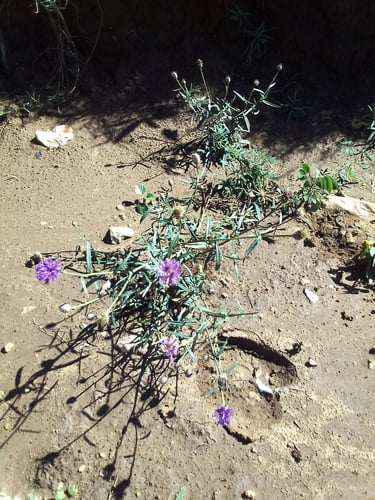
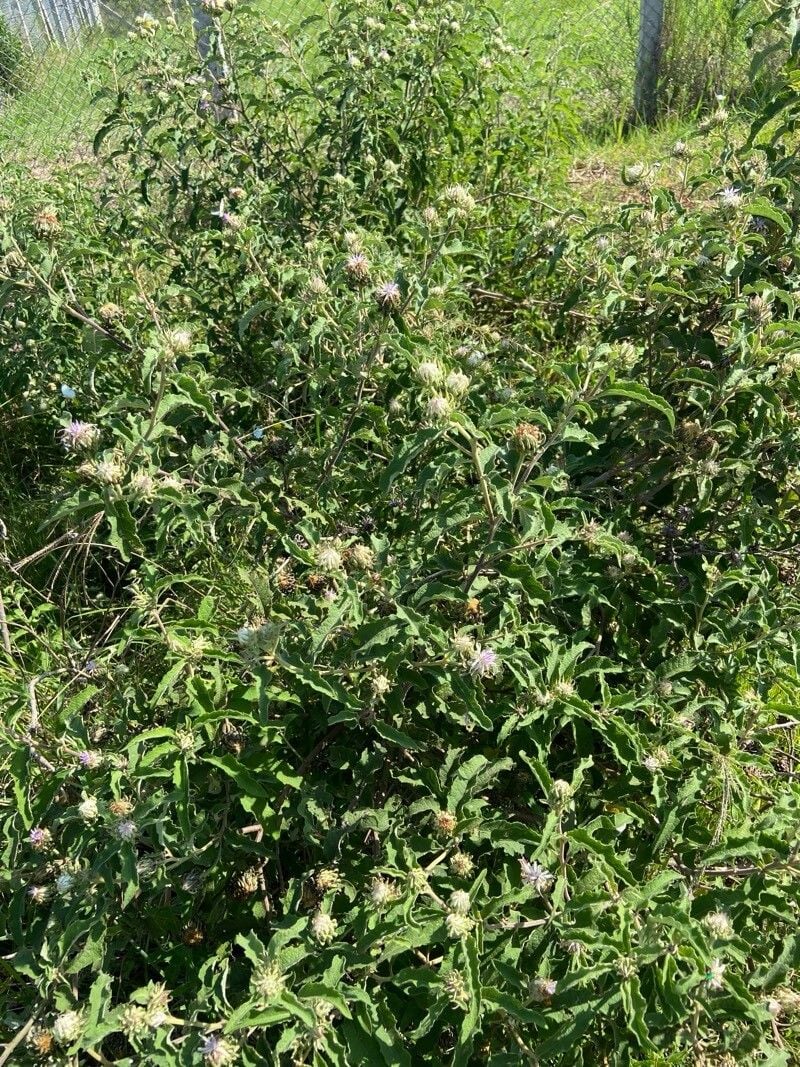
Mikania micrantha
Kunth
Climbing hempweed, Chinese creeper
iNaturalist· cc0
no rights reserved, uploaded by 葉子
iNaturalist· cc-by-nc
(c) Stargazer, some rights reserved (CC BY-NC)
iNaturalist· cc-by
(c) Michael J. Papay, some rights reserved (CC BY), uploaded by Michael J. Papay
Summary
Source: WikipediaMikania micrantha is a tropical plant in the family Asteraceae; known as bitter vine, climbing hemp vine, or American rope. It is also sometimes called mile-a-minute vine (a moniker also used for the unrelated Persicaria perfoliata). It is a vigorously growing perennial creeper that grows best in areas in high humidity, light and soil fertility, though it can adapt in less fertile soils. The featherlike seeds are dispersed by wind. A single stalk can produce between 20 and 40 thousand seeds a season. The species is native to the sub-tropical zones of North, Central, and South America.
Description
A climber. It is a slender vine that branches. The stem are yellow. The leaves are opposite. The leaf stalks are 1-6 cm long. The leaves are oval and 3-13 cm long by 10 cm wide. The base is heart shaped. There can be coarse teeth along the edge.
Traditional Uses
The leaves are used for a tea drink probably more as a medicine.
This uses section is brief — help expand it
Medicinal Uses
It is used to heal cuts and stop minor external bleeding in Fiji but its medicinal properties are still yet to be fully discovered. It is also a very popular local antiseptic medicine in Mizoram State of India, it is known locally as Japan Hlo. Its use has also been reported in the state of Arunachal Pradesh; fresh leaves are pounded and then applied over lacerations to stop bleeding and subsequent healing. In Bangladesh used to treat gastric ulcer and as a local antiseptic. The antioxidant activity and anthelmintic (anti-parasitic) activity of Mikania micrantha leaves has been studied.
Distribution
It is a tropical plant. In Argentina it grows from sea level to 2,000 m above sea level. It grows along rivers and in marshy areas. In Sikkim it grows between 300-1,700 m above sea level.
Where It Grows
American Samoa, Argentina, Asia, Australia, Bougainville, Brazil, British Indian Ocean Terr., BIOT, Caribbean*, Central America, China, Dominica, Dominican Republic, Fiji, Guyana, India, Mexico, Myanmar, Niue, Northeastern India, Pacific, Papua New Guinea, PNG, Paraguay, Puerto Rico, Rotuma, Samoa, SE Asia, Sikkim, Solomon Islands, South America*, Sri Lanka, Tuvalu, Uruguay, Vanuatu, West Indies,
Cultivation
Tolerates some shade, growing best where fertility, organic matter, and soil and air humidities are all high. This species is widely regarded as one of the worlds worst weeds. It is a major weed in plantations, pastures and along roadsides, and is an intermediate weed in crops and forestry. It tolerates some shade, and very rapidly overgrows abandoned areas. Cleared areas, especially in or near forest, can be quickly overrun by the plant as the ground is rapidly covered by a dense tangled mat of trailing stems. It also tends to smother shrubs and small trees, these being sometimes almost hidden. The seed is dispersed by the wind or in clothing, or by the hair of animals. It also reproduces vegetatively from broken stem fragments, with each node of the stem able to produce roots. The use of this species as cattle feed, cover crop, and as a garden ornamental further helps it to spread. Plants can flower and produce fruit all year round.
Propagation
Seed - germinates best in a sunny position. Cuttings
Other Uses
The plant has been used as a ground cover, its rapid rate of growth soon covering the ground. This use, however, should only be contemplated within the plant's native range because of its ability to escape from cultivation and invade native habitat.
Notes
It is considered a serious weed. As a medicine it is used as an anti-malarial drig.
Also Known As
Bitter tally, Fue saina, Guaco falso, Josuralata, Mekanilata, Pakama maituru, Ren bale, Taralata, Wayamaka erepari
References (10)
- Acevedo-Rodriguez, P., 2005, Vine and Climbing Plants of Puerto Rico and the Virgin islands. Contributions to the United States National Herbarium. Volume 51:1-483 p 100
- Cabalion, P. and Morat, P., 1983, Introduction le vegetation, la flore et aux noms vernaculaires de l'ile de Pentcoste (Vanuatu), In: Journal d'agriculture traditionnelle et de botanique appliquee JATBA Vol. 30, 3-4
- Flora of Solomon Islands
- Franklin, J., Keppel, G., & Whistler, W., 2008, The vegetation and flora of Lakeba, Nayau and Aiwa Islands, Central Lau Group, Fiji. Micronesica 40(1/2): 169–225, 2008
- Kumar, S. A., Manus, D. & Mallika, M., 2018, Impact of non-timber forest products on Forest and in Livelihood Economy of the People of Adjoining Areas of Jalpaiguri Forest Division, West Bengal, India. Int. J. of Life Sciences, 2018; 6 (2):365-385
Show all 10 references Hide references
- Liefting, A., et al, Samoan plant names. http://en.wikipedia.org
- Maas, P.J. M., Non-Timber Forest Products of the North-West District of Guyana Part 2. The 85 most important NTFP species. p 162
- Sarma, H., et al, 2010, Updated Estimates of Wild Edible and Threatened Plants of Assam: A Meta-analysis. International Journal of Botany 6(4): 414-423
- Thaman, R. R, 2016, The flora of Tuvalu. Atoll Research Bulletin No. 611. Smithsonian Institute p 68
- Topp, J. M. W., 1988, An Annotated Check List of the Flora of Diego Garcia, British Ocean Territory. Atoll Research Bulletin No. 313