Solanecio biafrae
(Oliv. et Hiern.) S. Moore
Sierra Leone bologi
gbif· cc-by
Royal Botanic Gardens, Kew
Summary
Perennial climbing plant growing to 2 m tall and 0.5 m wide at fast rate. Hardy to UK zone 10. Grows in light sandy, medium loamy, or heavy clay soils with good drainage. Tolerates mildly acid to basic pH. Thrives in semi-shade or full sun. Prefers moist soil.
Description
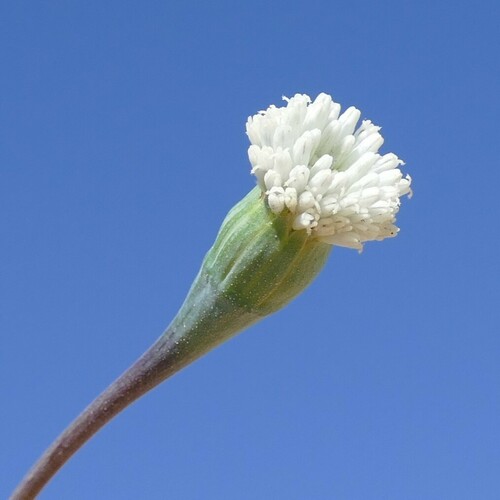
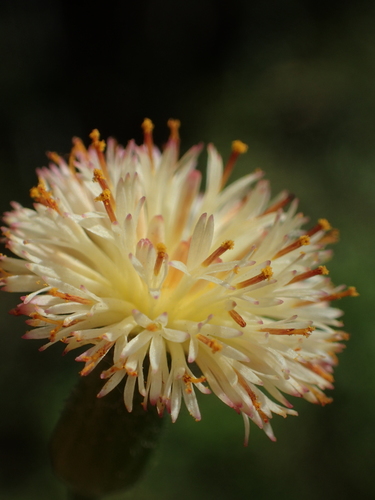
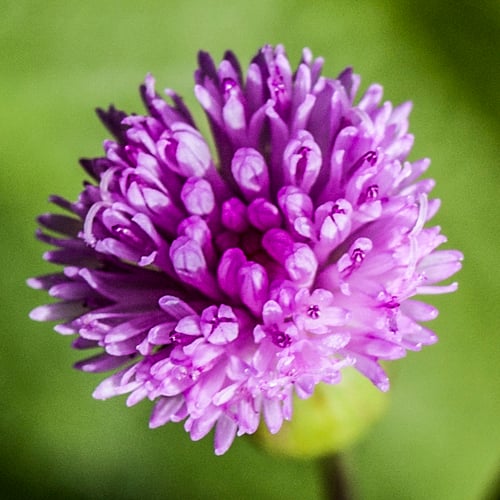
A climbing herb. It twines clockwise. It usually branches 50 cm above the ground producing bushy growth. The leaves are succulent. They have long leaf stalks and teeth along the edge. They are almost triangle shaped. They are 5-8 cm long by 3-5 cm wide. They can be larger. The young leaves stick up and the older leaves hang down. The flowers are creamy white and at the ends of the shoots. They are in rounded clusters. The fruits are dry. There are improved cultivated varieties.
Edible Uses
Leaves and young stems are cooked and used as a spinach. They are succulent and usually cooked with pepper, tomato and onions — dishes prepared this way are said to need no meat or fish due to the excellent properties of the vegetable. The leaves are mucilaginous; they are sometimes first steamed in boiling water and then squeezed to remove the mucilage, followed by 2–3 rinses with cold water to remove it as completely as possible. A leaf infusion is also taken as a drink.
Traditional Uses
The leaves and stems are used as a vegetable. They are cooked with pepper, tomato and onion. The leaves are also used as a tea substitute.
This uses section is brief — help expand it
Medicinal Uses
The plant has a reputation as a cough cure, for heart troubles, and as an appetiser and tonic, and is eaten as a vegetable for these purposes. It is pulped into a paste and applied to the breasts as a galactogene. The leaves or a leaf extract are used as a wound dressing and to stop bleeding, and a leaf extract is used to treat sore eyes. The sap is taken by draught to treat coughs in children, and is also rubbed on the body to relieve rheumatic pain, prurigenic allergies and localised oedemas. A preparation is taken by the Igbo of southern Nigeria for 'hot belly' (possibly indigestion).
Distribution
A tropical plant. It grows well in light shade. It cannot tolerate drought. It can grow in arid places. It grows in secondary jungle in West Africa. It grows in areas with an annual rainfall of 1,500 mm. It grows from sea level to 1,300 m above sea level. It needs shade.
Where It Grows
Africa, Benin, Cameroon, Central Africa, Congo, Côte d'Ivoire, East Africa, Gabon, Ghana, Guinea, Guinée, Guinea-Bissau, Ivory Coast, Liberia, Nigeria, Sao Tome and Principe, Sierra Leone, Togo, Uganda, West Africa,
Cultivation
Plants can be grown from seed but are often grown from cuttings. Cuttings 25 cm long from older stems are used. Some of the leaves are removed. It is best to use a trellis for the plant to climb over. This should be 1 m high. It can grow under cacao.
Propagation
Seed - viability tends to be very poor, generally less than 2%. Sow in pervious humid soil under light shade; germination takes several days. Spontaneous seedlings are sometimes collected for transplanting. Semi-ripe cuttings 10–15cm long with 4–6 nodes are used; it is recommended to remove leaves and tops before planting. Cuttings are planted directly into permanent positions in moist, well-drained soil rich in organic matter, always under a tree or shrub for shade and support. Cuttings of mature shoots up to 25cm long can also be used.
Other Uses
The plant continues to grow in the dry season when planted under the moist conditions of cacao plantations, where it quickly forms a dense, weed-excluding canopy under the trees.
Production
About 12 pickings of leaves can give a yield of 14 kg per plant. Plants can be harvested several times in a year.
Other Information
It is a commercially cultivated vegetable. A popular vegetable in Nigeria. It is marketed locally.
Notes
There are about 16 Solanecio species. A Yoruba proverb: "A vegetable soup prepared with worowo does not need meat."
Synonyms
Also Known As
Ota eke, Worowo, Yankonfeh
References (20)
- Abbiw, D.K., 1990, Useful Plants of Ghana. West African uses of wild and cultivated plants. Intermediate Technology Publications and the Royal Botanic Gardens, Kew. p 41
- Adebooye, O. C. et al, 2005, Seed constraint to cultivation and productivity of African indigeous leaf vegetables. African Journal of Biotechnology 4(13) pp 1480-1484
- Burkill, H. M., 1985, The useful plants of west tropical Africa, Vol. 3. Kew.
- Dalziel, J. M., 1937, The Useful plants of west tropical Africa. Crown Agents for the Colonies London. (As Crassocephalum biafrae)
- Epenhuijsen C.W. van., 1974, Growing Native vegetables in Nigeria. FAO Rome, p 58 (As Crassocephalum biafrae)
Show all 20 references Hide references
- Grivetti, L. E., 1980, Agricultural development: present and potential role of edible wild plants. Part 2: Sub-Saharan Africa, Report to the Department of State Agency for International Development. p 29 (As Senecio biafrae)
- Grubben, G. J. H. and Denton, O. A. (eds), 2004, Plant Resources of Tropical Africa 2. Vegetables. PROTA, Wageningen, Netherlands. p 468
- INFOODSUpdatedFGU-list.xls
- Jardin, C., 1970, List of Foods Used In Africa, FAO Nutrition Information Document Series No 2.p 70 (As Crassocephalum biafrae)
- Kays, S. J., and Dias, J. C. S., 1995, Common Names of Commercially Cultivated Vegetables of the World in 15 languages. Economic Botany, Vol. 49, No. 2, pp. 115-152 (As Crassocephalum biafrae)
- Martin, F.W. & Ruberte, R.M., 1979, Edible Leaves of the Tropics. Antillian College Press, Mayaguez, Puerto Rico. p 184 (As Crassocephalum biafrae) and p 186 (As Senecio biafrae)
- Okigbo, B.N., Vegetables in Tropical Africa, in Opena, R.T. & Kyomo, M.L., 1990, Vegetable Research and development in SADCC countries. Asian Vegetable Research and development Centre. Taiwan. p 38 (As Crassocephalum biafrae)
- Oniang’o, R., Grum, M. and Obel-Lawson, E., editors. 2008. Developing African leafy vegetables for improved nutrition. Regional workshop, 6-9 December 2005. Rural Outreach Program, Nairobi, Kenya. p 3 (As Crassocephalum biafrae)
- Peters, C. R., O'Brien, E. M., and Drummond, R.B., 1992, Edible Wild plants of Sub-saharan Africa. Kew. p 89 (As Crassocephalum biafrae)
- Raponda-Walker, A & Sillans, R., 1961, Les Plantes Utiles du Gabon. Editions Paul Lechevalier, Paris. p 130
- Royal Botanic Gardens, Kew (1999). Survey of Economic Plants for Arid and Semi-Arid Lands (SEPASAL) database. Published on the Internet; http://www.rbgkew.org.uk/ceb/sepasal/internet [Accessed 14th April 2011]
- Terra, G.J.A., 1973, Tropical Vegetables. Communication 54e Royal Tropical Institute, Amsterdam, p 41 (As Crassocephalum biafrae)
- Tindall, H.D., 1983, Vegetables in the tropics. Macmillan p. 84 (As Crassocephalum biafrae)
- World Checklist of Useful Plant Species 2020. Royal Botanic Gardens, Kew
- Zeven, A. C. & de West, J. M. J., 1982, Dictionary of cultivated plants and their regions of diversity. Wageningen. p 123 (As Senecio biafrae)