Crambe tatarica
Sebeok
Tartarian breadplant, Tatarian sea kale
iNaturalist· cc-by
(c) Vladimir Atachkin, some rights reserved (CC BY)
iNaturalist· cc-by
(c) Vladimir Atachkin, some rights reserved (CC BY)
iNaturalist· cc-by
(c) Vladimir Atachkin, some rights reserved (CC BY)
Summary
A hardy perennial reaching 1 m in height and width, suitable for UK zone 5. Hermaphroditic and insect-pollinated. Attracts wildlife. Adapts to light sandy, medium loamy, and heavy clay soils, including poor and very alkaline soils. Grows in semi-shade to full sun and prefers moist conditions.
Description
A cabbage family herb. It keeps growing from year to year. It grows 1 m tall and 1 m wide.
This description is brief — help expand it
Edible Uses
Leaves and young stems can be eaten raw or cooked, usually blanched in much the same way as seakale (C. maritima). The root, which can be as thick as a person's arm, is fleshy and sweet. It can be used raw in salads or cooked as a vegetable, and can also be dried and ground into a powder to mix with cereal flours when making bread. The root is rich in starch and sugars.
Traditional Uses
The root is eaten raw. It is also cooked and seasoned with oil, vinegar and salt. It can be dried and ground into a powder and mixed with cereal flours to make bread. The young blanched leaf stalks are eaten raw or cooked.
Medicinal Uses
None known.
Distribution
It is a temperate plant. It suits USDA hardiness zones 4-8.
Where It Grows
Austria, Balkans, Bulgaria, Czech, Estonia, Europe, Hungary, Italy, Mediterranean, Romania, Russia, Siberia, Slovakia, Turkey, Türkiye, Ukraine, Yugoslavia,
Cultivation
An easily grown plant, succeeding in a good loam and an open sunny position. Prefers a slightly alkaline soil in a position sheltered from strong winds. Tolerates poor soil and some shade. Dislikes acid soils. A deep-rooted plant, it dislikes root disturbance. This is an aggregate species. There is some confusion over the correct spelling of this species name, it is written as C. tataria in some books. Plants can be grown in the summer meadow if the grass is not cut too low (since this would damage the growing point). A good bee plant.
Propagation
Seed — sow in March/April in a seedbed outdoors and either thin or transplant to permanent positions when plants are about 10cm tall. Young plants are very attractive to slugs and will often need protection. As germination can be slow, sowing in pots in a cold frame is preferable; germination usually occurs in 3–26 weeks at 15°c. Prick seedlings into individual pots as soon as they are large enough to handle, and plant out when at least 10cm tall. Divide in spring or autumn by digging up the root clump and cutting off sections, each with at least one growing point; larger divisions can go straight into permanent positions while smaller ones are best potted and grown on in a cold frame until established. Root cuttings 3–10cm long taken in spring can be planted directly in the ground or potted in a greenhouse and planted out once growing strongly.
Other Uses
Attracts wildlife.
Other Information
It is a commercially cultivated vegetable.
Notes
There are about 20 Crambe species.
Synonyms
References (10)
- Facciola, S., 1998, Cornucopia 2: a Source Book of Edible Plants. Kampong Publications, p 58
- Hammer, K. & Spahillari, M., 1999, Crops of European origin. in Report of a networking group on minor crops. IPGRI p 44
- Hedrick, U.P., 1919, (Ed.), Sturtevant's edible plants of the world. p 224
- Kays, S. J., and Dias, J. C. S., 1995, Common Names of Commercially Cultivated Vegetables of the World in 15 languages. Economic Botany, Vol. 49, No. 2, pp. 115-152
- Lim, T. K., 2015, Edible Medicinal and Non Medicinal Plants. Volume 9, Modified Stems, Roots, Bulbs. Springer p 28
Show all 10 references Hide references
- Plants for a Future database, The Field, Penpol, Lostwithiel, Cornwall, PL22 0NG, UK. http://www.scs.leeds.ac.uk/pfaf/
- Reis. Russland 1:194. 1787
- Terra, G.J.A., 1973, Tropical Vegetables. Communication 54e Royal Tropical Institute, Amsterdam, p 41
- USDA, ARS, National Genetic Resources Program. Germplasm Resources Information Network - (GRIN). [Online Database] National Germplasm Resources Laboratory, Beltsville, Maryland. Available: www.ars-grin.gov/cgi-bin/npgs/html/econ.pl (10 April 2000)
- World Checklist of Useful Plant Species 2020. Royal Botanic Gardens, Kew
More from Brassicaceae
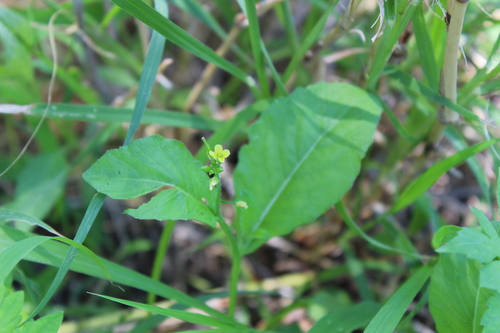
Brassica integrifolia var. chevalieri
Chevalieri
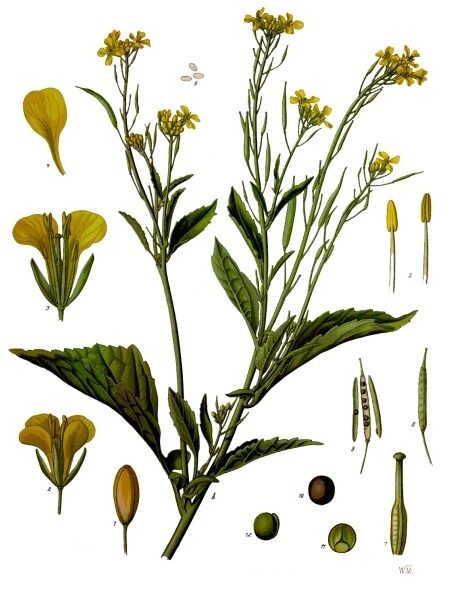
Brassica juncea
Indian mustard, Leaf mustard, Chinese mustard
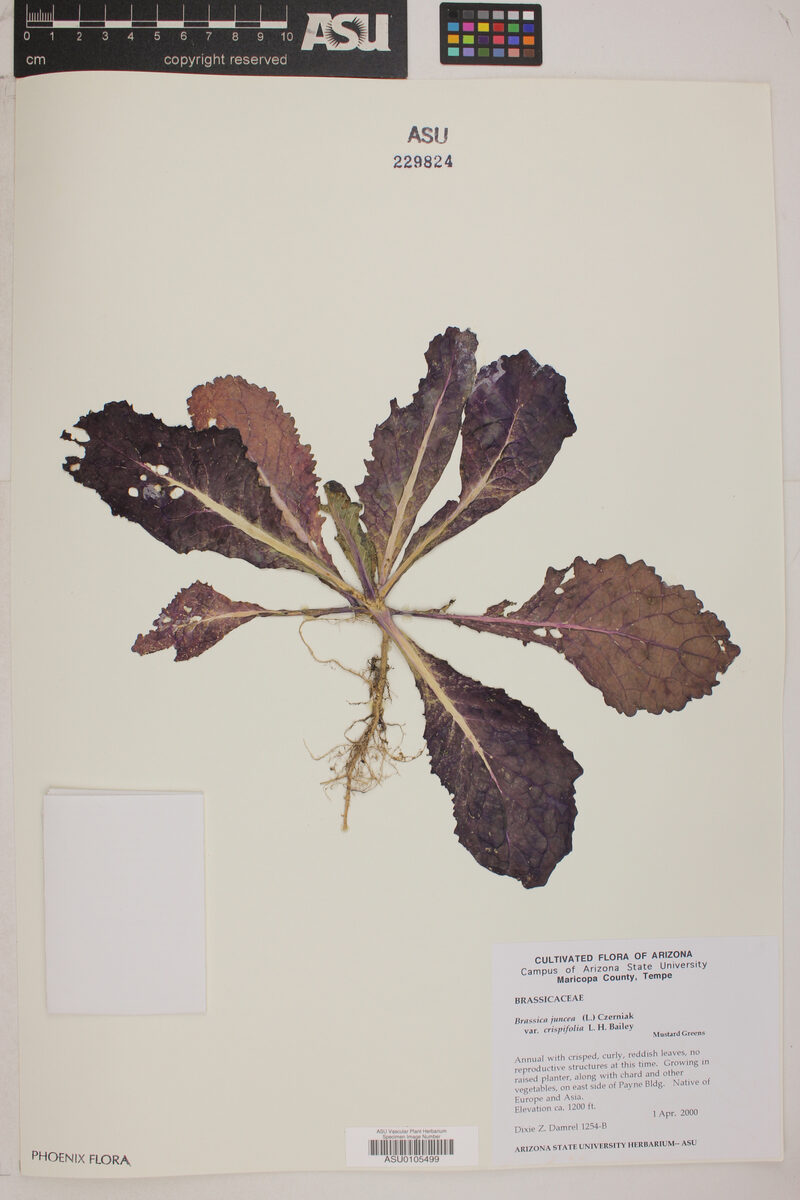
Brassica juncea crispifolia
Curled Mustard
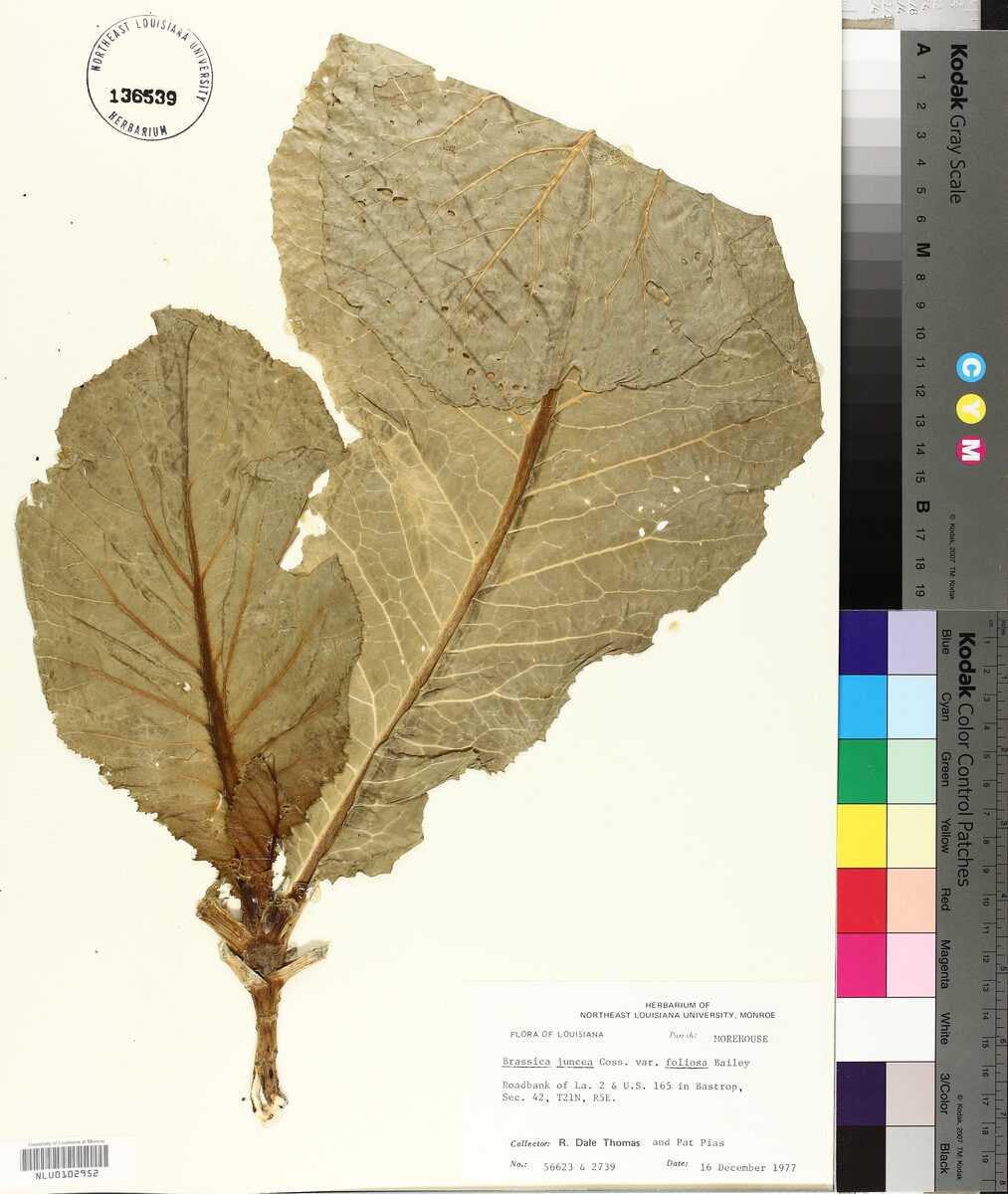
Brassica juncea foliosa
Leaf Mustard
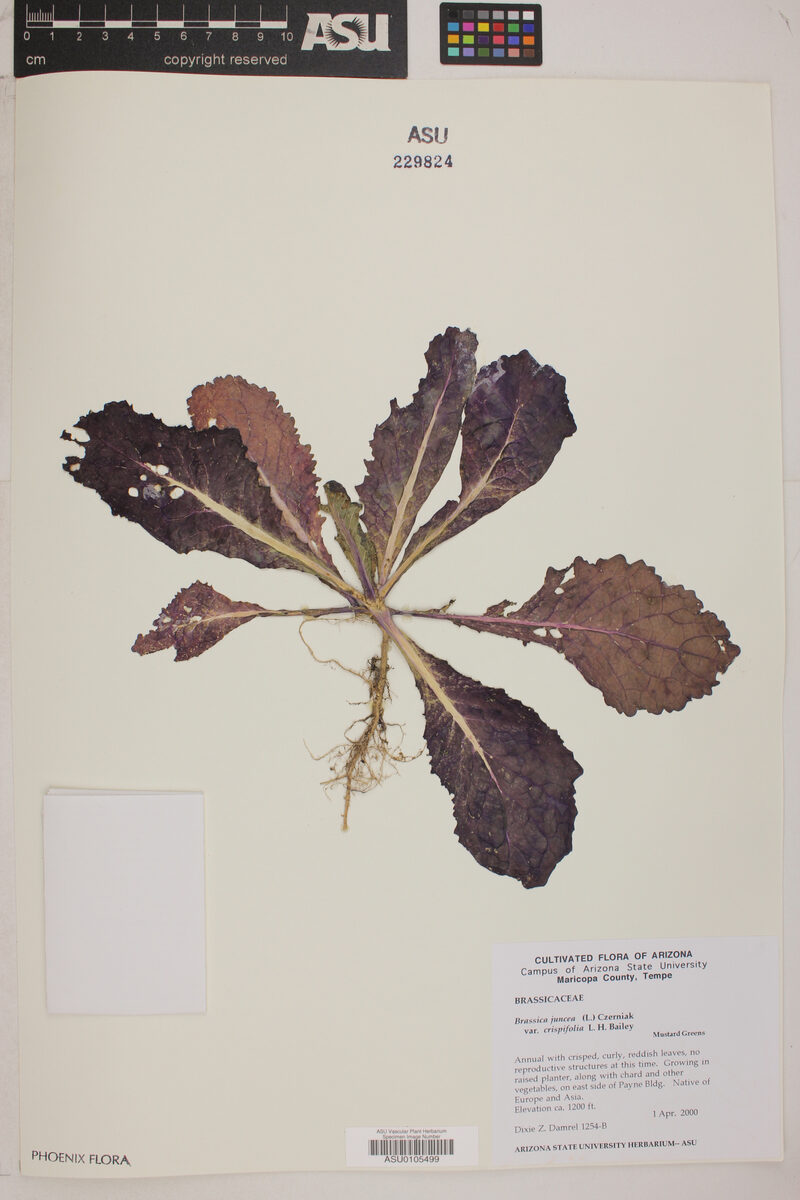
Brassica juncea integrifolia crispifolia
Curled Mustard
Brassica juncea integrifolia rugosa - (Roxb.) M.Tsen & S.H.Lee
Head Mustard