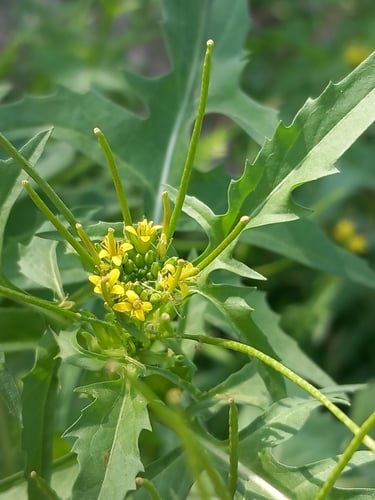
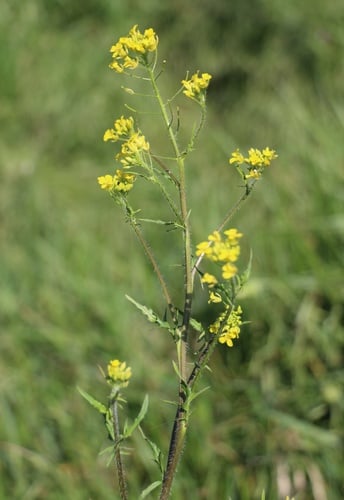
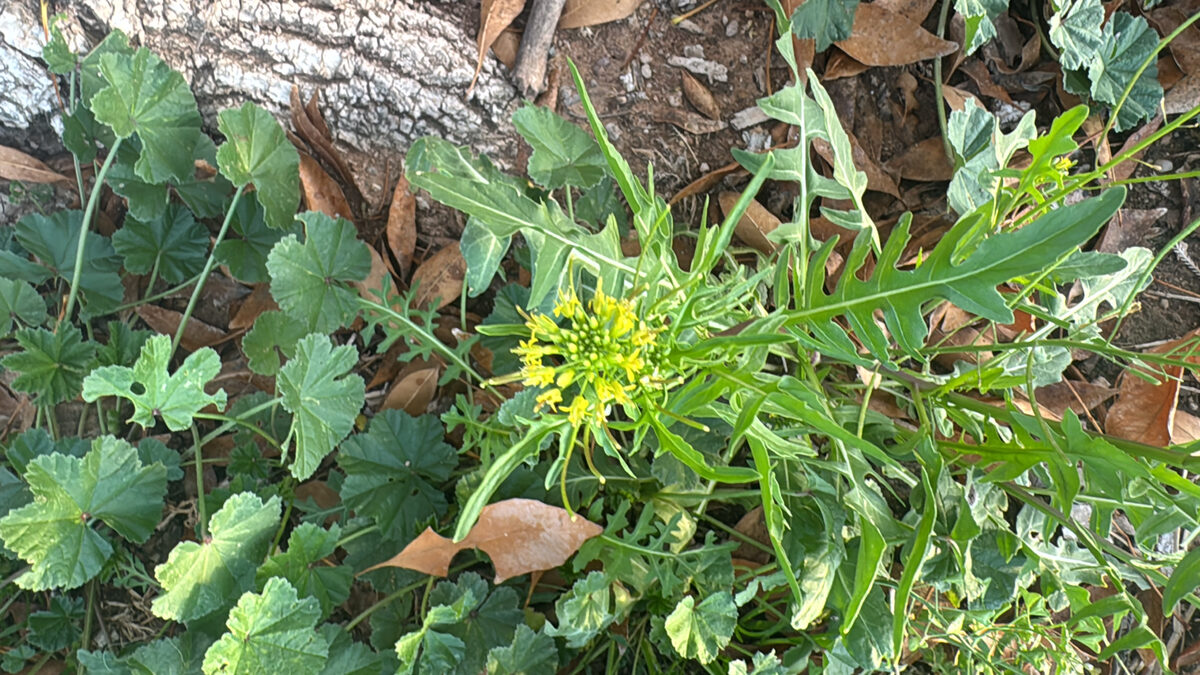
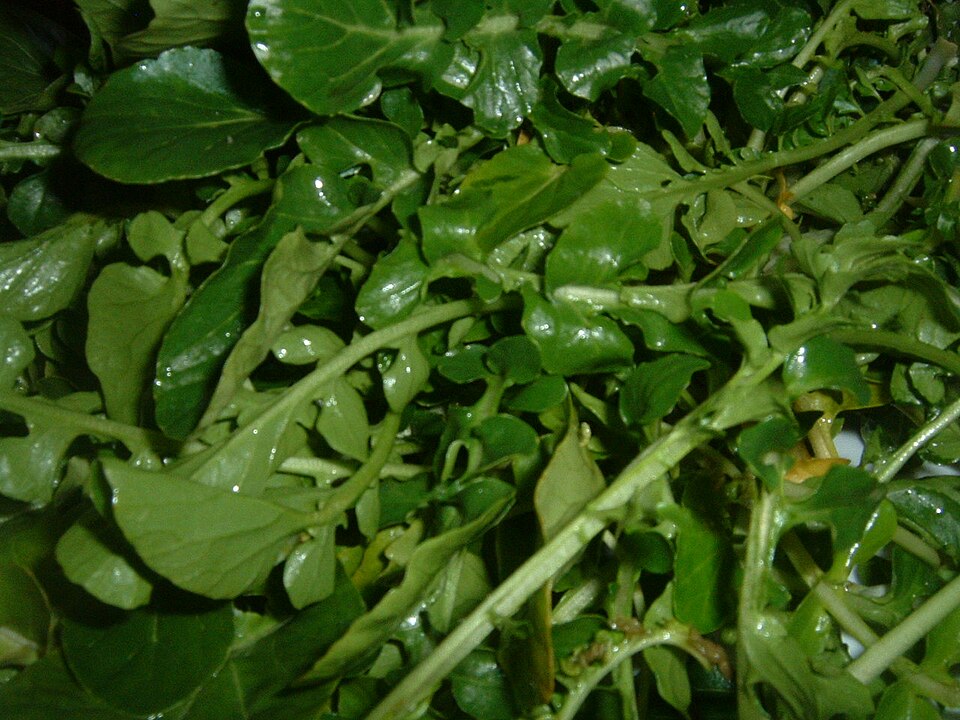
Crambe cordifolia
Steven
Colewort, Tartar sea-kale
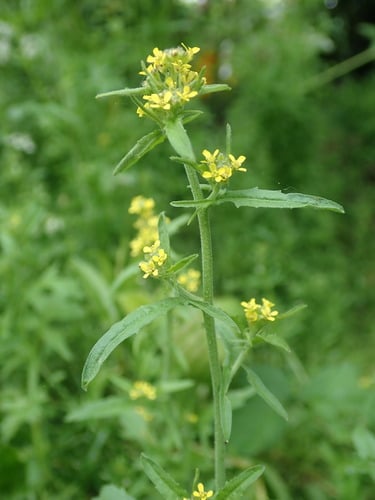
iNaturalist· cc-by-nc
(c) Lloyd Esler, some rights reserved (CC BY-NC), uploaded by Lloyd Esler
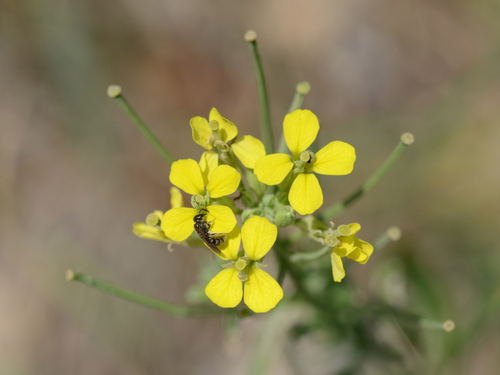
iNaturalist· cc-by-nc
(c) orzimatturginov, some rights reserved (CC BY-NC)
Summary
Source: WikipediaCrambe cordifolia, the greater sea-kale, colewort or heartleaf crambe ( syn. Crambe glabrata DC.), is a species of flowering plant in the family Brassicaceae, native to the Caucasus. It has gained the Royal Horticultural Society's Award of Garden Merit.
Description
A cabbage family herb. It is a perennial plant. It grows 1.8-2.5 m high and 1.2-1.5 m wide. The leaves are heart shaped or sword shaped. They are 35 cm long. The leaves are puckered and lobed. They are coarse and hairy. The stems are branched and criss-crossed. The flowers are small and white.
Edible Uses
The leaves are cooked and used as a potherb. Young leaves have a pleasant cabbage-like flavour, though older leaves become rather tough. The root is also edible cooked.
Traditional Uses
The young leaves are eaten as a potherb. The root is also eaten.
This uses section is brief — help expand it
Medicinal Uses
The plant is used as a cure for itch.
Distribution
It is a temperate plant. It is frost hardy. It is best in a slightly alkaline soil. In Northwest India it grows between 2,400-4,200 m above sea level. Hobart Botanical Gardens. It suits hardiness zones 6-9.
Where It Grows
Africa, Asia, Australia, Caucasus, East Africa, Ethiopia, Europe, Himalayas, India, Iran, Middle East, Pakistan, Slovenia, Tasmania, Tibet, Turkey, Türkiye,
Cultivation
An easily grown plant, succeeding in a good loam and an open sunny position but also tolerating some shade. Prefers a slightly alkaline soil in a position sheltered from strong winds. Another place in this report says that the plant tolerates maritime exposure. Tolerates poor and dry soils and some shade. Dislikes acid soils. Established plants are drought tolerant. Plants are hardy to about -20°c. A deep-rooted plant, it dislikes root disturbance. The young growth in spring is adored by slugs. Plants can be grown in the summer meadow if the grass is not cut too low, since this would damage the growing point. The flowers emit a delicious wallflower-like scent in hot sunny weather.
Propagation
Seed — sow in March/April in a seedbed outdoors and either thin or transplant to permanent positions when plants are about 10cm tall. Young plants are very attractive to slugs and will often need protection. As germination can be slow, sowing in pots in a cold frame is preferable; germination usually occurs in 3–26 weeks at 15°c. Prick seedlings into individual pots as soon as they are large enough to handle, and plant out when at least 10cm tall. Divide in spring or autumn by digging up the root clump and cutting off sections, each with at least one growing point; larger divisions can go straight into permanent positions while smaller ones are best potted and grown on in a cold frame until established. Root cuttings 3–10cm long taken in spring can be planted directly in the ground or potted in a greenhouse and planted out once growing strongly.
Other Uses
Plants form large clumps and can be used for ground cover when planted approximately 1.2 metres apart each way.
Other Information
It is cultivated.
Notes
There are about 20 Crambe species.
Synonyms
Also Known As
Srčastolistni pustoljub
References (19)
- Ambasta, S.P. (Ed.), 2000, The Useful Plants of India. CSIR India. p 144
- Brickell, C. (Ed.), 1999, The Royal Horticultural Society A-Z Encyclopedia of Garden Plants. Convent Garden Books. p 311
- Cundall, P., (ed.), 2004, Gardening Australia: flora: the gardener's bible. ABC Books. p 429
- Facciola, S., 1998, Cornucopia 2: a Source Book of Edible Plants. Kampong Publications, p 58
- Hedrick, U.P., 1919, (Ed.), Sturtevant's edible plants of the world. p 223
Show all 19 references Hide references
- Heywood, V.H., Brummitt, R.K., Culham, A., and Seberg, O. 2007, Flowering Plant Families of the World. Royal Botanical Gardens, Kew. p 70
- Hibbert, M., 2002, The Aussie Plant Finder 2002, Florilegium. p 75
- Joyce, D., 1998, The Garden Plant Selector. Ryland, Peters and Small. p 218
- Lim, T. K., 2015, Edible Medicinal and Non Medicinal Plants. Volume 9, Modified Stems, Roots, Bulbs. Springer p 28
- Martin, F.W. & Ruberte, R.M., 1979, Edible Leaves of the Tropics. Antillian College Press, Mayaguez, Puerto Rico. p 188
- Mem. Soc. Imp. Naturalistes Moscou 3:267. 1812
- Plants for a Future database, The Field, Penpol, Lostwithiel, Cornwall, PL22 0NG, UK. http://www.scs.leeds.ac.uk/pfaf/
- Ryan, S., 2008, Dicksonia. Rare Plants Manual. Hyland House. p 99
- Seidemann J., 2005, World Spice Plants. Economic Usage, Botany, Taxonomy. Springer. p 119
- Singh, H.B., Arora R.K.,1978, Wild edible Plants of India. Indian Council of Agricultural Research, New Delhi. p 25
- Terra, G.J.A., 1973, Tropical Vegetables. Communication 54e Royal Tropical Institute, Amsterdam, p 41
- Wild edible plants of Himachal Pradesh
- World Checklist of Useful Plant Species 2020. Royal Botanic Gardens, Kew
- Zeven, A. C. & de West, J. M. J., 1982, Dictionary of cultivated plants and their regions of diversity. Wageningen. p 89