Eruca vesicaria sativa - (Mill.)Thell.
(Mill.)Thell.
Rocket
gbif· cc-by-nc-nd
Adam
gbif· cc-by-nc-nd
Hildegard Löcker
gbif· cc-by-nc-nd
Hildegard Löcker
Description
Eruca vesicaria sativa is a ANNUAL growing to 0.6 m (2ft) by 0.3 m (1ft in) at a fast rate. See above for USDA hardiness. It is hardy to UK zone 7 and is not frost tender. It is in leaf all year, in flower from May to August, and the seeds ripen from July to September. The species is hermaphrodite (has both male and female organs) and is pollinated by Insects. Suitable for: light (sandy), medium (loamy) and heavy (clay) soils and prefers well-drained soil. Suitable pH: mildly acid, neutral and basic (mildly alkaline) soils. It can grow in semi-shade (light woodland) or no shade. It prefers dry or moist soil and can tolerate drought. The plant can tolerates strong winds but not maritime exposure.
Edible Uses
Oil. Young leaves - raw or cooked. A distinct strongly spicy flavour, the taste is best from fast, well-grown plants. A few leaves added to a salad are acceptable though the flavour is too strong for many tastes. Some people really like these leaves though most are not very keen. Older leaves that have become too hot to eat on their own can be pureed and added to soups etc. In the milder areas of Britain it is possible to produce edible leaves all year round from successional sowings, especially if the winter crop is given some protection. Flowers - raw[52}. A similar taste to the leaves, they make a nice garnish on the salad bowl. The seed yields a semi-drying oil which is edible if stored 6 months and is a substitute for rapeseed oil. It contains 32% fat, 27% protein. It is known as 'jamba oil'. A mustard is obtained from the seed, the strong flavour comes from an essential oil that is contained within the oil of the seed. The pungency of mustard develops when cold water is added to the ground-up seed - an enzyme (myrosin) acts on a glycoside (sinigrin) to produce a sulphur compound. The reaction takes 10 - 15 minutes. Mixing with hot water or vinegar, or adding salt, inhibits the enzyme and produces a mild bitter mustard.
Medicinal Uses
Antibacterial Antiscorbutic Aphrodisiac Diuretic Rubefacient Stimulant Stomachic. Rocket was at one time used medicinally, though it is now used only as a salad herb. The leaves are antiscorbutic, diuretic, stimulant and stomachic. The seed is rubefacient and stimulant. The powdered seed possesses antibacterial activity, but no alkaloids have been isolated. The oil from the seed is said to have aphrodisiac properties.
Distribution
Europe - Mediterranean. A frequent casual in Britain, occasionally becoming established for a while.
Where It Grows
Coming Soon
Cultivation
A very easily grown and fast-maturing plant, it succeeds in most soils and conditions, though it prefers some shade in summer. Once established, plants are quite drought resistant. Rocket is occasionally cultivated for its edible leaves and flowers, it can be ready for harvest within 40 days of sowing the seed, there are some named varieties. 'Rocket Improved' is less prone to bolting, though it still grows best in cooler weather. Plants usually self-sow freely if the ground is disturbed in some way, such as by hoeing. This species is normally untroubled by pests or diseases.
Propagation
Seed - sow outdoors in spring in situ. Germination is usually very quick and free. In order to obtain a continuous supply of edible leaves, successional sowings can be made every few weeks until mid August. A late summer/early autumn sowing can provide leaves in winter, though the plants might require some protection in very cold winters.
Other Uses
Oil Oil. The seed yields a semi-drying oil which is a substitute for rapeseed oil. It can also be used for lighting, burning with very little soot.
Synonyms
More from Brassicaceae
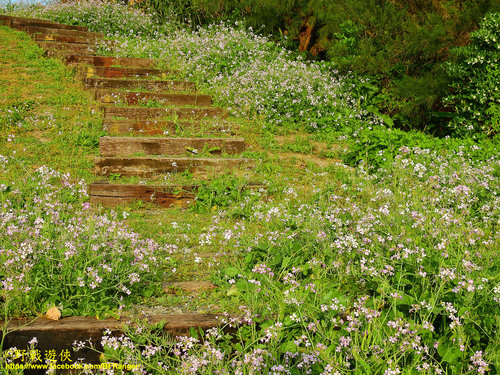
Raphanus sativus var. caudatus
Rat-tail radish, Potting radish
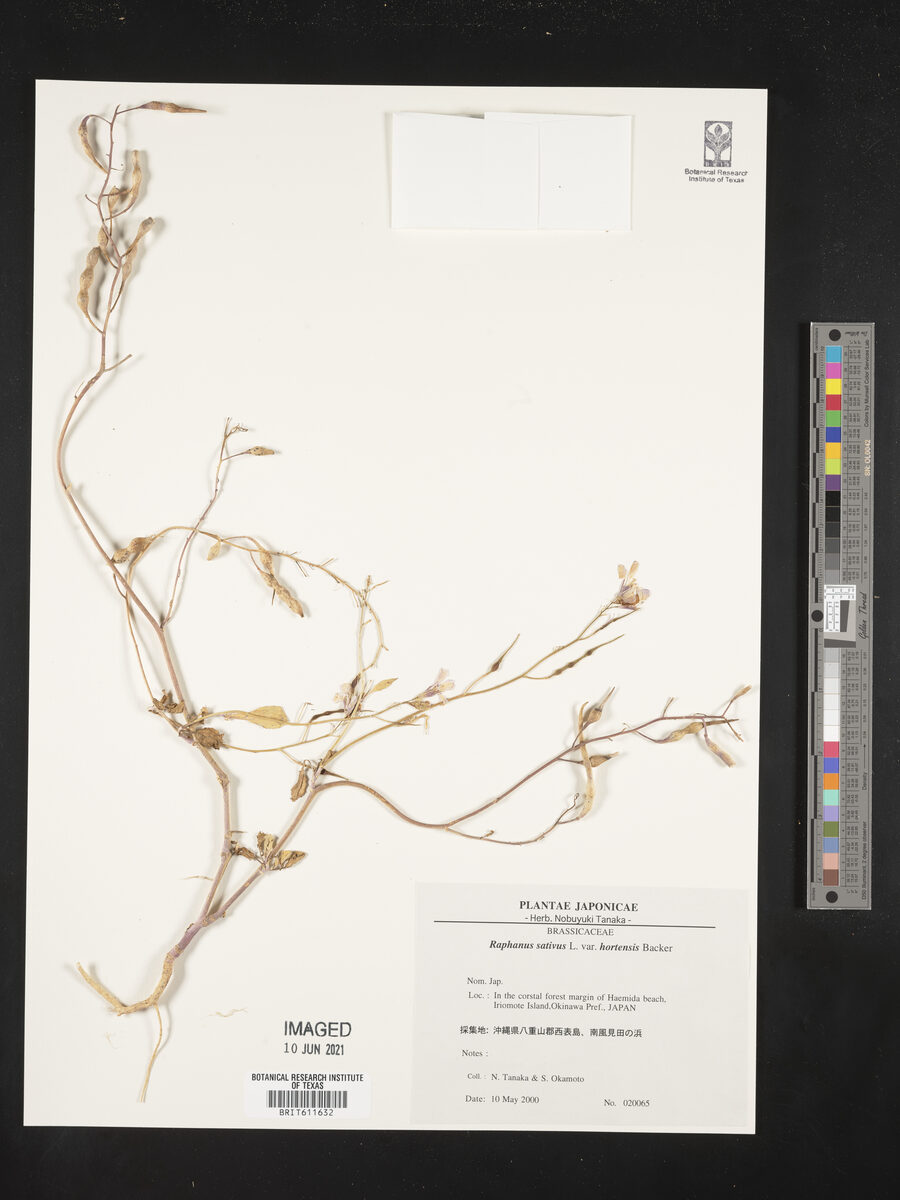
Raphanus sativus var. hortensis
Japanese winter radishes
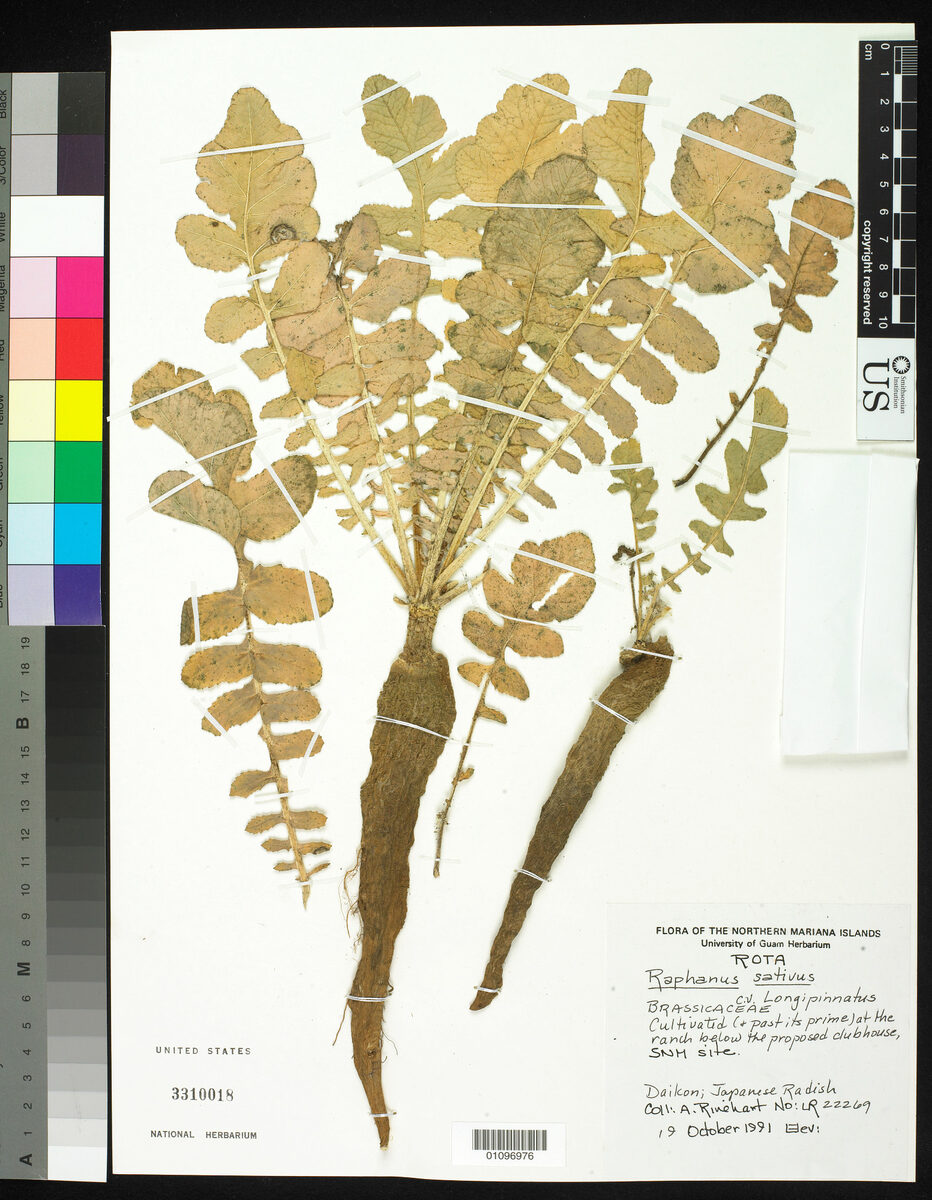
Raphanus sativus var. longipinnatus
Chinese radish, Daikon, Oriental radish
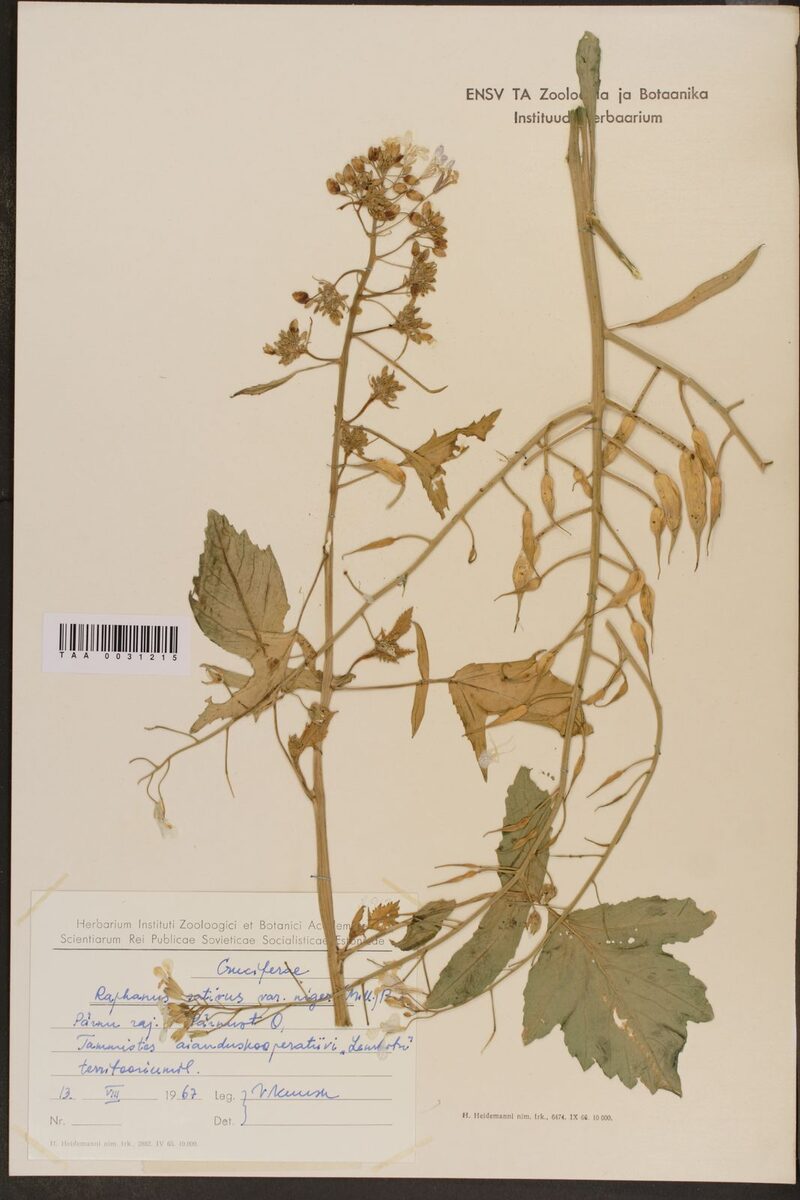
Raphanus sativus var. niger
Oriental radish, Black Spanish winter radish
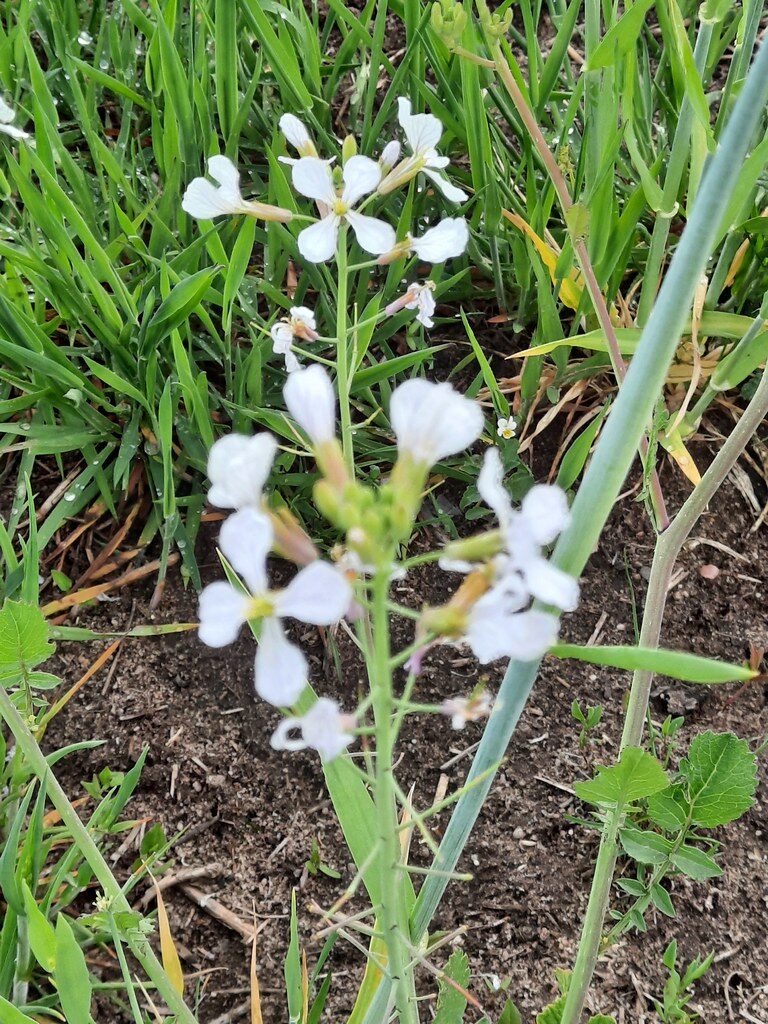
Raphanus sativus var. oleiformis
Fodder radish, Oil radish, Oilseed radish
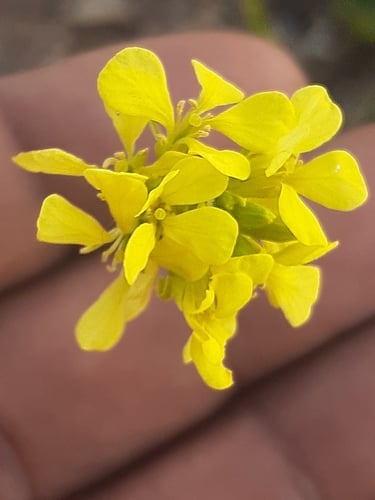
Rapistrum rugosum
Turnip Weed, Short-fruited wild turnip