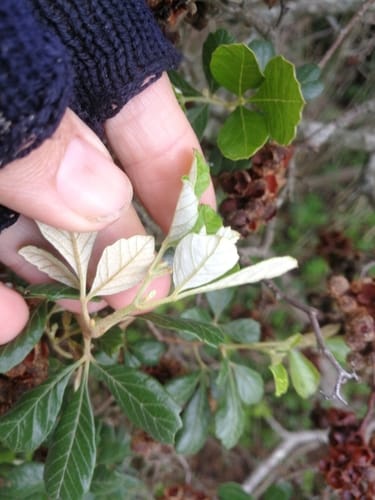
Toxicodendron succedaneum
(L.) Kuntze
Rhus tree
iNaturalist· cc0
no rights reserved, uploaded by 葉子
iNaturalist· cc-by-nc
(c) KOFANG, some rights reserved (CC BY-NC), uploaded by KOFANG
iNaturalist· cc-by-nc
(c) 陳育賢, some rights reserved (CC BY-NC), uploaded by 陳育賢
Summary
Source: WikipediaToxicodendron succedaneum, the wax tree, Japanese Hazenoki tree (Sumac or wax tree), sơn in Vietnamese or charão in Portuguese, is a flowering plant species in the genus Toxicodendron found in Asia, although it has been planted elsewhere, most notably Australia and New Zealand. It is a large shrub or tree, up to 8 m tall, somewhat similar to a sumac tree. Because of its beautiful autumn foliage, it has been planted outside Asia as an ornamental plant, often by gardeners who were apparently unaware of the dangers of allergic reactions. It is now officially classified as a noxious weed in Australia and New Zealand. It is one of the city tree symbols of Kurume, Fukuoka, Japan. The larvae of the moths Eteoryctis deversa, Caloptilia aurifasciata, Caloptilia protiella, Caloptilia rhois, and Callidrepana patrana feed on T. succedaneum.
Description
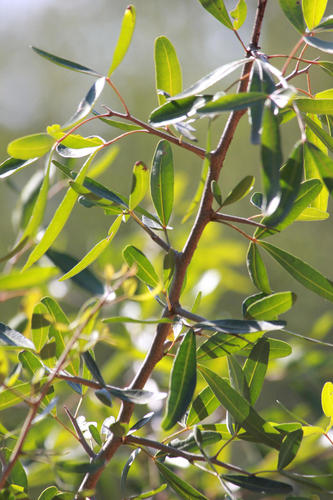
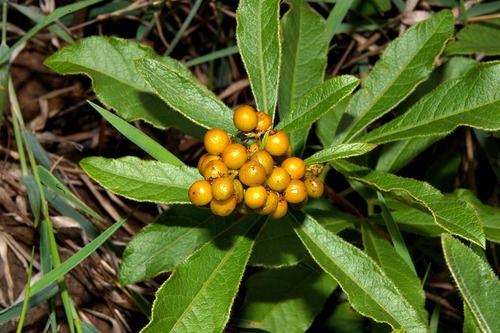
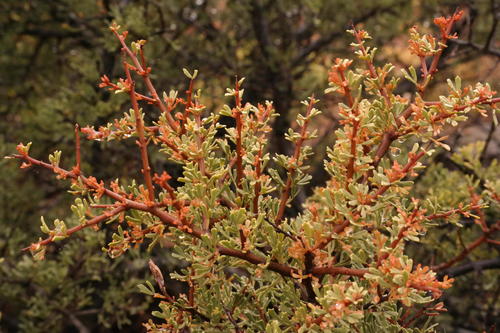
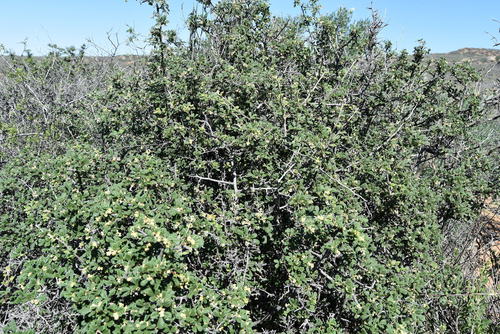
A shrub or small tree. It grows 2-8 m tall or higher. The leaves are compound and 20-35 cm long. There are 5-15 leaflets. The leaflet blades are 3-16 cm long by 1-5 cm wide. The flowers are yellowish green. The fruit is 7-10 mm across.
Edible Uses
It is used to produce lacquer. In Vietnam, lacquer is used to produce lacquer paintings, known as sơn mài, from resin of the tree. In East Asia, in particular in Japan, traditional candle fuel (also called Japan wax) was produced, among other sumac plants, from Toxicodendron succedaneum crushed fruits rather than beeswax or animal fats. Japan's wax is a byproduct of lacquer manufacture. It is not a true wax but a fat that contains 10–15% palmitin, stearin, and olein with about 1% japanic acid (1,21-heneicosanedioic acid). Japan wax is sold in flat squares or disks and has a rancid odor. It is extracted by expression, heat, or the action of solvents. The fatty-acid methyl ester of the kernel oil meets all of the major biodiesel requirements in the USA (ASTM D 6751-02, ASTM PS 121-99), Germany (DIN V 51606), and the European Union (EN 14214). It is used as a medicinal plant in India. The fruits are edible, though their consumption is not recommended because of the general toxicity of the plant.
Medicinal Uses
The plant is antidote, antivinous, cholagogue, febrifuge, ophthalmic. Used as a wash to counteract varnish poisoning. Use with extreme caution, see notes above on toxicity. The fruit is used in the treatment of phthisis. A wax from the fruits is used in ointments. An ethanolic extract of the leaves exhibits anticancer and antiviral activities.
Known Hazards
This plant contains toxic substances which can cause severe irritation to some people. The fresh sap causes skin blisters. The leaves contain the ubiquitous carcinogen shikimic acid.
Distribution
It is a subtropical plant. It grows up to 1,500 m above sea level.
Where It Grows
Asia, Australia, China, India, Japan, New Zealand, SE Asia, Vietnam,
Cultivation
Toxicodendron succedaneum is a plant of the warm temperate to tropical zones of eastern Asia and is not very cold-hardy, only succeeding outdoors in the milder areas of the temperate zone. The young growth in spring can be damaged by late frosts. Succeeds in a well-drained fertile soil in full sun. Plants have brittle branches and these can be broken off in strong winds. Plants are also susceptible to coral spot fungus. Plants in this genus are notably resistant to honey fungus. This species is frequently cultivated in Japan for its sap and the wax obtained from its fruit. Many of the species in this genus, including this one, are highly toxic and can also cause severe irritation to the skin of some people, whilst other species are not poisonous. It is relatively simple to distinguish which is which, the poisonous species have axillary panicles and smooth fruits whilst non-poisonous species have compound terminal panicles and fruits covered with acid crimson hairs. The toxic species are sometimes separated into their own genus, Toxicodendron, by some botanists. Dioecious. Male and female plants must be grown if seed is required.
Propagation
Seed - best sown as soon as it is ripe. Pre-soak the seed for 24 hours in hot water (starting at a temperature of 80 - 90°c and allowing it to cool) prior to sowing in order to leach out any germination inhibitors. The stored seed also needs hot water treatment. Sow in containers or a nursery seedbed in light shade. When the seedlings are large enough to handle, prick them out into individual pots and plant them out when they are 25cm or more tall. Cuttings of half-ripe wood, 10cm with a heel. Root cuttings 4cm long, and potted up vertically. Good percentage. Suckers.
Other Uses
The leaves contain about 20% tannin. They can be collected as they fall in the autumn and used as a brown dye or as a mordant. The sap is tapped and used as a lacquer. It is much used in Japanese art and needs to be kept in a cool humid place for it to dry properly. The Japanese traditionally kept their paintings in a damp cave until the lacquer had dried. A yellow dye is obtained from the wood. A wax obtained from the fruit is used to make candles, floor wax, varnish etc. The fruit contains about 17% wax. The fatty acid composition of the wax is 77% palmitic, 5% stearic and arachidic, 6% dibasic, 12% oleic and a trace of linoleic. A wax obtained from the fruit is used as an ingredient in commercial cosmetic preparations as an emollient, binding agent and viscosity controller. The seed oil contains 25% glycerides of palmitic, 47% oleic and 28% linoleic.
Synonyms
References (2)
- Ferns, K., Useful Tropical Plants
- World Checklist of Useful Plant Species 2020. Royal Botanic Gardens, Kew