Baorangia bicolor
(Peck) G. Wu & Zhu L. Yang
iNaturalist· cc-by-sa
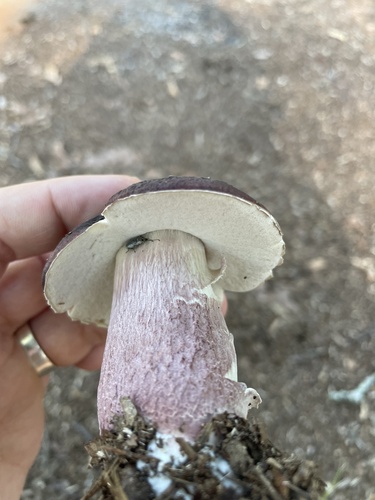
(c) Fluff Berger, some rights reserved (CC BY-SA), uploaded by Fluff Berger
iNaturalist· cc-by
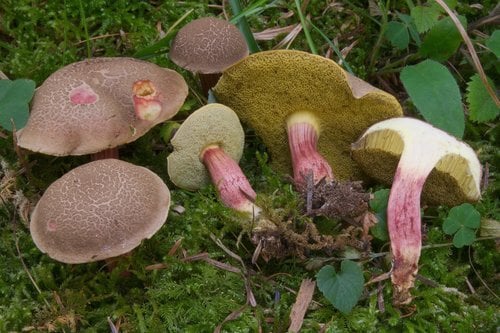
(c) Jason Hollinger, some rights reserved (CC BY)
iNaturalist· cc-by-sa
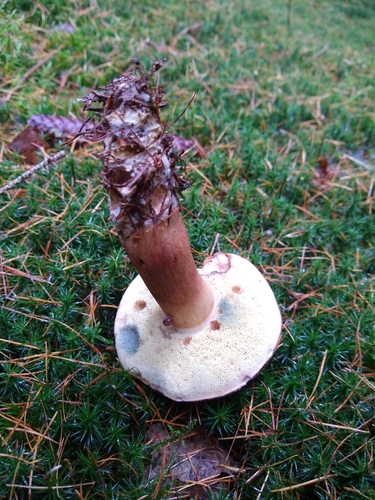
(c) Douglas Goldman, some rights reserved (CC BY-SA), uploaded by Douglas Goldman
Summary
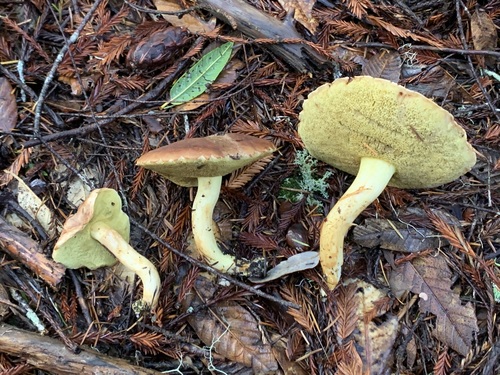
Source: WikipediaBaorangia bicolor, also known as the two-colored bolete or red and yellow bolete after its two-tone coloring scheme, is a species of fungus in the genus Baorangia. Its fruit body, the mushroom, is classed as medium or large in size, which helps distinguish it from the many similar appearing species that have a smaller stature. A deep blue/indigo bruising of the pore surface and a less dramatic bruising coloration change in the stem over a period of several minutes are identifying characteristics that distinguish it from the similar poisonous species Boletus sensibilis. There are also nonpoisonous similar species, and two varieties, var. borealis and var. subreticulatus. Baorangia bicolor inhabits most of eastern North America, primarily east of the Rocky Mountains, and is in season during the summer and fall. It can also be found in China and Nepal. It is an edible mushroom.
Description
A subtropical mushroom in the Boletaceae family.
This description is brief — help expand it
Edible Uses
The mushroom fungus is edible.
Distribution
It is a subtropical plant.
Where It Grows
Asia, China, Nepal, North America,
Synonyms
References (3)
- Christensen, M., et al, 2008, Collection and Use of Wild Edible Fungi in Nepal. Economic Botany, 62(1), 2008, pp. 12–23 (As Boletus bicolor)
- Sun, L. et al, 2017, Comparison of Free Total Amino Acid Compositions and Their Functional Classifications in 13 Wild Edible Mushrooms. Molecules 2017, 22, 350 (As Boletus bicolor)
- Wikipedia