Lepidium didymum
L.
Lesser swinecress, Twin cress
iNaturalist· cc-by-nc
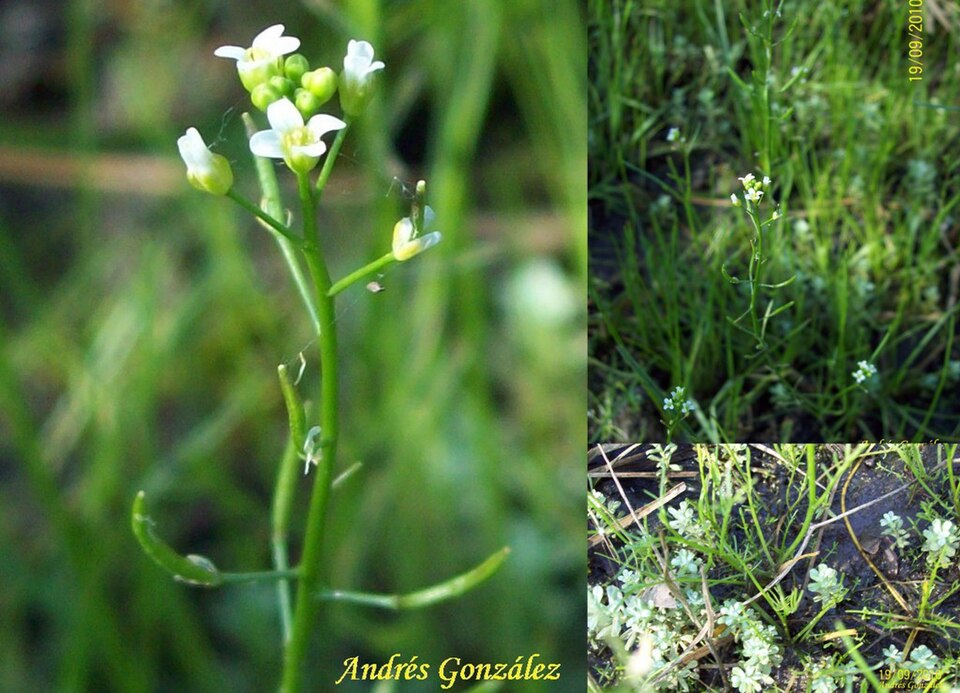
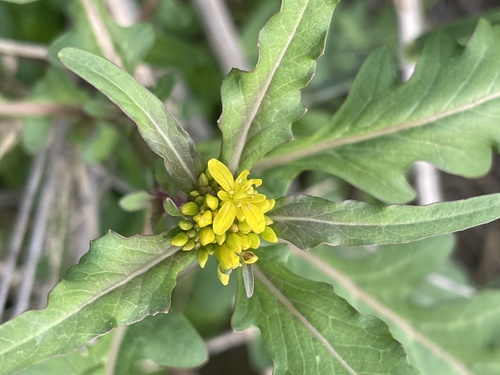
(c) Valentina, some rights reserved (CC BY-NC), uploaded by Valentina
iNaturalist· cc-by-nc
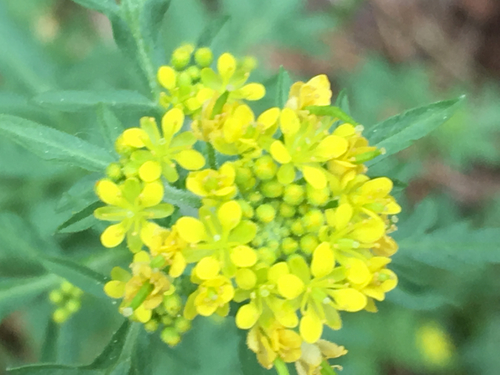
(c) Chuangzao, some rights reserved (CC BY-NC), uploaded by Chuangzao
iNaturalist· cc0
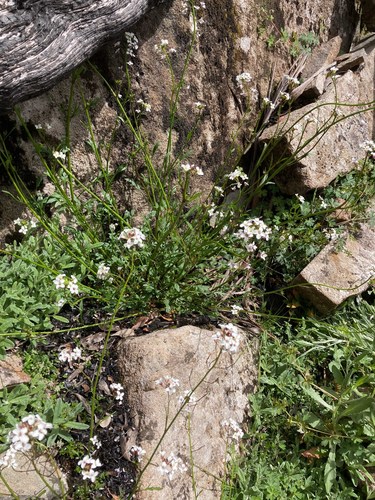
no rights reserved, uploaded by Jesse Rorabaugh
Summary
Source: WikipediaLepidium didymum, the lesser swine-cress, is a species of flowering plant in the family Brassicaceae.
Description
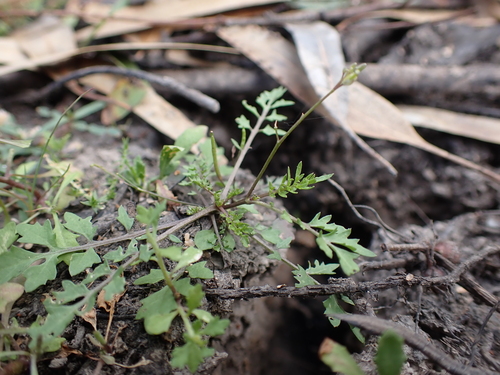
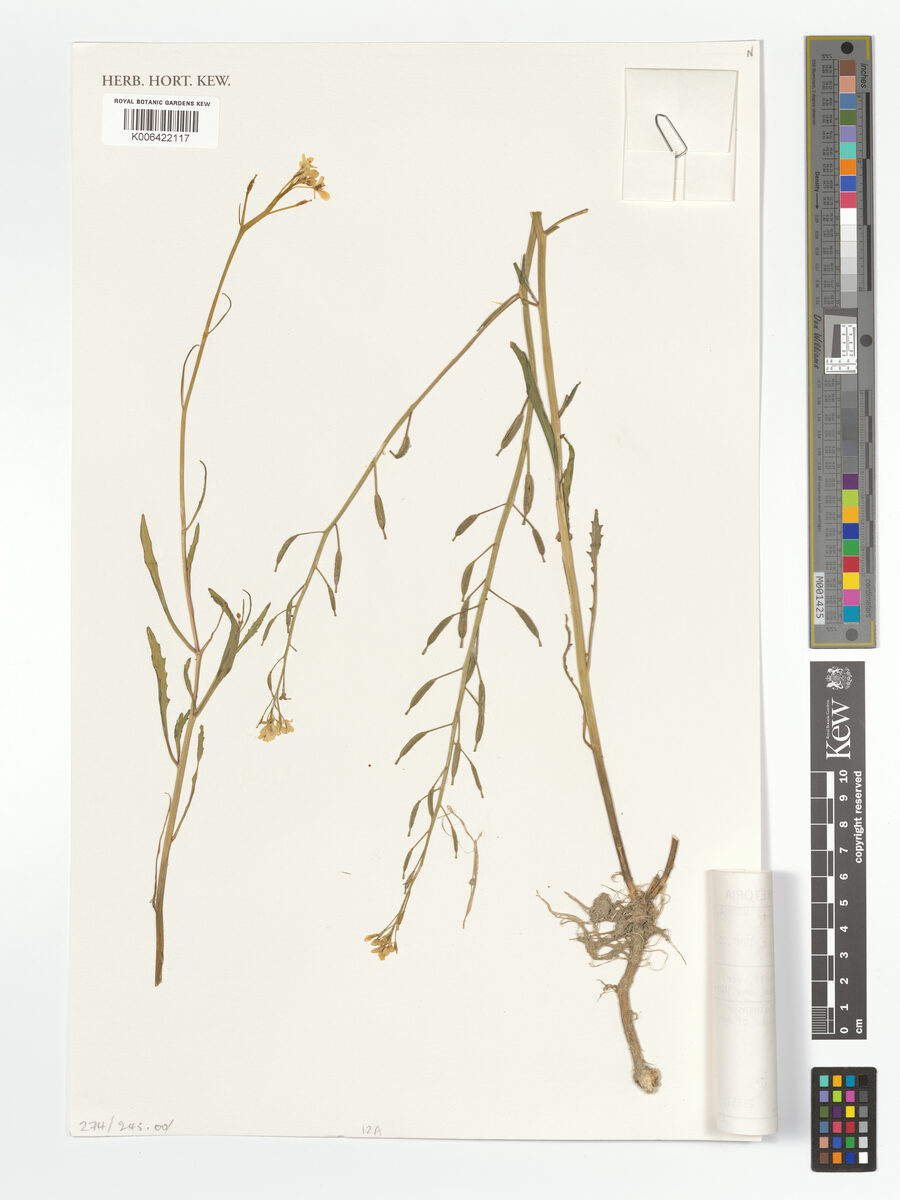
A cabbage family herb. It grows 10-70 cm high. It grows for one or two years. It is often a spreading plant lying along the ground. The stems have many branches. The stems are covered with fine long hairs. The stem leaves are divided into leaflets along the stalk. The leaflets vary. The leaves are 2-5 cm long. The leaves are alternate. The plant has a smell like cress when crushed. The flowers are at the end of the plant. The flowers are very small. They may only be 1.5-2 mm across. They have 4 petals. The fruit have 2 rounded sections like two balls close together. These seed pods are 2 mm wide.
Edible Uses
The leaves of this plant are edible, and have a salty, cress or mustard flavour.
Traditional Uses
The leaves have a pungent taste and are used in salads and sandwiches. The plant can be made more edible by extensive boiling.
This uses section is brief — help expand it
Medicinal Uses
The plant (part not specified) is credited with antiscorbutic, digestive, expectorant, febrifuge, stimulant and tonic properties. The plant is valued in traditional medicine as a treatment for cancer, gangrene, haemorrhoids, allergies and wounds. A decoction of the whole plant is drunk to treat headache and fevers. A leaf poultice is applied externally to treat headache. Phytochemical screening of the plant showed the presence of flavonoids, saponins and tannins. The bioactive flavonoid chrysoeriol has been isolated. These compounds have free radical-scavenging and antioxidant properties. The sterol beta-sitosterol has been isolated from the petroleum ether extract; it has hypocholesterolaemic activity. The seeds contain erucic acid and glucosinolate. Tests in India have shown wound-healing, anti-inflammatory, antiallergic, antipyretic, hypoglycaemic and hepatoprotective activities of the plant.
Known Hazards
Cows may produce off-flavoured milk when they have been fed with grass mixed with Lepidium didymum. It has been suggested that this is caused by the inhibitory actions of benzyl isothiocyanate present in the plant on microbial and/or enzymatic activities inthe rumen of the cows.
Distribution
It is a temperate plant. It grows on roadsides, waste areas, fields; near sea level to 1000 m altitude in China. It grows between 1,350-2,800 m in the tropics. In Argentina it grows between sea level and 2,900 m above sea level. It can tolerate salty soils. It often grows near mangroves. It can grow in arid places. Tasmania Herbarium.
Where It Grows
Africa, Antilles, Argentina, Asia, Australia, Austria, Azores, Bahamas, Belgium, Bolivia, Brazil, Britain, Cape Verde, Central Africa, Chile, China, Congo, Czech Republic, East Africa, Easter Island, Egypt, Ethiopia, Europe, Falklands, Fiji, Finland, France, Germany, Greece, Guiana, Hawaii, Himalayas, Hungary, India, Indochina, Ireland, Italy, Jamaica, Kenya, Korea, Madagascar, Mediterranean, Middle East, Mozambique, Netherlands, New Caledonia, New Zealand, Norfolk Island, North Africa, North America, NW India, Oman, Pacific, Pakistan, Paraguay, Peru, Portugal, Romania, Samoa, Sao Tome and Principe, Scandinavia, SE Asia, Slovakia, South Africa, Southern Africa, South America, Spain, St Helena, Switzerland, Taiwan, Tanzania, Tasmania, Tonga, Uruguay, USA, Vanuatu, Vietnam, West Indies, Zambia, Zimbabwe,
Cultivation
Lepidium didymum is a cosmopolitan weed. It has spread from its native range in S. America to much of Europe, N. America and parts of Africa and Asia partly by its seeds being carried by birds and mammals and also by various human activities. In some regions it is considered a serious weed of cultivated land, for example. in wheat, potato, pea, carrot and onion crops in India and in onion crops in Brazil. After germination, Lepidium didymum plants develop rapidly. They often complete their life cycle within a few months. The whole plant has a foetid smell.
Propagation
Seed - sow in situ.
Other Uses
The plant is often found as a weed of disturbed soil. It has been found to tolerate high levels of lead in the soil and to accumulate the metal in its leaves and roots, though mainly in the roots. The plant has excellent potential for mitigating lead from polluted soils and is a promising candidate for use in soil remediation projects
Notes
There are 10 Coronopus species. Now Lepidium didymum.
Nutrition
| Part | Moisture | kJ | kcal | Protein | Vit A | Vit C | Iron | Zinc |
|---|---|---|---|---|---|---|---|---|
| Leaves | 84.6 | 209 | 50 | 3.7 | — | 11.5 | — | — |
Synonyms
Also Known As
Anatsingita, Bitter cress, Calachin, Cervellina, Gangly, Hallian, Lesser wart-cress, Mastuerzo, Mestruz, Mintruiz, Mistruiz, Quimpe, Tsingita, Vranozka podvojna
References (38)
- Cribb, A.B. & J.W., 1976, Wild Food in Australia, Fontana. p 135 (As Coronopus didymus)
- Curtis, W.M., 1956, The Students Flora of Tasmania Vol 1 p 44 (As Coronopus didymus)
- Dashorst, G.R.M., and Jessop, J.P., 1998, Plants of the Adelaide Plains & Hills. Botanic Gardens of Adelaide and State Herbarium. p 68 (As Coronopus didymus)
- Flora of Australia, Volume 8, Lecythidales to Batales, Australian Government Publishing Service, Canberra (1982) p 283 (As Coronopus didymus)
- Flora of Australia Volume 49, Oceanic Islands 1, Australian Government Publishing Service, Canberra. (1994) p 139 (As Coronopus didymus)
Show all 38 references Hide references
- Fl. brit. 2:691. 1800 (As Coronopus didymus)
- Fox, F. W. & Young, M. E. N., 1982, Food from the Veld. Delta Books. p 139 (As Coronopus didymus)
- Freyre. M. R., et al, 2000, Suitability of wild underexploited vegetables from the Argentine Chaco as a food source. (In Spanish), Arch. Latinoam Nutr. Dec. 50(4):394-9 (As Coronopus didymus)
- Hanif, U., et al, 2013, Ethnobotanical studies on some wild plants of head Qadirabad and adjoining areas, Pakistan. International Journal of Phytomedicine 5:373-377
- Harris, S., Buchanan, A., Connolly, A., 2001, One Hundred Islands: The Flora of the Outer Furneaux. Tas Govt. p 137 (As Coronopus didymus)
- Hedrick, U.P., 1919, (Ed.), Sturtevant's edible plants of the world. p 603 (As Senebiera coronopus)
- Hussey, B.M.J., Keighery, G.J., Cousens, R.D., Dodd, J., Lloyd, S.G., 1997, Western Weeds. A guide to the weeds of Western Australia. Plant Protection Society of Western Australia. p 116 (As Coronopus didymus)
- Hyde-Wyatt, B.H. & Morris D.I., 1975, Tasmanian Weed Handbook. Dept of Ag Tasmania. p 43 (As Coronopus didymus)
- Khan, M. & Hussain, S., 2014, Diversity of wild edible plants and flowering phenology of district Poonch (J & K) in the northwest Himalaya. Indian Journal of Sci, Res. 9(1): 032-038 (As Coronopus didymus)
- Kinupp, V. F., 2007, Plantas alimenticias nao-convencionais da regiao metropolitana de Porto Alegre, RS, Brazil p 70 (As Coronopus didymus)
- Kinupp, V. F. & Bergman, I., 2008, Protein and minerals of native species, potential vegetables and fruits. Cienc.Tecnol. Aliment. Vol. 28 No. 4 Campinas Oct/Dec. (As Coronopus didymus)
- Kujawska, M. & Luczaj, L., 2015, Wild Edible Plants Used by the Polish Community in Misiones, Argentina. Human Ecology 43:855-869
- Lamp, C & Collet F., 1989, Field Guide to Weeds in Australia. Inkata Press. p 85 (As Coronopus didymus)
- Lazarides, M. & Hince, B., 1993, Handbook of Economic Plants of Australia, CSIRO. p 65 (As Coronopus didymus)
- Leon-Lobos, P., et al, 2022, Patterns of Traditional and Modern Uses of Wild Edible Native Plants of Chile: Challenges and Future Perspectives. Plants (Basel) v 11 (6) Table S1
- Low, T., 1991, Wild Herbs of Australia and New Zealand. Angus & Robertson. p 60 (Drawing) (As Coronopus didymus)
- Low, T., 1992, Bush Tucker. Australia’s Wild Food Harvest. Angus & Robertson. p 143 (As Coronopus didymus)
- Malezas Comestibles del Cono Sur, INTA, 2009, Buernos Aires (As Coronopus didymus)
- Martin, F.W. & Ruberte, R.M., 1979, Edible Leaves of the Tropics. Antillian College Press, Mayaguez, Puerto Rico. p 188 (As Coronopus pinnatifida)
- Paczkowska, G. & Chapman, A.R., 2000, The Western Australian Flora. A Descriptive Catalogue. Western Australian Herbarium. p 186 (As Coronopus didymus)
- Pham-Hoang Ho, 1999, An Illustrated Flora of Vietnam. Nha Xuat Ban Tre. p 605 (As Coronopus didymus)
- Plants for a Future database, The Field, Penpol, Lostwithiel, Cornwall, PL22 0NG, UK. http://www.scs.leeds.ac.uk/pfaf/ (As Coronopus didymus)
- Razanameharizaka, J., et al, 2022, Catalogue Legumes Traditionnels de Madagascar. Université d’Antananarivo, Antananarivo (101), Madagascar. Vol. 1. p 31
- Royal Botanic Gardens, Kew (1999). Survey of Economic Plants for Arid and Semi-Arid Lands (SEPASAL) database. Published on the Internet; http://www.rbgkew.org.uk/ceb/sepasal/internet [Accessed 15th April 2011] (As Coronopus didymus)
- Ruiters-Welcome, A. K., 2019, Food plants of southern Africa. Ph.D. thesis. Univ. of Johannesburg p 39 (As Coronopus didymus)
- Simkova, K. et al, 2014, Ethnobotanical review of wild edible plants used in the Czech Republic. Journal of Applied Botany and Food Quality 88, 49-67
- Universidad Nacional de Lujan. http://www.unlu.edu.ar\~argenfood (As Coronopus didymus)
- Upson, R., & Lewis R., 2014, Updated Vascular Plant Checklist and Atlas for the Falkland Islands. Falklands Conservation and Kew.
- Welcome, A. K. & Van Wyk, B.-E., 2019, An inventory and analysis of the food plants of southern Africa. South African Journal of Botany 122 (2019) 136–179 (As Coronopus didymus)
- World Checklist of Useful Plant Species 2020. Royal Botanic Gardens, Kew
- Yuncker, T.G., 1959, Plants of Tonga, Bernice P. Bishop Museum, Hawaii, Bulletin 220. p 122 (As Coronopus didymus)
- Zizka, G., 1991, Flowering Plants of Easter Island. Palmarum Hortus Francofurtensis (As Coronopus didymus)
- Zhou Taiyan, Lu Lianli, Yang Guang; Ihsan A. Al-Shehbaz, BRASSICACEAE (CRUCIFERAE), Flora of China. (As Coronopus didymus)