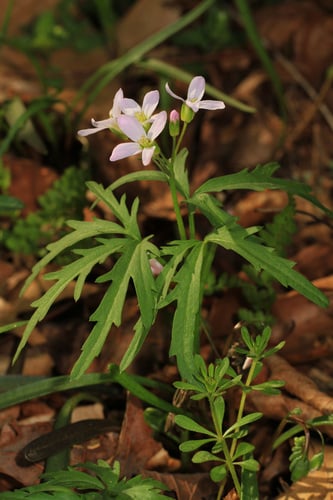
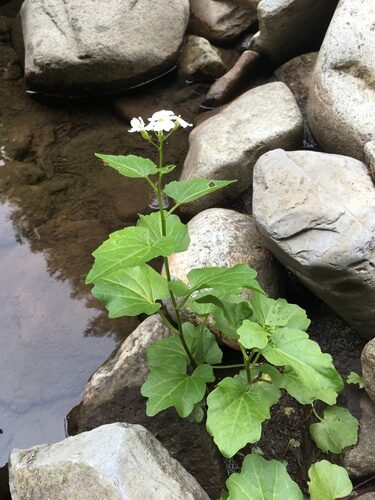
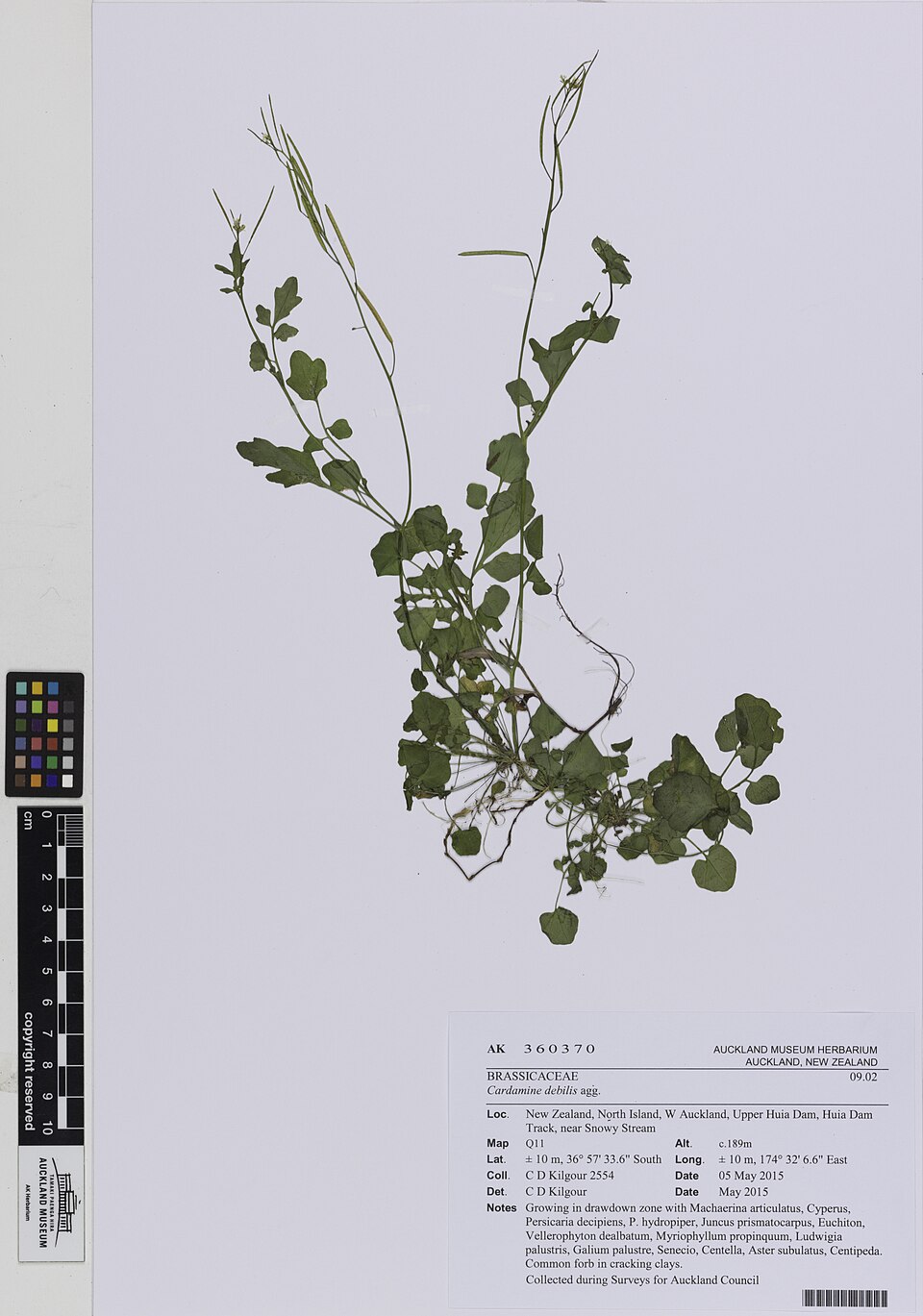
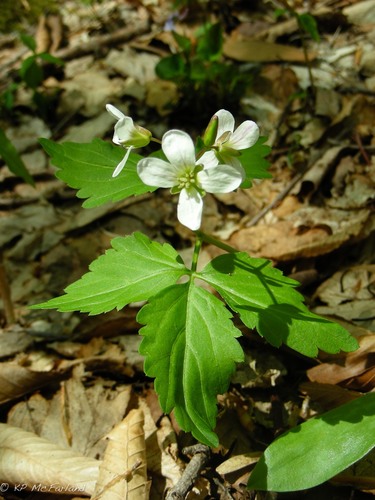
Raphanus sativus var. longipinnatus
L. H. Bailey
Chinese radish, Daikon, Oriental radish
gbif· cc0
Ingrid P. Lin
gbif· cc0
Conveyor Belt
gbif· cc-by
Royal Botanic Gardens, Kew
Description
A cabbage family plant like a large radish. It has a large fleshy root and deeply divided leaves. The taproot is long and white. It takes one or two years to complete its life cycle. The stems can be 20-100 cm high. The leaves near the base are long. They are divided and have coarse teeth. The leaves up the stem are simple and narrow. The flowers develop at the top. They are usually white with purple veins. The fruit are pods about 3-8 cm long and 1.25 cm across. They have a long tapering beak. There are 6-12 round seeds. These can be yellow or brown.
Edible Uses
The roots are eaten cooked in stir-fried dishes and soups, pickled, or shredded raw in salads. Young leaves can be cooked, young flowers are stir-fried or added to soups, and young seedlings can be cooked like spinach. The peppery seeds are used in salads and rice dishes, and the pods are also edible.
Traditional Uses
The roots are cooked and eaten. They are used in stir-fried dishes and soups. They can be pickled. The young leaves can be eaten cooked. The roots can also be shredded and eaten raw in salads. The young flowers are stir fried or added to soups. The young seedlings can be cooked like spinach. The peppery seeds can be used in salads and rice dishes. The pods can also be eaten.
Distribution
A temperate plant. It is more common in lowland areas in the tropics. It needs a rich loose fertile soil. It suits hardiness zones 6-9.
Where It Grows
Asia, Australia, Cambodia, Canada, China, East Africa, East Timor, Fiji, FSM, Hawaii, India, Indochina, Indonesia, Japan, Korea, Malawi, Malaysia, Nauru, North America, Pacific, Papua New Guinea, PNG, Philippines, Pohnpei, SE Asia, Singapore, Solomon Islands, Sri Lanka, Taiwan, Tasmania, Thailand, Timor-Leste, USA, Vanuatu, Vietnam,
Cultivation
Plants are grown from seeds. A spacing of 15 cm apart in rows is suitable. Often plants are sown more thickly and seedlings are thinned out and eaten. It is possible to save seed from plants.
Production
Plants are ready for harvesting about 50 days after planting.
Other Information
It is a commercially cultivated vegetable. Rarely grown or eaten by village people in Papua New Guinea. It is seen at schools and institutions and sometimes in coastal markets.
Synonyms
Also Known As
Cu cai trang, Labanos, Lao bo, Lo bok, Lobak, Loh-bak, Lo paak, Moo, Mooli, Muli, Mure, Phakkat-hua, Rabu
References (24)
- Chin, H. F., 1999, Malaysian Vegetables in Colour. Tropical Press. p 54
- Creasy, R., 2000, The Edible Asian Garden. Periplus p 39
- Cundall, P., (ed.), 2004, Gardening Australia: flora: the gardener's bible. ABC Books. p 1133
- Facciola, S., 1998, Cornucopia 2: a Source Book of Edible Plants. Kampong Publications, p 60
- French, B.R., 1986, Food Plants of Papua New Guinea, A Compendium. Asia Pacific Science Foundation p 122
Show all 24 references Hide references
- French, B.R., 2010, Food Plants of Solomon Islands. A Compendium. Food Plants International Inc. p 147
- Herklots, G. A. C., 1972, Vegetables in South-East Asia. Allen & Unwin. p 141
- Gentes Herb. 1:25. 1920
- Grubben, G. J. H. and Denton, O. A. (eds), 2004, Plant Resources of Tropical Africa 2. Vegetables. PROTA, Wageningen, Netherlands. p 441
- Kays, S. J., and Dias, J. C. S., 1995, Common Names of Commercially Cultivated Vegetables of the World in 15 languages. Economic Botany, Vol. 49, No. 2, pp. 115-152
- Kiple, K.F. & Ornelas, K.C., (eds), 2000, The Cambridge World History of Food. CUP p 1767
- Larkcom, J., 1991, Oriental Vegetables, John Murray, London, p 111
- Lim, T. K., 2015, Edible Medicinal and Non Medicinal Plants. Volume 9, Modified Stems, Roots, Bulbs. Springer p 72
- Pham-Hoang Ho, 1999, An Illustrated Flora of Vietnam. Nha Xuat Ban Tre. p 606
- Purseglove, J.W., 1968, Tropical Crops Dicotyledons, Longmans. p 97
- Schneider, E., 2001, Vegetables from Amaranth to Zucchini: The essential reference. HarperCollins. p 522
- Solomon, C., 2001, Encyclopedia of Asian Food. New Holland. p 304
- Staples, G.W. and Herbst, D.R., 2005, A tropical Garden Flora. Bishop Museum Press, Honolulu, Hawaii. p 204
- Tindall, H.D., 1983, Vegetables in the tropics. Macmillan p. 135
- Tronickova, E. & Krejcova, Z., 1987, Ortaggi, Instituto Geografico de Agostini, Cecoslovacchia. p
- Walter, A. & Lebot, V., 2007, Gardens of Oceania. ACIAR Monograph No. 122. p 283
- Williamson, J., 2005, Useful Plants of Malawi. 3rd. Edition. Mdadzi Book Trust. p 213
- Woodward, P., 2000, Asian Herbs and Vegetables. Hyland House. p 117
- Zeven, A. C. & de West, J. M. J., 1982, Dictionary of cultivated plants and their regions of diversity. Wageningen. p 35