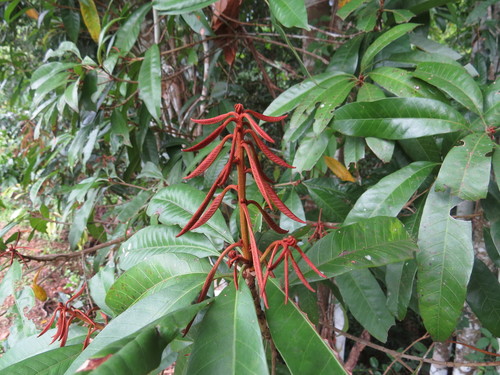
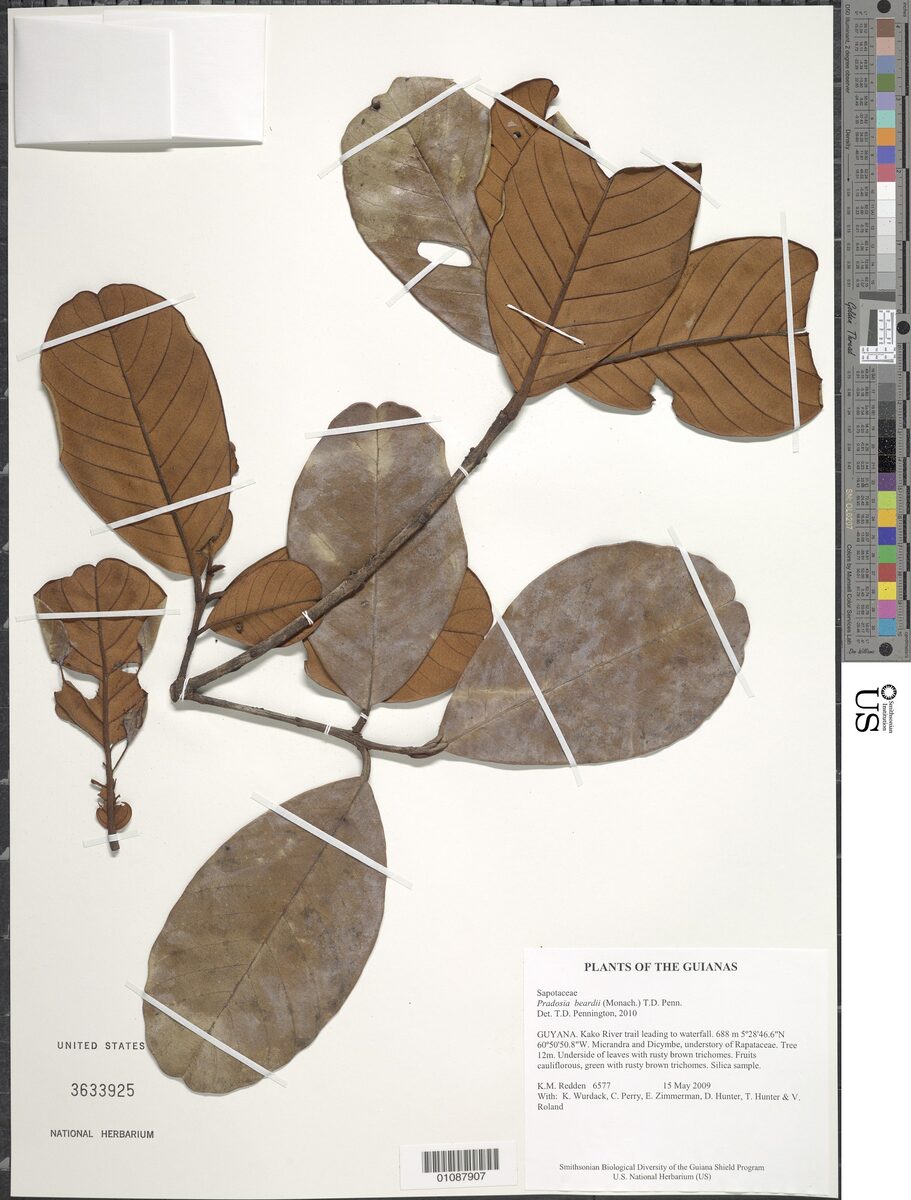
Chrysophyllum roxburghii
G. Don
Star apple
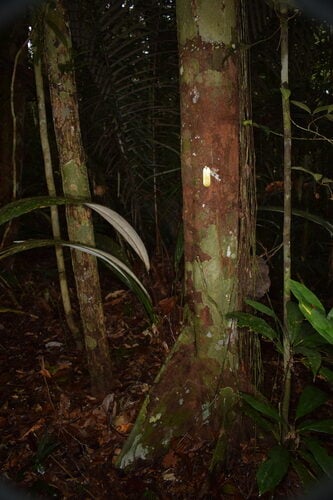
iNaturalist· cc-by-nc
(c) Radha Veach, some rights reserved (CC BY-NC)
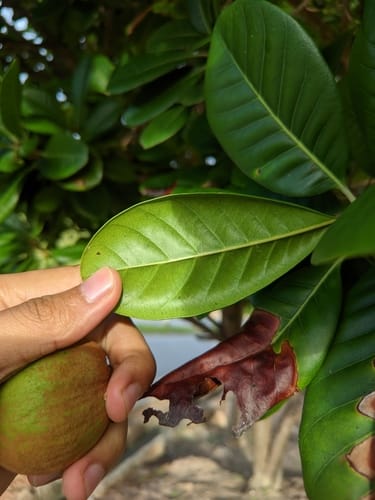
iNaturalist· cc-by-nc
(c) Radha Veach, some rights reserved (CC BY-NC)
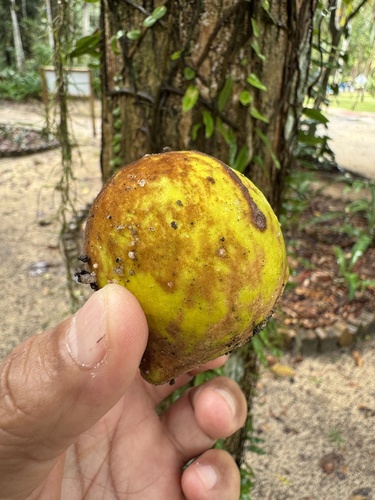
iNaturalist· cc-by-nc
(c) Radha Veach, some rights reserved (CC BY-NC)
Description
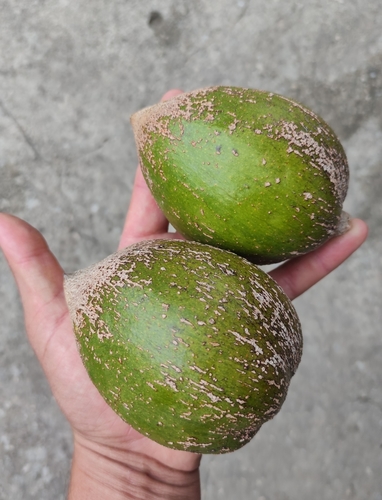
A tree. It can be 30 m tall. It can have buttresses. It has a white sticky exudate. The leaves are simple and 5-15 cm long by 2-3 cm wide. The new growth has rusty brown hairs. The leaf stalk is 5-8 mm long. The flowers are in groups in the axils of leaves. There are 5 green or white petals. They are 2-3 mm long. The fruit is fleshy and green or yellow. It is 5-6 cm long and wide. The fruit has a sticky white exudate. There can be 5 seeds and they are shiny brown. They are 24 mm long.
Edible Uses
Fruit - raw. The brown to purplish black, subglobose fruit is usually 15 - 20mm in diameter, but can be up to 40mm.
Traditional Uses
The ripe fruit are eaten.
This uses section is brief — help expand it
Medicinal Uses
The roots and leaves are used medicinally.
Distribution
A tropical plant. It grows in rainforest. In tropical Queensland it grows from sea level to 450 m altitude.
Where It Grows
Asia, Australia, Central America, China, India, Indochina, Indonesia, Laos, Malaysia, Myanmar, Northeastern India, Pacific, Papua New Guinea, PNG, Philippines, SE Asia, Singapore, Solomon Islands, Sri Lanka, Thailand, Torres Strait, West Indies,
Cultivation
Plants can be grown by seeds and also by budding and grafting.
Other Uses
The heartwood is yellow-white or yellow-brown; it is not distinctly demarcated from the lighter coloured sapwood. The texture is very fine and even; the grain is straight or shallowly interlocked. The wood is moderately heavy, moderately hard. It should be suitable for general planking and temporary structures. It can also be used for shingles, flooring, interior trim, panelling and partitioning, light tool handles, furniture and cabinet making, grain mortars, veneer and plywood.
Production
In NE India plants flower and fruit April to May.
Notes
There are about 80-150 Chrysophyllum species. They are mostly in tropical America. There are 44 species in tropical America.
Nutrition
| Part | Moisture | kJ | kcal | Protein | Vit A | Vit C | Iron | Zinc |
|---|---|---|---|---|---|---|---|---|
| Fruit | 309 | 74 | 0.6 | — | — | 1.3 | — | — |
Synonyms
Also Known As
Atha pala, Boppitha, Hale, Kappalei, Kattillupai, Kattusapotta, Lawulu, Mansal palam, Petakara, Pitakara, Pithogardkh, Pohon kayu nasi, Pokok melukut, Pokok pepulut, Pokok pulut-pulut, Pulichakka, Tarsi, Thai pabuan, Tha-kya-pin
References (17)
- Ambasta, S.P. (Ed.), 2000, The Useful Plants of India. CSIR India. p 123
- Burkill, I.H., 1966, A Dictionary of the Economic Products of the Malay Peninsula. Ministry of Agriculture and Cooperatives, Kuala Lumpur, Malaysia. Vol 1 (A-H) p 541
- Chandrashekara, U. M., 2009, Tree species yielding edible fruit in the coffee-based homegardens of Kerala, India: their diversity, uses and management. Food Sec. 1:361-370
- Cooper, W. and Cooper, W., 2004, Fruits of the Australian Tropical Rainforest. Nokomis Editions, Victoria, Australia. p 505
- Ferns, Useful Tropical Plants
Show all 17 references Hide references
- French, B.R., 2010, Food Plants of Solomon Islands. A Compendium. Food Plants International Inc. p 308
- Hedrick, U.P., 1919, (Ed.), Sturtevant's edible plants of the world. p 189
- INFOODS:FAO/INFOODS Databases
- Jeeva, S., 2009, Horticultural potential of wild edible fruits used by the Khasi tribes of Meghalaya. Journal or Horticulture and Forestry Vol. 1(9) pp. 182-192 (As Donella roxburghii)
- Kar, A., et al, 2013, Wild Edible Plant Resources used by the Mizos of Mizoram, India. Kathmandu University Journal of Science, Engineering and Technology. Vol. 9, No. 1, July, 2013, 106-126 (As Chrysophyllum lanceolatum)
- Mua Bioversity Profile, 2013, Profile for Management of the Habitats and Related Ecological and Cultural Resources of Mua Island. Torres Strait Regional Authority Land & Sea Management Unit. p 32
- Ramachandran, V. S., 2007, Wild edible plants of the Anamalais, Coimbatore district, western Ghats, Tamil Nadu. Indian Journal or Traditional Knowledge. 6(1) pp 173-176
- Sawian, J. T., et al, 2007, Wild edible plants of Meghalaya, North-east India. Natural Product Radiance Vol. 6(5): p 415 (As Donella roxburghii)
- Singh, H.B., Arora R.K.,1978, Wild edible Plants of India. Indian Council of Agricultural Research, New Delhi. p 56 (As Donella roxburghii)
- Singh, V. B., et al, (Ed.) Horticulture for Sustainable Income and Environmental Protection. Vol. 1 p 215
- Sukarya, D. G., (Ed.) 2013, 3,500 Plant Species of the Botanic Gardens of Indonesia. LIPI p 195
- World Checklist of Useful Plant Species 2020. Royal Botanic Gardens, Kew (As Donella lanceolata)