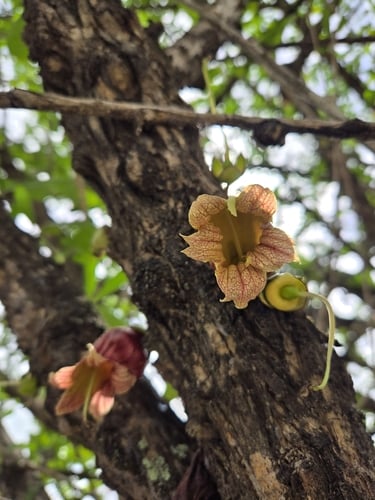
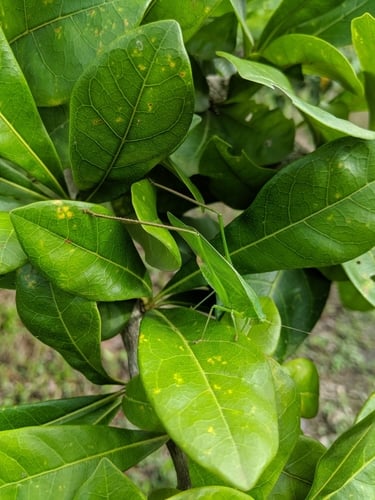
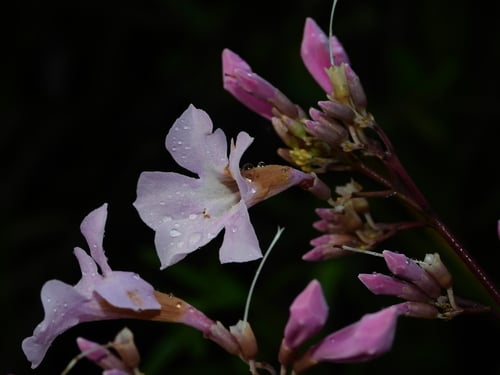
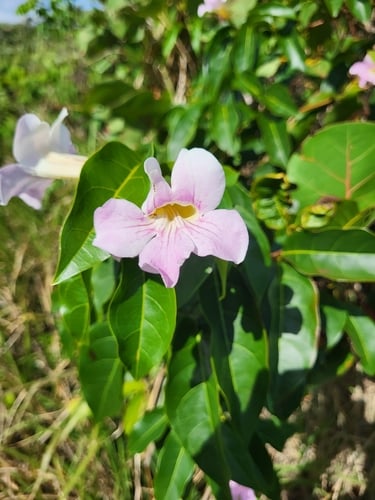
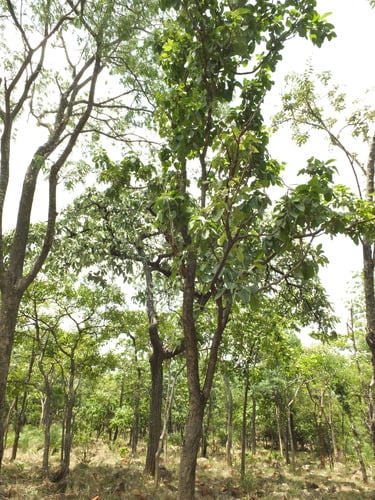
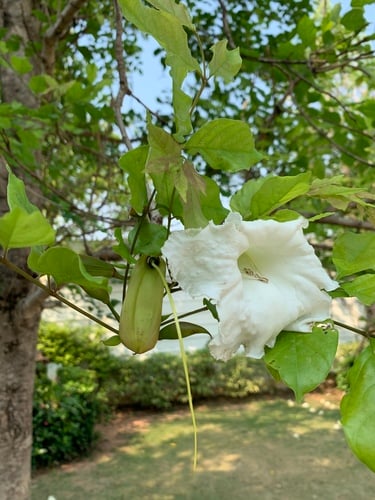
Handroanthus albus
(Cham.) Mattos
White handroanthus
iNaturalist· cc-by-nc
(c) Frederico Acaz Sonntag, some rights reserved (CC BY-NC), uploaded by Frederico Acaz Sonntag
iNaturalist· cc-by-nc
(c) Facundo Varela Barros, some rights reserved (CC BY-NC)
Summary
Source: WikipediaHandroanthus albus, the golden trumpet tree, is a tree with yellow flowers native to Argentina, Paraguay, Bolivia and the Cerrado (tropical savannas) of Brazil, where it is known as ipê-amarelo-da-serra. This plant is found in the Brazilian states of Distrito Federal, where it's the states symbol, Bahia, Espírito Santo, Goiás, Mato Grosso do Sul, Minas Gerais, Paraná, Rio de Janeiro, Rio Grande do Sul, Santa Catarina, Piauí, Amazonas, Pará and São Paulo. It is used as an urban tree. Well-known and popular, the tree and its flower are the national plants of Brazil.
Description
A tropical tree in the Bignoniaceae family.
This description is brief — help expand it
Edible Uses
The flowers are eaten.
Medicinal Uses
The leaves are astringent. They are used in the treatment of inflammations of the nasal passages and the throat. An infusion of the inner bark is used as a diuretic. We have no further specific information for this species, but the inner bark of the various Handroanthus species has been shown to contain several pharmacologically active compounds. In particular, the bark has astringent and anti-inflammatory properties and several species are used to treat skin disorders, fungal infections, wounds etc, as well as a various inflammatory diseases, cancer etc. The bark contains the naphthoquinones lapachol and beta-lapachone. These compounds have a range of medicinal activities, including antitumor activity, but when isolated from the whole bark and used in the quantities required to treat conditions such as cancer, they have also shown unacceptable levels of toxicity towards the body.
Known Hazards
The sawdust can cause skin problems in woodworkers.
Distribution
It is a tropical plant.
Where It Grows
Argentina, Brazil, Paraguay, South America,
Cultivation
Grows best in a sunny position. Prefers a deep, fertile, moist but well-drained soil. Young plants grow away quickly, reaching a height of around 3.5 metres within 2 years. They usually commence flowering when around 6 - 8 metres tall, though sometimes when only 3 metres tall.
Propagation
Seed - best sown as soon as it is ripe in a partially shaded position in a nursery seedbed or in individual containers. A germination rate in excess of 80% can be expected, with the seed sprouting within 5 - 10 days. When the seedbed-sown seedlings are 4 - 6cm tall, pot them up into individual containers and they should be ready to plant out around 6 months later. The seed has a viability of less than 4 months in storage.
Other Uses
The wood is heavy, hard, compact, of high durability even under unfavourable circumstances. A good quality wood, it is suitable for outdoor work such as railway sleepers, bridges, fencing posts, girders, axles, wooden mills, parquet flooring, floorboards, barrels, gear teeth, general carpentry and cabinet making. Most species of Handroanthus, almost certainly including this one, produce a very hard, heavy and durable timber known collectively as 'Ipê' and widely traded under that name. Most Ipê wood comes from this genus (Handroanthus), though some also comes from the genera Tabebuia and Roseodendron. The general description of Ipê wood, when produced from Handroanthus species is as follows:- The heartwood is yellowish brown to dark olive brown, sometimes with thin veins; it is clearly demarcated from the 3 - 9cm wide band of lighter-coloured sapwood. The texture is usually fine, though it is medium in some species; the grain is interlocked; there are canals in the wood containing a greenish-yellow deposit of the naphthoquinon 'lapachol'. The wood is very heavy; very hard; elastic; it is very durable, even in contact with the soil, resisting fungi, dry wood borers and termites. It seasons slowly, but with only a low risk of checking or distortion; once dry it is moderately stable in service. The wood has a fairly high blunting effect - stellite-tipped and tungsten carbide tools are recommended; there can be some difficulties due to the interlocked grain; filling is recommended in order to get a good finish; nailing and screwing are good , but require pre-boring; gluing is correct for internal use only, and needs to be done with care because the wood is so dense. Ipê is a very durable and strong wood that has a very wide range of uses, especially for outdoor applications. It is used for making high class furniture, cabinet work, heavy construction, railway sleepers, bridges, hydraulic works, industrial flooring, decking, posts and poles, turnery, musical instruments, tool handles, veneer etc.
Synonyms
Also Known As
Aipe, Ipe-amarelo, Ipa-de-serra, Ipe-de-cerrado, Ipe-dourado, Ipe-mamono, Ipe-ouro, Taipoco, Taju sa'y
References (1)
- Grandtner, M. M. & Chevrette, J., 2013, Dictionary of Trees, Volume 2: South America: Nomenclature, Taxonomy and Ecology. Academic Press p 289