Coriandrum sativum
L.
Coriander
iNaturalist· cc0
no rights reserved, uploaded by 葉子
iNaturalist· cc-by
(c) Георгий Виноградов (Georgy Vinogradov), some rights reserved (CC BY)
Summary
Source: WikipediaAnnual herb growing to 0.5 m tall and 0.3 m wide. Hardy to UK zone 3, not frost tender. Flowers June to July with seeds ripening August to September. Hermaphrodite, self-fertile flowers pollinated by insects attract wildlife. Grows in light sandy and medium loamy well-drained soils, tolerating mildly acid to very alkaline pH. Can grow in semi-shade to full sun, adapts to dry or moist soil conditions.
Description
An annual herb up to 70 cm high. It spreads to 50 cm across. It has a fleshy taproot. The stem is erect and finely grooved. The leaves are compound, and divided along their length. The lower leaves have lobes, while the upper leaves are finely divided. The leaves are bright green, and glossy. Flowers are pink to white. They occur in flat arrangements, with stalks coming from the same point. The plant has an unpleasant smell until the fruit ripens. The fruit are pale brown. The fruit have lines along them. Some lines are wavy and some are straight.
Edible Uses
Leaves can be eaten raw or cooked and are widely used fresh as a flavouring herb in salads, soups, and similar dishes — fresh leaves contain approximately 0.012% oxalic acid and 0.172% calcium. They should not be eaten in large quantities. The seed is used cooked as a flavouring in cakes, bread, curries, and certain alcoholic liquors. Fresh seed has a disagreeable smell, but once dried it becomes fragrant and grows more so the longer it is kept. Plants yield approximately 1¾ tonnes of seed per acre. The root is powdered and used as a condiment. An essential oil extracted from the seed is also used as a food flavouring.
Traditional Uses
The dried fruit are used in curry and flavourings. The seeds are boiled and used as a drink. The young plants and leaves are used in soups, sauces and as flavourings. The root is also crushed and used as a seasoning.
Medicinal Uses
Coriander is a commonly used domestic remedy, particularly valued for its effects on the digestive system — treating flatulence, diarrhoea, and colic, calming gut spasms, and countering nervous tension. The seed is aromatic, carminative, expectorant, narcotic, stimulant, and stomachic. It is most often combined with active purgatives to mask their flavour and reduce their tendency to cause gripe. Chewing the raw seed stimulates gastric juice production and cures foul breath, including that caused by garlic. However, if used too freely the seeds become narcotic, so some caution is advised. Externally, the seeds have been used as a lotion or bruised into a poultice to treat rheumatic pains. The essential oil is used in aromatherapy, with 'appetite stimulant' as its key application. The German Commission E Monographs approve coriander for dyspepsia and loss of appetite.
Known Hazards
The plant can have a narcotic effect if it is eaten in very large quantities. Powdered coriander and oil may cause allergic reactions and photosensitivity. Use dry coriander sparingly if suffering bronchial asthma and chronic bronchitis
Distribution
A Mediterranean plant. Sometimes it does not set seed in the lowland tropics. It grows up to about 2200 m altitude in the tropics. It prefers light to medium, well-drained soils. It suits an open sunny position. It is drought and frost tender. In Nepal it grows to 3000 m altitude. It can grow in arid places. It suits hardiness zones 6-9.
Where It Grows
Afghanistan, Africa, Algeria, Amazon, Argentina, Asia, Australia, Azores, Balkans, Bangladesh, Belarus, Belgium, Bhutan, Brazil, Britain, Bulgaria, Cambodia, Cameroon, Canada, Canary Islands, Cape Verde, Caribbean, Caucasus, Central America, Central Asia, Chad, Chile, China, Colombia, Cook Islands, Costa Rica, Crete, Cuba, Cyprus, Czech Republic, Denmark, Dominican Republic, East Africa, East Timor, Ecuador, Egypt, El Salvador, Eritrea, Ethiopia, Europe, Fiji, Finland, France, Georgia, Germany, Greece, Guatemala, Guyana, Haiti, Hawaii, Himalayas, Holland, Hungary, India, Indochina, Indonesia, Iran, Iraq, Israel, Italy, Japan, Jordan, Kazakhstan, Kenya, Korea, Kuwait, Laos, Libya, Macedonia, Madagascar, Malawi, Malaysia, Mali, Malta, Mauritius, Mediterranean, Mexico, Middle East, Mongolia, Morocco, Mozambique, Myanmar, Nauru, Nepal, Netherlands, New Zealand, Nicaragua, Norfolk Is., North Africa, North America, Northeastern India, Norway, Pacific, Pakistan, Palestine, Papua New Guinea, PNG, Paraguay, Peru, Philippines, Poland, Portugal, Puerto Rico, Romania, Russia, Saudi Arabia, SE Asia, Serbia, Siberia, Sikkim, Sinai, Slovenia, Somalia, South Africa, Southern Africa, South America, Spain, Sri Lanka, Sudan, Sweden, Switzerland, Syria, Taiwan, Tajikistan, Tanzania, Tasmania, Thailand, Timor-Leste, Trinidad-Tobago, Turkey*, Türkiye, Turkmenistan,Tuvalu, Uganda, Ukraine, USA, Uzbekistan, Vanuatu, Vietnam, West Africa, West Indies, Yemen, Yugoslavia, Zambia, Zimbabwe,
Cultivation
Prefers a warm dry light soil. Plants grown mainly for their seeds do well in partial shade, but when growing for the seed or essential oil a sunny position is preferred. The plants dislike constant moisture or too much nitrogen. Another report says that coriander grows best when a cool damp spring is followed by a hot dry summer. Coriander tends to run quickly to seed if the plants are too dry at the seedling stage. Plants tolerate a pH in the range 4.9 to 8.3. Coriander is often cultivated, both on a garden scale and commercially, for its edible seed, there are some named varieties. The plant is fast-growing, ripening its seed without difficulty in Britain and it seems to be free of pests and diseases. The seeds have been used medicinally and as a food flavouring since ancient times, and were introduced into Britain by the Romans. In the Middle Ages they were added to love potions because of their reputation as aphrodisiacs. The plants flowers are very attractive to pollinating insects. Coriander is in general a good companion plant in the garden, helping to repel aphis and carrot root fly. It grows well with anise, improving the germination rate when the two species are sown together, but it grows badly with fennel, where it acts to reduce the seed yield of the fennel. Coriander also grows particularly well with dill and chervil.
Propagation
Sow seed in April directly in situ. As germination is slow, seed can also be sown in March in a cold frame on a garden scale — sow a few seeds per pot and plant out in May once growing strongly. Seed can also be sown in situ in autumn; autumn-sown plants grow larger and produce more seed.
Other Uses
An essential oil from the seed is used in food flavouring, perfumery, and soap making, and has fungicidal and bactericidal properties. The growing plant repels aphids. A spray made by boiling one part coriander leaves and one part anise seeds in two parts water is effective against red spider mites and woolly aphids. An oil from the seed is also used in soap making — whether the essential or fixed oil is used is unclear. The seed contains about 20% fixed oil, which has potential for industrial use as an alternative to oilseed rape, though the oil content was considered slightly low as of 1995. This oil can be refined into types suited for soap production or for making plastics. The dried stems are used as a fuel.
Production
Plants mature after about 3 months. It is important to dry the fruit before use, to get rid of an unpleasant smell.
Other Information
It is a commercially cultivated vegetable. One of the world's most commonly used herbs and spices.
Notes
There are 2 Coriandrum species.
Nutrition
| Part | Moisture | kJ | kcal | Protein | Vit A | Vit C | Iron | Zinc |
|---|---|---|---|---|---|---|---|---|
| Seeds | 11 | 1218 | 291 | 14 | 300 | 21 | 18 | 4.7 |
| Leaves - dried | 7.3 | 1167 | 279 | 21.9 | 585 | 567 | 42.5 | 4.7 |
| Leaves | 92.8 | 84 | 20 | 2.4 | 48 | 11 | 2 | 0.5 |
Synonyms
More from Apiaceae
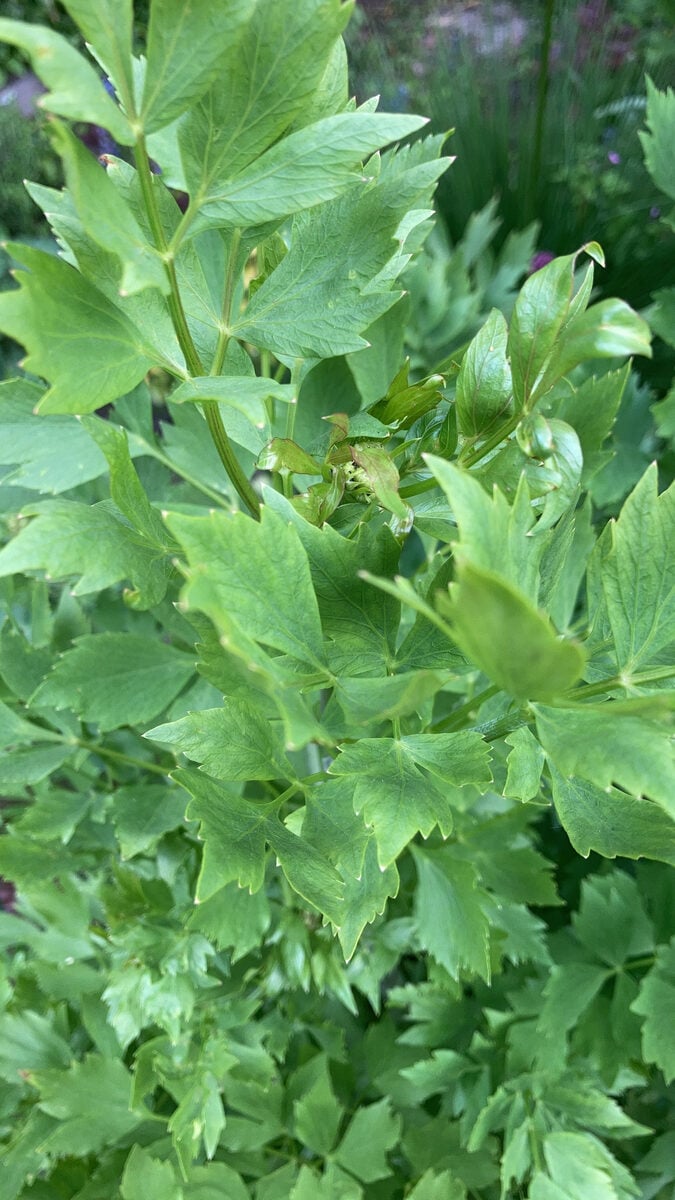
Apium graveolens var. secalinum
Chinese celery, Asian celery, Leaf celery
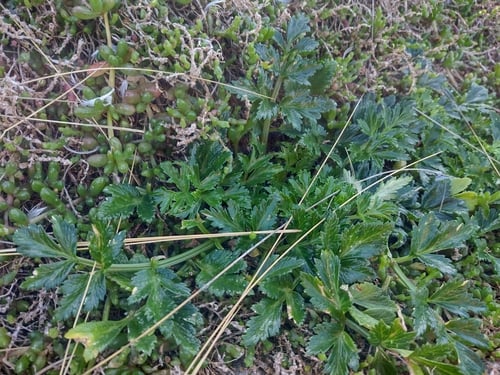
Apium insulare
Island celery
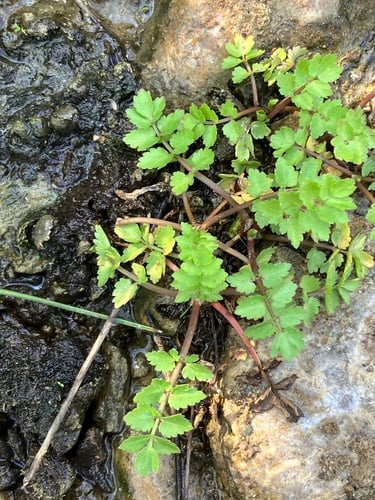
Apium nodiflorum
Crescione, Creeping marshwort, Water parsnip
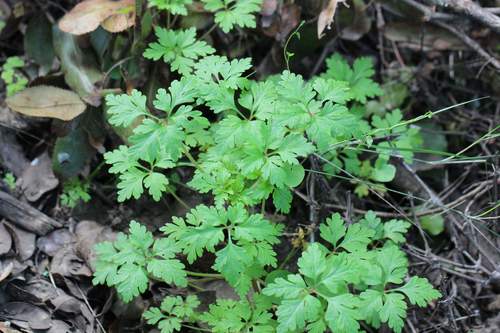
Apium panul
Panul
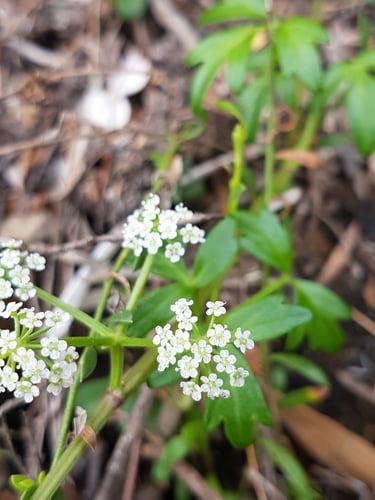
Apium prostratum
Sea celery, Sea parsley, Australian celery, Slender sea celery
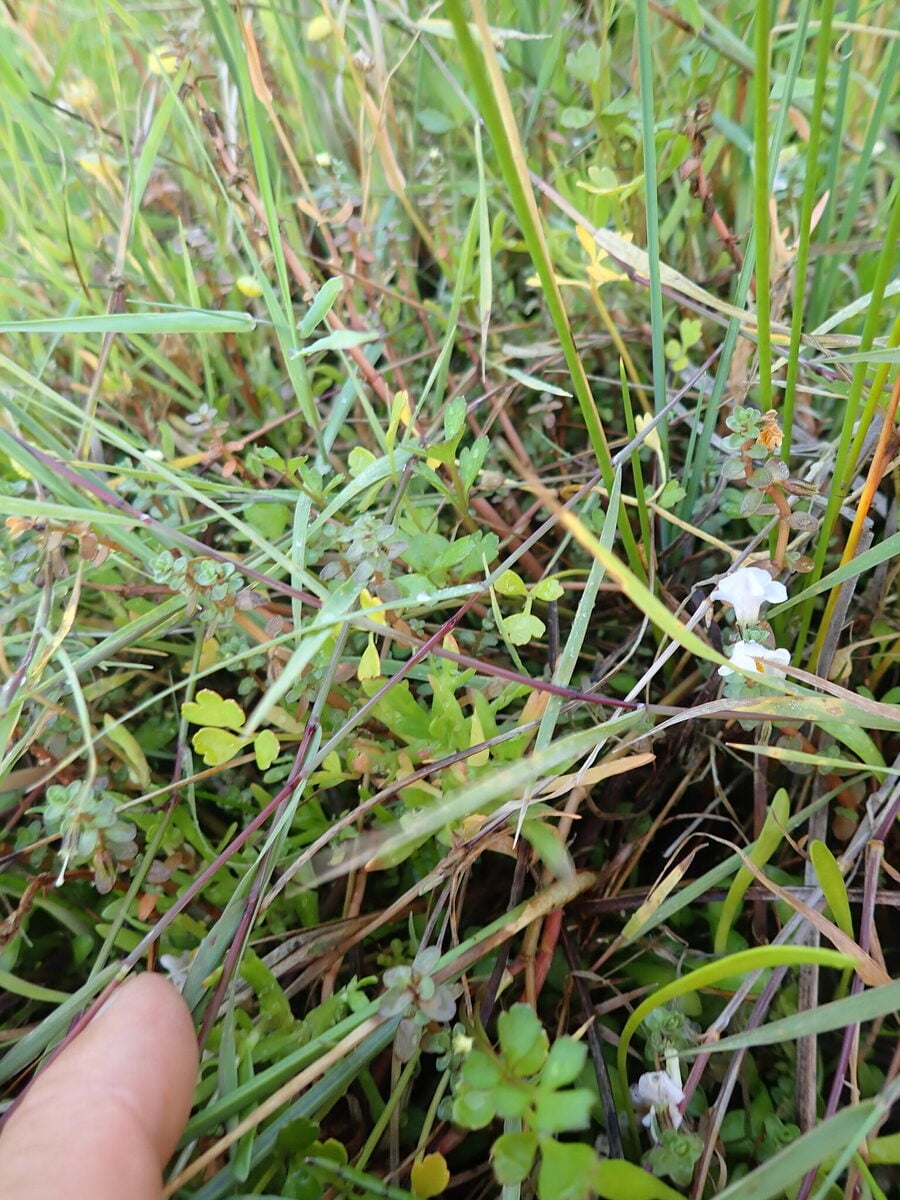
Apium prostratum var. filiformis
Mangrove sea celery