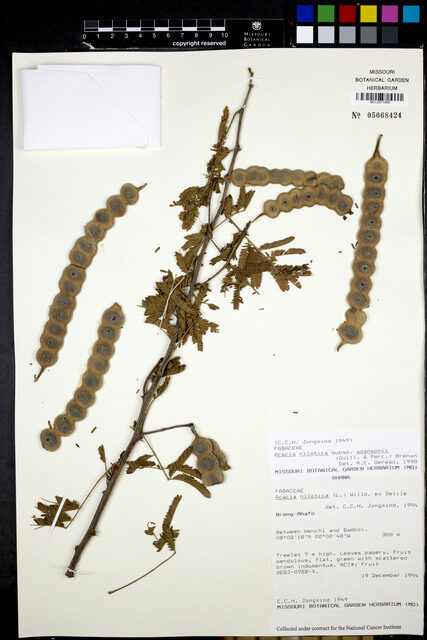
Inga setosa
G. Don
Setose inga
No photos yet for Inga setosa
Sign in to contribute a photoDescription
A tropical tree in the Fabaceae family that grows approximately 15 meters tall, typically found near rivers.
This description is brief — help expand it
Edible Uses
Although we have no specific information on this species, the pulp surrounding the seeds of many members of the genus is sweet and edible.
Distribution
It is a tropical plant. It grows near rivers.
Where It Grows
Bolivia, Brazil, Colombia, Ecuador, Peru, South America,
Cultivation
This species has a symbiotic relationship with certain soil bacteria, these bacteria form nodules on the roots and fix atmospheric nitrogen. Some of this nitrogen is utilized by the growing plant but some can also be used by other plants growing nearby.
Other Uses
The wood of Inga species is generally attractive, but it has a coarse texture, is susceptible to attack by dry-wood termites and is not durable in the soil. When grown as a shade tree, the plant is pruned on a regular basis, and these prunings are often burned as a fuel. The tree is grown to provide shade in coffee plantations in Peru. Inga species generally have a number of factors that make them popular for use as shade trees in coffee and cacao plantations:- they grow quickly and so soon make an effecte shade; they respond well to drastic pruning and so are easy to keep within the required size and shade levels; they promote and maintain soil fertility; they are effective soil stabilizers.
Production
It produces fruit the first year after planting.
Synonyms
Also Known As
Cachepao, Pacay
References (3)
- Grandtner, M. M. & Chevrette, J., 2013, Dictionary of Trees, Volume 2: South America: Nomenclature, Taxonomy and Ecology. Academic Press p 326
- Kew Plants of the World On line
- Philips, O., 1992, The potential for harvesting fruits in tropical rainforests: new data from Amazonian Peru. Biodiversity and Conservation 2, 18-38