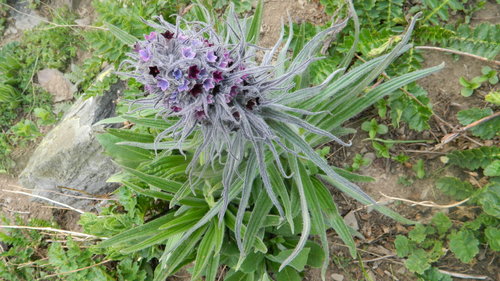
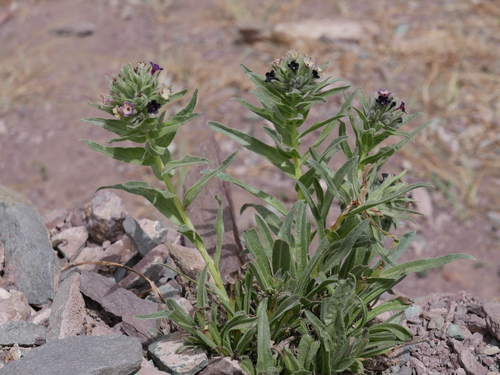
Cordia sinensis
Lam.
Grey-leaved saucer-berry, Grey leafed cordia
iNaturalist· cc-by-nc
(c) Theodore, some rights reserved (CC BY-NC)
iNaturalist· cc-by-nc
(c) Theodore, some rights reserved (CC BY-NC)
iNaturalist· cc-by-nc
(c) Theodore, some rights reserved (CC BY-NC)
Summary
Source: WikipediaCordia sinensis is a species of flowering tree in the family Cordiaceae. Common names include grey-leaved saucer berry, grey-leaved cordia, marer, mnya mate, mkamasi and tadana. It is found in Africa and Asia.
Description
A tangled shrub or small tree. It loses its leaves during the year. It is 3-12 m tall. The trunk is crooked. It has many branches and these often droop over. The bark is grey and smooth when young. It later becomes dark and roughly grooved. The leaves are grey-green. They are narrow and oblong. They can be 9 cm long. They feel rough to touch and have hairs on both sides. The tip of the leaf is rounded. The leaf stalk is 1 cm long. Leaves are almost opposite. The flowers are small and like tubes. The 4 or 5 petals are bent backwards. They are fused into a short tube at the base. The flowers are creamy white. They have a sweet smell. The flowers occur in clusters at the ends of branches. They grow on branched hairy stalks. The fruit is oval and 2 cm long. It has a tip at the end and is held in a cup of leaves (calyx). The fruit is orange-red and has a sticky edible pulp. There are 1-4 tiny seeds. The seeds are embedded in a clear pulp.
Edible Uses
The orange-red fruit has a sticky edible pulp that is eaten raw when ripe, or eaten green as a vegetable and pickled; the skin is removed and seeds discarded. The fruit can be added to porridge as a sweetener or fermented into beer. The roots are eaten raw, and the clear gum from the tree is also edible.
Traditional Uses
The fruit is eaten green as a vegetable or pickled. They are sweet and sticky. The skin is removed and the seeds are not eaten. They are added to porridge instead of sugar. The roots are eaten raw. The clear gum from the tree is edible. The ripe fruit is eaten raw. The fruit are fermented into beer.
Medicinal Uses
The fruits are edible and are eaten in a variety of cuisine. The gum from the tree is also edible. The timber is used as firewood and for making furniture and tools. The leaves are an important source of animal fodder. Both roots and bark are used to treat a variety of disorders in both humans and livestock, including malaria, intestinal disorders and conjunctivitis. In Turkana, the fruit is often eaten fresh, or collected into large quantities, dried, and stored. After storage it is rehydrated for consumption. The fruit is also used for juice, or to make beer, sometimes mixed with tamarind prior to fermentation. In the Tanout and Gouré Departments of Niger, the juicy pulp of the fruits is cooked down into a thick syrup locally called kango, which serves as a sweetener for porridges and can be preserved for a long time.
Distribution
A tropical plant. It is widespread in Africa at low altitudes and in dry areas. It is more common in dry river beds. It can grow on sandy or salty soils. In Africa it grows from sea level to 1,400 m above sea level. In Tanzania it grows in areas with a rainfall between 600-1,000 mm. It can grow in arid places. It grows on gravelly soils and in wasteland. It is drought hardy. In Pakistan it is found in dry areas up to 300 m above sea level. It grows in the lowlands and often along rivers.
Where It Grows
Africa, Angola, Arabia, Asia, Botswana, Burkina Faso, Cameroon, Central Africa, Chad, East Africa, Egypt, Eswatini, Ethiopia, Ghana, India, Israel, Jordan, Kenya, Mali, Mauritania, Mediterranean, Middle East, Mozambique, Myanmar, Namibia, Niger, Nigeria, North Africa, Oman, Pakistan, Sahel, Saudi Arabia, SE Asia, Senegal, Socotra, Somalia, South Africa, Southern Africa, South Sudan, Sri Lanka, Sudan, Swaziland, Tanzania, Togo, Uganda, West Africa, Yemen, Zambia, Zimbabwe,
Cultivation
It can be grown from seed or cuttings. Plants also grow naturally. (There are 14,000 seeds per kg.) When seed are sown fresh no treatment is necessary. For stored seed they should have warm water poured over them then be allowed to soak before being planted. Seed can be stored for 3 months at room temperature. It is best to plant seeds where they are to grow.
Propagation
Seed - very slow to germinate, the process can be sped up if the seed is scarified by lightly abrading the seedcoat to allow easier ingress of water. Germination rates of up to 80% can be achieved.
Other Uses
A fibre obtained from the inner bark is used for making ropes, caulking boats etc. Very strong. The bark is used for covering local huts. A gum obtained from the damaged bark is used to adulterate gum arabic (obtained from Acacia senegal and other spp). The heart-wood is brown and slightly scented; the sapwood is yellowish. The wood is hard. A good quality wood, it is used as a substitute for sandalwood in Sudan, and is used generally for roofing, construction of local houses, tool handles, walking sticks, arrow shafts, clubs etc. Larger pieces are hollowed out to make pots. The wood is used for fuel.
Production
It is a fairly slow growing plant. In India the fruit are available August to February.
Other Information
The fruit are eaten especially by children. It is a cultivated fruit tree. The fruit are sold in markets.
Notes
The fruit are high in Vitamins. There are about 300 Cordia species.
Nutrition
| Part | Moisture | kJ | kcal | Protein | Vit A | Vit C | Iron | Zinc |
|---|---|---|---|---|---|---|---|---|
| Fruit | 8.8 | 2015 | — | 16.6 | — | — | — | — |
Synonyms
Also Known As
Adome, Andarab, Cambununo, Chinnabotuka, Duva, Edume, Gondani, Gondi, Gondna, Gondri, Gunda, Gundani, Gundi, Habusum ngheghi, Harores, Izera, Kirichalle, Kithea, Kithia, Laghushleshmataka, Lasoodi, Leedii, Ledo, Maded, Madehr, Mader, Madera, Maderra, Maderta, Madheedh, Mafheera raphachoo, Mared, Mareer, Marer, Mdawi, Mdelela, Mkamasi, Mnya, Muthea, Muthee, Muthei-munini, Narrow-leaved sepistan, Naruvili, Ndea, Ol-dorko, Ol-durgo, Ol-olfot, Sellai, Shengolochi, Silapani, Thanat, Thanut, Turu
References (65)
- Abbiw, D.K., 1990, Useful Plants of Ghana. West African uses of wild and cultivated plants. Intermediate Technology Publications and the Royal Botanic Gardens, Kew. p 46 (As Cordia rothii)
- Addis, G., Asfaw, Z & Woldu, Z., 2013, Ethnobotany of Wild and Semi-wild Edible Plants of Konso Ethnic Community, South Ethiopia. Ethnobotany Research and Applications. 11:121-141
- Addis, G., et al, 2013, The Role of Wild and Semi-wild Edible Plants in Household Food Sovereignty in Hamer and Konso Communities, South Ethiopia. Ethnobotany Research & Applications. 11:251-271
- Alfarhan, A. H., 2005, Flora of Jizan Region. AR 17-7. King Abdulaziz City for Science and Technology (KACST). p 331
- Allen, D. J., 2007, Wildflowers and Common Trees of East Africa. Camerapix Publishers p 70
Show all 65 references Hide references
- Ambasta, S.P. (Ed.), 2000, The Useful Plants of India. CSIR India. p 140 (As Cordia rothii)
- Arora, R. K., 2014, Diversity in Underutilized Plant Species - An Asia-Pacific Perspective. Bioversity International. p 65 (As Cordia gharaf)
- Asfaw, Z. and Tadesse, M., 2001, Prospects for Sustainable Use and Development of Wild Food Plants in Ethiopia. Economic Botany, Vol. 55, No. 1, pp. 47-62 (As Cordia gharaf)
- Burkill, H. M., 1985, The useful plants of west tropical Africa, Vol. 1. Kew.
- Chauhan, S. H., et al, 2018, Consumption patterns of wild edibles by the Vasavas: a case study from Gujarat, India. Journal of Ethnobiology and Ethnomedicine (2018) 14:5 (As Cordia gharaf)
- Dale, I. R. and Greenway, P. J., 1961, Kenya Trees and Shrubs. Nairobi. p 69 (As Cordia gharaf)
- Dalziel, J. M., 1937, The Useful plants of west tropical Africa. Crown Agents for the Colonies London.
- Dobriyal, M. J. R. & Dobriyal, R., 2014, Non Wood Forest Produce an Option for Ethnic Food and Nutritional Security in India. Int. J. of Usuf. Mngt. 15(1):17-37 (As Cordia gharaf)
- Ethiopia: Famine Food Field Guide. http://www.africa.upenn.edu/faminefood/category3.htm
- Feyssa, D. H., et al, 2011, Seasonal availability an consumption of wild edible plants in semiarid Ethiopia; Implications to food security and climate change adaptation. Journal of Horticulture and Forestry 3(5): 138-149
- Fowler, D. G., 2007, Zambian Plants: Their Vernacular Names and Uses. Kew. p 78
- Gemedo-Dalle, T., et al, 2005, Plant Biodiversity and Ethnobotany of Borana Pastoralists in Southern Oromia, Ethiopia. Economic Botany 59(1) pp. 43-65 (As Cordia gharaf)
- Glover, et al, 1966b,
- Goode, P., 1989, Edible Plants of Uganda. FAO p 30 (As Cordia gharaf)
- Grivetti, L. E., 1980, Agricultural development: present and potential role of edible wild plants. Part 2: Sub-Saharan Africa, Report to the Department of State Agency for International Development. p 41, 44 (As Cordia rothii)
- GUPTA & KANODIA, (As Cordia gharaf)
- Hedrick, U.P., 1919, (Ed.), Sturtevant's edible plants of the world. p 217 (As Cordia rothii)
- Heywood, V.H., Brummitt, R.K., Culham, A., and Seberg, O. 2007, Flowering Plant Families of the World. Royal Botanical Gardens, Kew. p 66 (Family)
- Ichikawa, M., 1980, The Utilization of Wild Food Plants by the Suiei Dorobo in Northern Kenya. J. Anthrop. Soc. Nippon. 88(1): 25-48
- Jadhav, R., et al, 2015, Forest Foods of Northern Western Ghats: Mode of Consumption, Nutrition and Availability. Asian Agri-History Vol. 19, No. 4: 293-317 (As Cordia gharaf)
- Jardin, C., 1970, List of Foods Used In Africa, FAO Nutrition Information Document Series No 2.p 130 (As Cordia gharaf)
- Johns, T., Mhoro, E. B. and Sanaya, P., 1996, Food Plants and Masticants of the Batemi of Ngorongoro District, Tanzania. Economic Botany, Vol. 50, No. 1, pp. 115-121 (As Cordia gharaf)
- Katende, A.B., Birnie, A & Tengnas B., 1995, Useful Trees and Shrubs for Uganda. Identification, Propagation and Management for Agricultural and Pastoral Communities. Technical handbook No 10. Regional Soil Conservation Unit, Nairobi, Kenya. p 208
- Khan, D. & Shaukat, S.S., 2006, The Fruits of Pakistan: Diversity, Distribution, Trends of Production and Use. Int. J. Biol. Biotech., 3(3):463-499 (As Cordia gharaf)
- Khayde, M. S., et al, 2009, Wild Edible Plants Used by the tribes of Akole Tahasil of Ahmednagar District (MS), India. Ethnobotanical Leaflets 13:1328-36 (As Cordia gharaf)
- Kidane, B., et al, 2014, Ethnobotany of Wild and Semi-wild Edible Fruit Species used by Maale and Ari Ethnic Communities in South Ethiopia. Ethnobotany Research and Applications. Vol. 12, 1546-3465-12-455
- Krishen P., 2006, Trees of Delhi, A Field Guide. DK Books. p 146 (As Cordia gharaf)
- Le Houerou, H. N., (Ed.), 1980, Browse in Africa. The current state of knowledge. International Livestock Centre for Africa, Ethiopia. p 161
- Lulekal, E., et al, 2011, Wild edible plants in Ethiopia: a review on their potential to combat food insecurity. Afrika Focus - Vol. 24, No 2. pp 71-121
- Mahony, D., 1991, Trees of Somalia. A Field Guide for Development Workers. Oxfam Research Paper 3. p 9
- Mannheimer, C. A. & Curtis. B.A. (eds), 2009, Le Roux and Muller's Field Guide to the Trees and Shrubs of Namibia. Windhoek: Macmillan Education Namibia. p 422
- Maundu, P. et al, 1999, Traditional Food Plants of Kenya. National Museum of Kenya. 288p
- Mbuya, L.P., Msanga, H.P., Ruffo, C.K., Birnie, A & Tengnas, B., 1994, Useful Trees and Shrubs for Tanzania. Regional Soil Conservation Unit. Technical Handbook No 6. p 208
- Morgan, W. T. W., 1981, Ethnobotany of the Turkana: Use of plants by a Pastoral People and Their Livestock in Kenya. Economic Botany 35(1):96-130
- Mutie, F. G., 2020, Conservation of Wild Food Plants and Their Potential for Combatting Food Insecurity in Kenya as Exemplified by the Drylands of Kitui County. Plants 2020, 9, 1017
- Omer, M., 2011, Diversity of Woody Species, Local Knowledge and Management Practices in Different Land Use Systems of Awbare Wereda, Jig-Jiga Zone of Somali Region, Ethiopia. M. Sc. thesis Addis Abba University p 47
- Palgrave, K.C., 1996, Trees of Southern Africa. Struik Publishers. p 802
- Peters, C. R., O'Brien, E. M., and Drummond, R.B., 1992, Edible Wild plants of Sub-saharan Africa. Kew. p 71
- Rasingam, L., 2012, Ethnobotanical studies on the wild edible plants of Irula tribes of Pillur Valley, Coimbatore district, Tamil Nadu, India. Asian Pacific Journal of Tropical Biomedicine. (2012) S1493-S1497
- Royal Botanic Gardens, Kew (1999). Survey of Economic Plants for Arid and Semi-Arid Lands (SEPASAL) database. Published on the Internet; http://www.rbgkew.org.uk/ceb/sepasal/internet [Accessed 4th April 2011]
- Ruffo, C. K., Birnie, A. & Tengnas, B., 2002, Edible Wild Plants of Tanzania. RELMA p 234
- Ruiters-Welcome, A. K., 2019, Food plants of southern Africa. Ph.D. thesis. Univ. of Johannesburg p 38
- SAXENA, (As Cordia gharaf)
- Schmidt, E., Lotter, M., & McCleland, W., 2007, Trees and shrubs of Mpumalanga and Kruger National Park. Jacana Media p 572
- Scudder, 1962, (As Cordia ovalis)
- SHANKARNARAYAN & SAXENA, (As Cordia gharaf)
- Singh, H.B., Arora R.K.,1978, Wild edible Plants of India. Indian Council of Agricultural Research, New Delhi. p 54 (As Cordia gharaf)
- Singh, V. and Singh, P., 1981, Edible Wild Plants of Eastern Rajasthan. J. Econ. Tax. Bot. Vol 2 pp 197-207(As Cordia gharaf)
- Sitzungsber. Ges. Naturf. Freunde Berlin 1879:46. 1879 (As Cordia gharaf)
- Some Kasigau Woody Plants and their Uses. 2013, National Geographic and Miami University
- Sullivan, S., 1998, People plants and practice in drylands: Socio-political and ecological dimensions of resource-use by Damara farmers in north-west Namibia. Ph.D. Univ. College London.
- Swaminathan, M.S., and Kochnar, S.L., 2007, An Atlas of Major Flowering Trees in India. Macmillan. p 185 (As Cordia gharaf)
- Syst. veg. 4:798. 1819 (As Cordia rothii)
- Tabl. encycl. 1(vol. 2):423. 1792
- Teklehaymanot, T., 2017, An ethnobotanical survey of medicinal and edible plants of Yalo Woreda in Afar regional state, Ethiopia. Journal of Ethnobiology and Ethnomedicine 13:40
- Termote, C., et al, 2014, Assessing the potential of wild foods to reduce the cost of a nutritionally adequate diet: An example from eastern Baringo District, Kenya. Food and Nutrition Bulletin, vol. 35, no. 4
- Vivien, J., & Faure, J. J., 1996, Fruitiers Sauvages d'Afrique. Especes du Cameroun. CTA p 84
- Welcome, A. K. & Van Wyk, B.-E., 2019, An inventory and analysis of the food plants of southern Africa. South African Journal of Botany 122 (2019) 136–179
- World Checklist of Useful Plant Species 2020. Royal Botanic Gardens, Kew
- www.worldagroforestrycentre.org/treedb/