Ehretia cymosa var. silvatica
Thonn., (Gurke) Brenan
iNaturalist· cc-by-nc
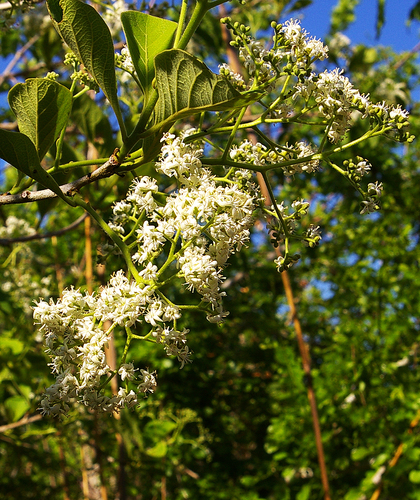
(c) merveille, some rights reserved (CC BY-NC)
iNaturalist· cc-by-nc
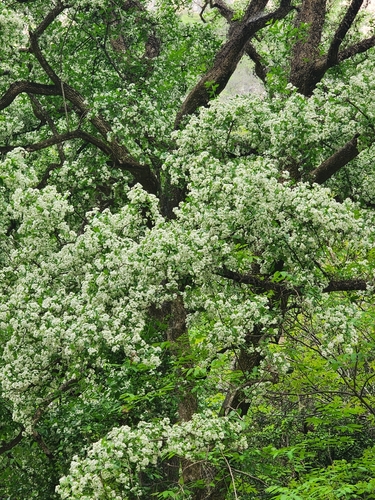
(c) merveille, some rights reserved (CC BY-NC)
iNaturalist· cc-by-nc
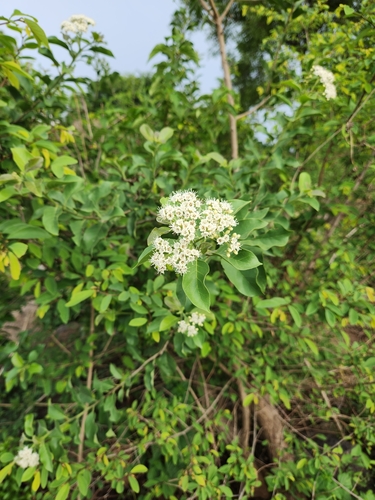
(c) merveille, some rights reserved (CC BY-NC)
Summary
Source: WikipediaEhretia cymosa is a small tree belonging to the family Ehretiaceae. It occurs over a wide range of habitat throughout of western, central and eastern Africa, including Benin, Côte d'Ivoire, Cameroon, Ethiopia, Kenya, Comoros, Madagascar, Mascarenes, Zimbabwe and Mozambique.
Description
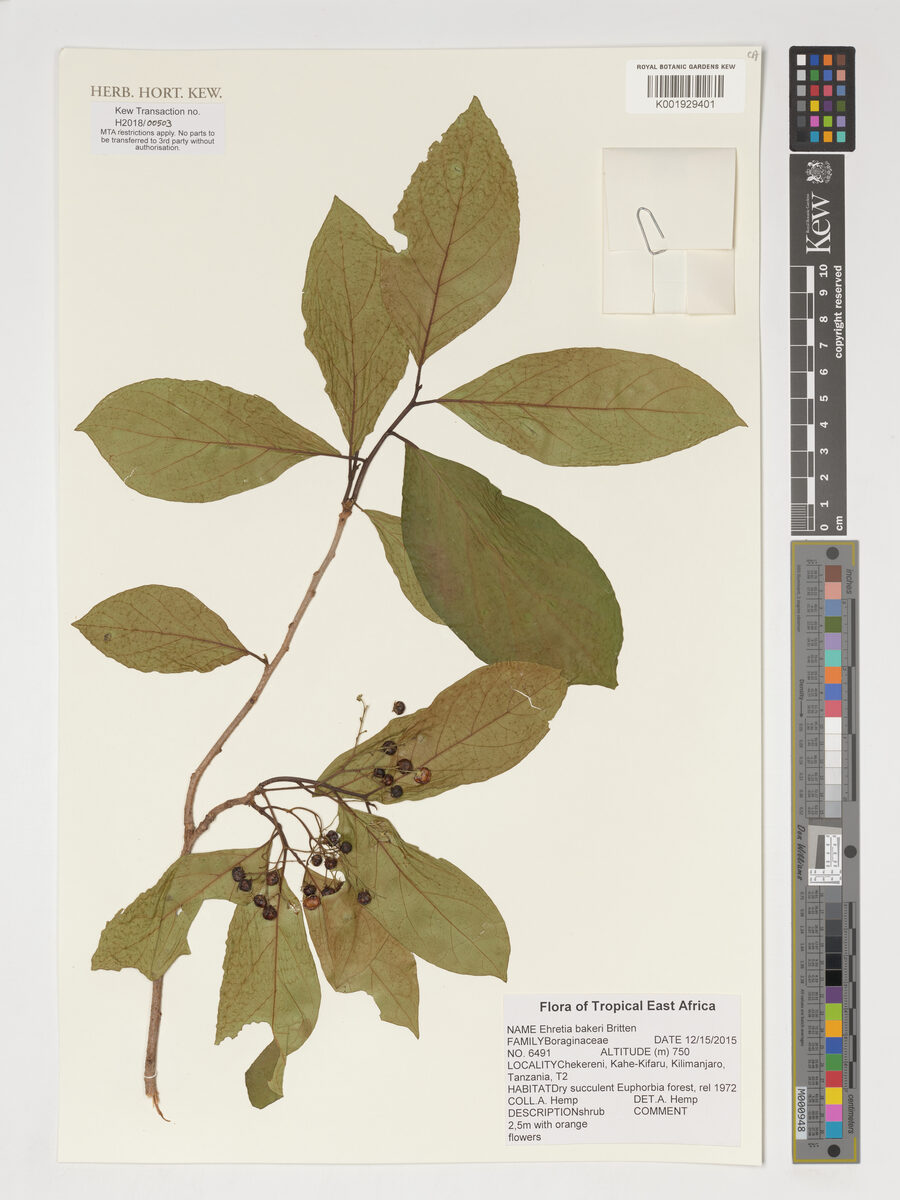
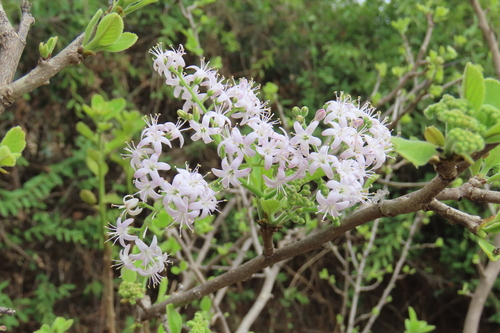
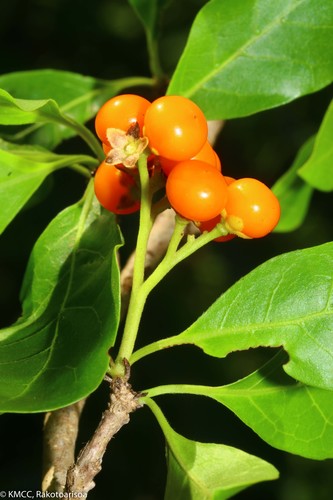
A tree. It grows up to 12-20 m tall. The bark is smooth and grey. The young branches are covered with white hairs. The leaves are oval and pointed. They are 7.5-20 cm long and 3-7.5 cm wide. The leaves are rough and dark green above but paler underneath. The veins are prominent underneath. The flowers are white and without stalks. They occur as many flowers together on the ends of branches. The fruit are orange red berries. They are 1 cm across. The fruit enclose four separate small nuts. The fruit is edible.
Edible Uses
The fruit can be eaten but is very acidic. The stem is chewed.
Traditional Uses
The fruit can be eaten but is very acid. The stem is chewed.
This uses section is brief — help expand it
Distribution
A tropical plant. It grows in areas with a rainfall of 1300-2000 mm per year. They usually grow on the edge of the forest. In East Africa it grows between 1,100-2,300 m altitude.
Where It Grows
Africa, East Africa, Ethiopia, Ghana, Kenya, Uganda, West Africa,
Notes
There are about 75 Ehretia species.
Synonyms
Also Known As
Endalati-ekolok, Game, Murembu, Musuga, Okosua
References (8)
- Abbiw, D.K., 1990, Useful Plants of Ghana. West African uses of wild and cultivated plants. Intermediate Technology Publications and the Royal Botanic Gardens, Kew. p 47
- Asfaw, Z. and Tadesse, M., 2001, Prospects for Sustainable Use and Development of Wild Food Plants in Ethiopia. Economic Botany, Vol. 55, No. 1, pp. 47-62
- Bekele-Tesemma A., Birnie, A., & Tengnas, B., 1993, Useful Trees and Shrubs for Ethiopia. Regional Soil Conservation Unit. Technical Handbook No 5. p 204
- Dalziel, J. M., 1937, The Useful plants of west tropical Africa. Crown Agents for the Colonies London.
- Dharani, N., 2002, Field Guide to common Trees & Shrubs of East Africa. Struik. p 227
Show all 8 references Hide references
- FAO, 1988, Traditional Food Plants, FAO Food and Nutrition Paper 42. FAO Rome p 262
- Peters, C. R., O'Brien, E. M., and Drummond, R.B., 1992, Edible Wild plants of Sub-saharan Africa. Kew. p 71
- Raponda-Walker, A & Sillans, R., 1961, Les Plantes Utiles du Gabon. Editions Paul Lechevalier, Paris. p 107