Cordia dichotoma
G. Forst.
Bird Lime Tree, Clammy-cherry
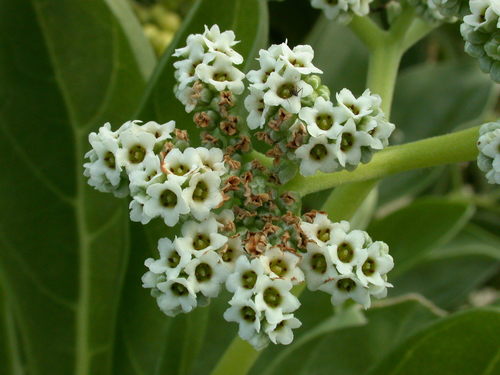
iNaturalist· cc0
no rights reserved, uploaded by 葉子
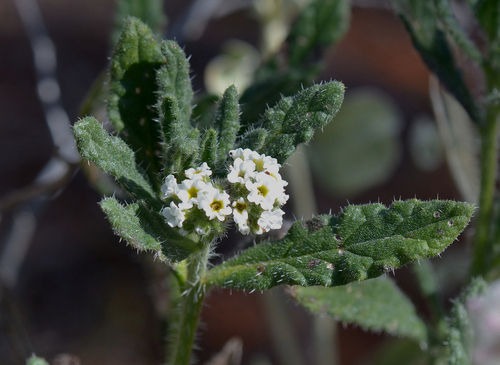
iNaturalist· cc-by-nc
(c) Susan J. Hewitt, some rights reserved (CC BY-NC), uploaded by Susan J. Hewitt
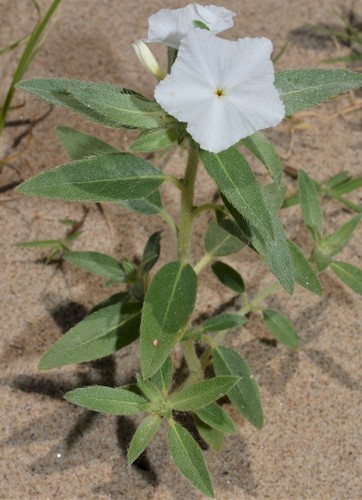
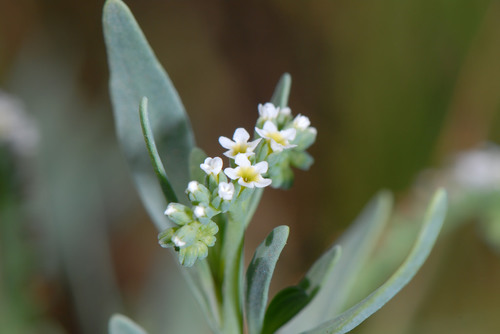
iNaturalist· cc0
no rights reserved, uploaded by 葉子
Summary
Source: WikipediaCordia dichotoma is a species of flowering tree in the family Cordiaceae, that is native to the Indomalayan realm, northern Australia, and western Melanesia. Common names in English include fragrant manjack, clammy cherry, glue berry tree and Indian cherry.
Description
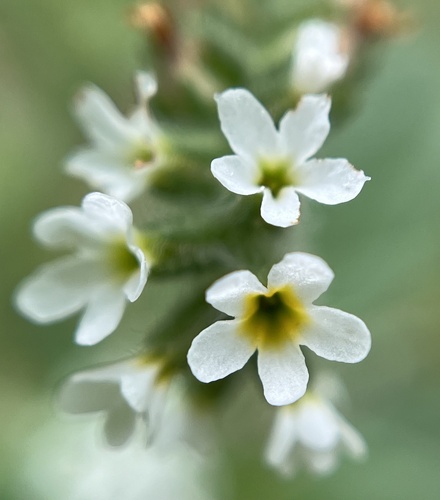
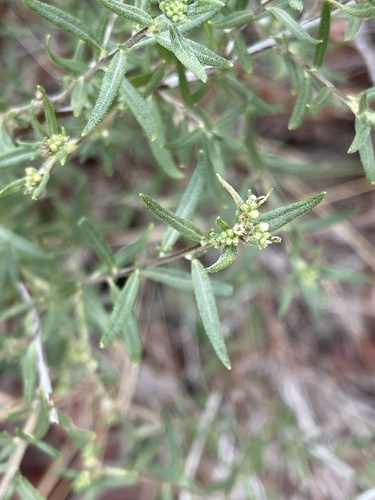
A medium sized tree, that loses its leaves at some times of the year. They are 5 to 15 m high. It can grow up to 27 m tall and be 50 cm across in the trunk. The tree has spreading branches. The bark is 2 cm thick and grey. It is deeply cracked. The leaves are alternate, smooth and pointed at both ends. They have 2-3, easy to see, veins. The veins are hairy on the underside. They are 5-8 cm long and 2-4 cm wide. The leaf stalk is 3-4 cm long. The flowers are white or yellow, and borne in flower clusters at the ends of branches. The flower clusters are 1-5 cm across, while individual flowers are 2 mm across. The flowers are orange, and funnel shaped at the base. Male and both sex flowers occur on separate trees. The fruit are yellowish white or pink, and soft but with a hard stone. They are 2 cm across and contain a sticky juice. The fruit is sweet and edible.
Edible Uses
The sweet fruit is eaten fresh, especially by children, and sold in markets. The seeds, leaves, flowers, and oil are also edible portions of this cultivated food plant.
Traditional Uses
Africa, Andamans, Asia, Australia, Bangladesh, Brunei, Cambodia, China, East Timor, Egypt, Fiji, Hawaii, Himalayas, India, Indochina, Indonesia, Japan, Laos, Malaysia, Marquesas, Myanmar, Nepal, New Caledonia, North Africa, Northeastern India, Pacific, Pakistan, Papua New Guinea, PNG, Philippines, SE Asia, Sri Lanka, Taiwan, Thailand, Tibet, Timor-Leste, USA, Vanuatu, Vietnam,
Medicinal Uses
The immature fruits are used in South Asian pickles, and as a vegetable fodder. The leaves yield good fodder. The fruits of C. dichotoma are edible. 'Joshanda' is a Unani herbal medicine, known for its ability to manage colds, coughs, sore throats, nasal congestion, respiratory problems, and fevers. It consists of seeds of 'Khatmi' (Althaea officinalis), fruits of 'Sapistan' (Cordia dichotoma), dried rhizomes of 'mulethi '(Glycyrrhiza glabra), seeds of 'Khubbazi' (Malva rotundifolia), leaves of 'Gaozaban' (Onosma bracteatum), flowers of Banafsha (Viola odorata) and the dried fruits of 'Unnab' (Ziziphus jujuba). Its fruits of C. dichotoma are a rich source of polysaccharides and are potential sources of phytochemicals with antibacterial and antioxidant activities.
Known Hazards
The fruits are used to stupefy fish.
Distribution
It is a tropical plant. It grows near rainforests and near the coast. It suits humid locations. It can tolerate wind and salt spray. It is very sensitive to frost. It requires a well drained soil, in a sunny position. They are common and widely distributed in secondary forest and open places at low altitudes in the Philippines. In Nepal it grows between 300-1400 m altitude. In India is grows in all warmer parts of the subcontinent. It can grow in arid places. In Yunnan.
Where It Grows
Open woods on slopes, mountain streamsides. Found in a variety of forests ranging from the dry deciduous to moist deciduous and tidal forests as well as in moist monsoon forest. Grows singly in moist shady ravines and valleys.
Cultivation
The fruit are eaten especially by children. The fruit are sold in markets. It is a cultivated food plant.
Propagation
Seed - sow direct into containers, beds or trays. Germination starts in about 3 - 4 weeks and is complete in 6 weeks. The germination process can be sped up if the seed is first scarified by lightly abrading the seedcoat to allow easier ingress of water. Seedlings should be potted up as soon as the first pair of true leaves have formed. At lower altitudes, seedlings large enough to plant out can be obtained after 3 - 4 months in the nursery, but at higher altitudes, 9 - 12 months are needed. Germination is epigeous - 1 or 2 seedlings may appear from 1 stone. Seeds can store for at least a year in airtight containers. Raising plants from stumps has been carried out successfully. The stumps should be 8 - 13 mm thick at the root collar, with about 4 cm stem and 20 - 25 cm root. Such plants should be raised in beds for 12 - 15 months before stumping. Shading should be for only 1 week after seedlings have been pricked out, otherwise seedlings should have full light.
Other Uses
The leaves are used to wrap food before cooking, and also as plates and cigar wrappers. An extract of the leaves is used as an ingredient in commercial cosmetic preparations as a skin conditioner. An oil is obtained from the seed. A glue can be made from the mucilaginous fruit. The fruit extract has been shown to suppress larval hatching of Meloidogyne incognita. The wood is tough, fairly strong and seasons well, but insects soon attack it. It is used for house construction and agricultural implements. The tree is used as a fuel wood. The plant is grown as a hedge. A quick-growing fruit tree, performing well under semi-arid conditions and suitable for planting along boundary and farm roads.
Production
There are about 300 Cordia species. It is used in medicine.
Nutrition
| Part | Moisture | kJ | kcal | Protein | Vit A | Vit C | Iron | Zinc |
|---|---|---|---|---|---|---|---|---|
| Fruit | — | — | — | — | — | 23.9 | 3.9 | — |
Synonyms
Also Known As
Abota, Anonang, Bahubara, Bahuvaraka, Bargund, Bhokar, Bhoker, Boal, Bohal, Bohari, Bohori, Bokar, Buch, Bulu, Buralessura, Cheruviri, Chikkachalle, Chinna nakkeru, Chokargond, Chota, Doba khari, Doddachalle, Gadgundi, Glue Berry Tree, Gobarhuta, Gondan, Gondi, Goohalo, Gunda, Hpak-mong, Indian-cherry, Kal, Kalahuza, Karadisellai, Kasondeh, Kendal, Kotra, Lashora, Lasoda, Lasoora, Lasora, Lasorda, Lassora, Lasura, Lasuri, Laswara, Lesua, Lisora, Muk-fang, Naruvali, Naruviri, Nunang, Pa-mi-shing, Patinga, Paw man, Peddanakkera, Periyaviri, Perunarubili, Pohon lasora besar, Puzhuventhekku, Sebestan plum, Selvat, Shelvant, Shelvati, Shembadi, Siumung esing, Thanapet, Thanat, Thanut, Tun-paw-man, Uddalaka, Vargund, Viri, Virimaram
References (97)
- Altschul, S.V.R., 1973, Drugs and Foods from Little-known Plants. Notes in Harvard University Herbaria. Harvard Univ. Press. Massachusetts. no. 3546 and no. 3548 (As Cordia griffithii) and no. 3547 (As Cordia wallichii)
- Ambasta, S.P. (Ed.), 2000, The Useful Plants of India. CSIR India. p 140 and p 141 (As Cordia wallichii)
- Anon., 2003, Native Plants for the Fitzroy basin. Society for Growing Australian Plants Inc. (Rockhampton Branch)
- Arora, R. K., 2014, Diversity in Underutilized Plant Species - An Asia-Pacific Perspective. Bioversity International. p 64
- Bajpai, O., et al, 2015, Tree species of the Himalayan Terai region of Uttar Pradesh, India: a checklist. Check List 11(4): 1718
Show all 97 references Hide references
- Bandyopadhyay, S. et al, 2009, Wild edible plants of Koch Bihar district, West Bengal. Natural Products Radiance 8(1) 64-72
- Bandyopadhyay, S., et al, 2012, A Census of Wild Edible Plants from Howrah District, West Bengal, India. Proceedings of UGC sponsored National Seminar 2012
- BARC, 2016, State of Biodiversity for Food and Agriculture in Bangladesh. Bangladesh Agricultural Research Council.
- Barwick, M., 2004, Tropical and Subtropical Trees. A Worldwide Encyclopedic Guide. Thames and Hudson p 131
- Basha, S. K. M., Ethnobotanical Trees of Sri Lanka Malleswara Wildlife Sanctuary; Eastern Ghats, Andhra Pradesh.
- Beasley, J., 2011, Plants of Tropical North Queensland - the compact guide. Footloose publications. p 170
- Bhatia, H., et al, 2018, Traditionally used wild edible plants of district Udhampur, J&K, India. Journal of Ethnobiology and Ethnomedicine (2018) 14:73
- Bodkin, F., 1991, Encyclopedia Botanica. Cornstalk publishing, p 280
- Bohra, N., et al, 2017, Ethnobotany of wild edible plants traditionally used by the local people in the Ramnagar regions from Nainital District, Uttarakhand, India. Biolife 5(1): 12-19
- Bole, P.V., & Yaghani, Y., 1985, Field Guide to the Common Trees of India. OUP p 75
- Burkill, I.H., 1966, A Dictionary of the Economic Products of the Malay Peninsula. Ministry of Agriculture and Cooperatives, Kuala Lumpur, Malaysia. Vol 1 (A-H) p 669
- Calvert, G., 2010, The Burdekin Delta Tree Guide. Lower Burdekin Landcare Association., Inc., Ayr p 59
- Cabalion, P. and Morat, P., 1983, Introduction le vegetation, la flore et aux noms vernaculaires de l'ile de Pentcoste (Vanuatu), In: Journal d'agriculture traditionnelle et de botanique appliquee JATBA Vol. 30, 3-4
- Chandrakumar, P., et al, 2015, Ethnobotanical studies of wild edible plants of Gond, Halba and Kawar tribes of Salekasa Taluka, Gondia District, Maharashtra State, India. International Research Journal of Pharmacy 6(8)
- Chandrashekara, U. M., 2009, Tree species yielding edible fruit in the coffee-based homegardens of Kerala, India: their diversity, uses and management. Food Sec. 1:361-370 (As Cordia wallichii)
- Cherikoff V. & Isaacs, J., The Bush Food Handbook. How to gather, grow, process and cook Australian Wild Foods. Ti Tree Press, Australia p 198
- Cooper, W. and Cooper, W., 2004, Fruits of the Australian Tropical Rainforest. Nokomis Editions, Victoria, Australia. p 93 and Cooper, W. and Cooper, W., 2004, Fruits of the Australian Tropical Rainforest. Nokomis Editions, Victoria, Australia. p 94 (As Cordia wallichii)
- Cowie, I, 2006, A Survey of Flora and vegetation of the proposed Jaco-Tutuala-Lore National Park. Timor-Lests (East Timor) www.territorystories.nt/gov.au p 45
- Cribb, A.B. & J.W., 1976, Wild Food in Australia, Fontana. p 103
- Dey, A. & Mukhererjee, A., 2015, Living and Survival Amidst Hunger: Wild Edible Botanicals as a Prime Forestt Productivity in the Rural Purulia District, West Bengal, India from Colonial to Present. Research Journal of Foresttry 9(3): 71-86
- Dobriyal, M. J. R. & Dobriyal, R., 2014, Non Wood Forestt Produce an Option for Ethnic Food and Nutritional Security in India. Int. J. of Usuf. Mngt. 15(1):17-37
- Elliot, W.R., & Jones, D.L., 1984, Encyclopedia of Australian Plants suitable for cultivation. Vol 3. Lothian. p 87
- Fl. ins. austr. 18, no. 110. 1786
- Gangwar, A. K. & Ramakrishnan, P. S., 1990, Ethnobotanical Notes on Some Tribes of Arunachal Pradesh, Northeastern India. Economic Botany, Vol. 44, No. 1 pp. 94-105
- Havel, J.J., 1975, Forestt Botany, Volume 3 Part 2 Botanical taxonomy. Papua New Guinea Department of Forestts, p 277
- Hedrick, U.P., 1919, (Ed.), Sturtevant's edible plants of the world. p 216 (As Cordia loureiri)
- Hu, Shiu-ying, 2005, Food Plants of China. The Chinese University Press. p 641
- Jackes, B.R., 2001, Plants of the Tropics. Rainforest to Heath. An Identification Guide. James Cook University. p 45
- Jadhav, R., et al, 2015, Forestt Foods of Northern Western Ghats: Mode of Consumption, Nutrition and Availability. Asian Agri-History Vol. 19, No. 4: 293-317
- Jones D, L, 1986, Ornamental Rainforest Plants in Australia, Reed Books, p 208
- Khayde, M. S., et al, 2009, Wild Edible Plants Used by the tribes of Akole Tahasil of Ahmednagar District (MS), India. Ethnobotanical Leaflets 13:1328-36
- Kar, A., et al, 2013, Wild Edible Plant Resources used by the Mizos of Mizoram, India. Kathmandu University Journal of Science, Engineering and Technology. Vol. 9, No. 1, July, 2013, 106-126
- Khan, M. & Hussain, S., 2014, Diversity of wild edible plants and flowering phenology of district Poonch (J & K) in the northwest Himalaya. Indian Journal of Sci, Res. 9(1): 032-038
- Kiran, K. C., et al, 2019, Diversity and Seasonal Availability of Potential Wild Edible Plants from Vidarbha Region of Maharashtra State, India. Int.J.Curr.Microbiol.App.Sci (2019) 8(2): 1434-1446
- Krishen P., 2006, Trees of Delhi, A Field Guide. DK Books. p 75
- Kuo, W. H. J., (Ed.) Taiwan's Ethnobotanical Database (1900-2000), http://tk.agron.ntu.edu.tw/ethnobot/DB1.htm
- Kuvar, S. D. & Shinde, R. D., 2019, Wild Edible Plants used by Kokni Tribe of Nasik District, Maharashtra. Journal of Global Biosciences. Volume 8, Number 2, 2019, pp. 5936-5945
- Li, S., et al, 2020, Monpa, memory, and change: an ethnobotanical study of plant use in Mêdog County, South-east Tibet, China. Journal of Ethnobiology and Ethnomedicine. (2020) 16:5 p 16
- Lord, E.E., & Willis, J.H., 1999, Shrubs and Trees for Australian gardens. Lothian. p 14
- Lugod, G.C. and de Padua L.S., 1979, Wild Food Plants in the Philippines. Vol. 1. Univ. of Philippines Los Banos. p 23
- Lyle, S., 2006, Discovering fruit and nuts. Land Links. p 154
- Maheshwari, J.K., & Singh, J.P., 1984, Contribution to the Ethnobotany of Bhoxa Tribe of Bijnor and Pauri Garhwal Districts, U.P. J. Econ. Tax. Bot. Vol.5. No.2 pp 253-
- Manandhar, N.P., 2002, Plants and People of Nepal. Timber Press. Portland, Oregon. p 169
- Martin, F.W. & Ruberte, R.M., 1979, Edible Leaves of the Tropics. Antillian College Press, Mayaguez, Puerto Rico. p 179
- Marwat, S. K., 2011, Medico-ethnobotanical studies of edible wild fruit plants species from the flora of northwestern Pakistan (D. I. Khan district). Journal of Medicinal Plants Research Vol. 5(16) pp 3679-3686.
- Melzer, R. & Plumb, J., 2011, Plants of Capricornia. Belgamba, Rockhampton. p 79
- Menninger, E.A., 1977, Edible Nuts of the World. Horticultural Books. Florida p 116
- Menisa, A. A., et al, 2012, Survey and characterization of Indigenous Food Plants in Ilocos Norte, Philippines. SEARCA Discussion Paper series No. 2011-2
- Misra S. & Misra M., 2016, Ethnobotanical and Nutritional Evaluation of Some Edible Fruit Plants of Southern Odisha, India. International Journal of Advances in Agricultural Science and Technology, Vol.3 Issue.1, March- 2016, pg. 1-30
- Misra, S., 2020, Survey of edible plants for human consumption in south Odisha, India. Journal of Emerging Technologies and Innovative Research (JETIR) Vol. 7, Issue 12 p 278
- Monsalud, M.R., Tongacan, A.L., Lopez, F.R., & Lagrimas, M.Q., 1966, Edible Wild Plants in Philippine Forestts. Philippine Journal of Science. p 463
- Paczkowska, G. & Chapman, A.R., 2000, The Western Australian Flora. A Descriptive Catalogue. Western Australian Herbarium. p 181
- Pandey, K. C. & Pande, N., 2016, Ethnobotanical Documentation of Wild Edible Plants used by Gujjar Community of Tarai West Forest Division Ramnagar, Nainital, India, Current World Environment. Vol. 11(3), 808-818
- Partha, P., 2014, Ethnobotany of the Laleng (Patra) Community in Bangladesh. Journal of Pharmacognosy and Phytochemistry. 2(6):173-184
- Pasha, M. K. & Uddin, S. B., 2019, Minor Edible Fruits of Bangladesh. Bangladesh J. Plant Taxon. 26(2): 299–313
- Patiri, B. & Borah, A., 2007, Wild Edible Plants of Assam. Geethaki Publishers. p 84
- Peekel, P.G., 1984, (Translation E.E.Henty), Flora of the Bismarck Archipelago for Naturalists, Division of Botany, Lae, PNG. p 471, 470
- Prachi, K., et al, 2012, Underutilized wild fruits of North Maharashtra. Journal of Research in Plant Sciences. (2012) 1:071-076
- Pradhan, R., et al, 2020, Potential Wild Edible Plants and its Significance in Livelihood of Indigenous People of Male Mahadeshwara Hills, Karnataka. Economic Affairs Vol. 64, No. 4 pp. 01-14 (As Cordia wallichii)
- Pradheep, K., et al, 2016, Wild edible plants used by Konyak tribe in Mon district of Nagaland: Survey and inventorisation. Indian Journal of Natural Products and Resources. Vol 7(1) pp 74-81
- PROSEA (Plant Resources of South East Asia) handbook, Volume 12 (1), 2001, Medicinal and poisonous
- Rahangdale, D.R. & Rahangdale, S.S., 2014, Potential Wild Edible Plant Resources from Maharashtra Future Prospects for their Conservation and Improvement. Life Science Leaflets. http://lifesciencesleaflets.ning.com
- Rajasab, A. H. et al, 2004, Documentation of folk knowledge on edible wild plants of North Karnataka. Indian Journal of Traditional Knowledge. Vol 3(4) pp 419-429
- Ramachandran, V.S. and Nair, V.J., 1981, Ethnobotanical studies in Cannanore District, Kerala State (India). J Econ. Tax. Bot. Vol 2 pp 65-72 (As Cordia wallichii)
- Rasingam, L., 2012, Ethnobotanical studies on the wild edible plants of Irula tribes of Pillur Valley, Coimbatore district, Tamil Nadu, India. Asian Pacific Journal of Tropical Biomedicine. (2012) S1493-S1497
- Reddy, K. N. et al, 2007, Traditional knowledge on wild food plants in Andhra Pradesh. Indian Journal of Traditional Knowledge. Vol. 6(1): 223-229
- Royal Botanic Gardens, Kew (1999). Survey of Economic Plants for Arid and Semi-Arid Lands (SEPASAL) database. Published on the Internet; http://www.rbgkew.org.uk/ceb/sepasal/internet [Accessed 4th April 2011]
- Sarma, H., et al, 2010, Updated Estimates of Wild Edible and Threatened Plants of Assam: A Meta-analysis. International Journal of Botany 6(4): 414-423
- SAXENA,
- Setiya, A. V., et al, 2016, Exploration and documentation of some wild edible plants used by the aboriginals from Gadchiroli District (M.S.) India. International Advanced Research Journal in Science, Engineering and Technology. 3(7)
- Shah, G.L., 1984, Some economically important plant of Salsette Island near Bombay. J. Econ. Tax. Bot. Vol. 5 No. 4 pp 753-765
- Sharma, B.D., & Lakshminarasimhan, P., 1986, Ethnobotanical Studies on the Tribals of Nasik District (Maharashtra). J. Econ. Tax. Bot. Vol. 8 No. 2 pp 439-446
- Singh, H.B., Arora R.K.,1978, Wild edible Plants of India. Indian Council of Agricultural Research, New Delhi. p 54
- Singh, V. and Singh, P., 1981, Edible Wild Plants of Eastern Rajasthan. J. Econ. Tax. Bot. Vol 2 pp 197-207
- Staples, G.W. and Herbst, D.R., 2005, A tropical Garden Flora. Bishop Museum Press, Honolulu, Hawaii. p 198
- Sukarya, D. G., (Ed.) 2013, 3,500 Plant Species of the Botanic Gardens of Indonesia. LIPI p 208 and p 210 (As Cordia wallichii)
- Swaminathan, M.S., and Kochnar, S.L., 2007, An Atlas of Major Flowering Trees in India. Macmillan. p 183
- Tamil herbs, 2007, Edible Plants of the Tropical Dry Evergreen Forestt.
- Tiwi Plants and Animals. 2001, Aboriginal flora and fauna knowledge from Bathurst and Melville Islands, northern Australia. Northern Territory Botanical Bulletin; No. 24 p 40
- Tomar, A., Kumar, A., & Dubey, K., 2002, Underutilized Wild Edible fruits of Nutritional and Medicinal Value. J. Res. Educ. Indian Med., Vol XX1
- Toppo, P. et al, 2016, Wild edible plants of Dhamtari district of Chhattisgarh, India. Van Sangyan Vol. 3, No. 4
- Townsend, K., 1994, Across the Top. Gardening with Australian Plants in the tropics. Society for Growing Australian Plants, Townsville Branch Inc. p 138 and 139 (As Cordia wallichii)
- Upreti, K., et al, 2010, Diversity and Distribution of Wild Edible Fruit Plants of Uttarakhand. Bioversity Potentials of the Himalaya. p 166
- USDA, ARS, National Genetic Resources Program. Germplasm Resources Information Network - (GRIN). [Online Database] National Germplasm Resources Laboratory, Beltsville, Maryland. Available: www.ars-grin.gov/cgi-bin/npgs/html/econ.pl (10 April 2000)
- Valvi, S. R. & Rathod, 2011, Mineral composition of some wild edible fruits from Kolhapur District. International Journal or Applied Biology and Pharmaceutical Tehcnology. 2(1): 392
- Walter, A. & Sam C., 2002, Fruits of Oceania. ACIAR Monograph No. 85. Canberra. p 279
- Wiersema, J. H. & Leon, B., 2013, World Economic Plants. A Standard Reference CRC Press. 2nd Ed. p 199
- Wild edible plants of Himachal Pradesh
- World Checklist of Useful Plant Species 2020. Royal Botanic Gardens, Kew
- www.worldagroforestrycentre.org/treedb/
- Young, J., (Ed.), 2001, Botanica's Pocket Trees and Shrubs. Random House. p 266 (As Cordia wallichii)
- Zhu Ge-ling; Harald Riedl, Rudolf Kamelin, BORAGINACEAE, Flora of China