Cordia africana
Lam.
Large-leafed cordia, Sudan teak
iNaturalist· cc-by-nc
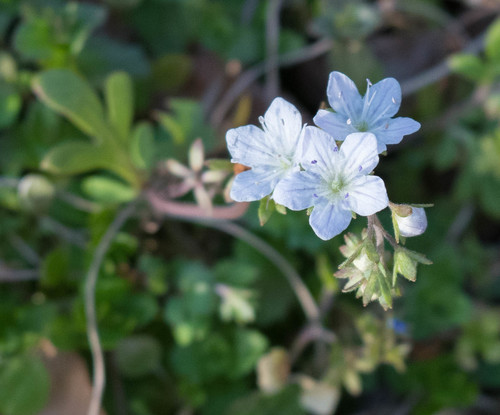
(c) bryanadkins, some rights reserved (CC BY-NC)
iNaturalist· cc-by-nc
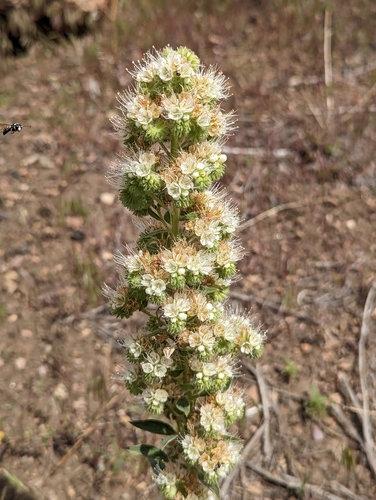
(c) David Bygott, some rights reserved (CC BY-NC), uploaded by David Bygott
iNaturalist· cc-by-nc
(c) bryanadkins, some rights reserved (CC BY-NC)
Summary
Source: WikipediaCordia africana or Sudan teak is a mid-sized, white-flowered, evergreen tree in the family Cordiaceae, native to Africa. It produces edible fruit, and its wood is used for drums or other carpentry.
Description
A large tree. It looses its leaves during the year. The crown is rounded. The trunk is often crooked. It grows 15 m high. The bark is pale brown and rough. It becomes cracked with age. The leaves are large and oval. They can be 16 cm long. They taper towards the tip. The base is rounded. The leaves are dark green above and paler underneath. The young shoots and underneath the leaves are covered with soft brown hairs. The flowers are white. They are funnel shaped. The occur in large numbers near the ends of branches. The flowers have a sweet scent. The fruit are round and 1 cm across. They are yellow. They are in a hairy cup. The seeds are in sweet sticky flesh. The fruit is edible. They contain about 6 seeds.
Edible Uses
Cordia africana has been used in the manufacture of drums. The Akan Drum which is now in the British Museum was identified as being of African manufacture because it was found to be made from this tree. It is also sometime called Sudan Teak and has been used for flooring, high-quality furniture, window making, interior decking. The wood can be used to manufacture beehives which can be kept in this tree where the bees can live off the plentiful supply of nectar which comes from the flowers. In addition the tree supplies leaves for forage and an edible fruit. In Ethiopia, where the tree is known in Amharic as wanza, the hearth of a fire-stick was traditionally made therefrom for lighting fires.
Traditional Uses
The ripe fruit has a sweet edible pulp and are eaten raw. It is used for drinks and sweets. The fruit are also dried. The seeds are eaten fresh. The kernel of the nut is used to make an alcoholic drink. Caution: Alcohol is a cause of cancer.
Medicinal Uses
The wood-ash, mixed with butter, is applied to certain skin-troubles. Leaf decoctions are administered to treat headache, nose bleeding, dizziness and vomiting during pregnancy, and worms. The leaves are dried and powdered to sprinkle over wounds. A root-decoction is drunk as a treatment for jaundice and schistosomiasis. The fresh, juicy bark is used to tie a broken bone; this splint is changed occasionally with a fresh one until the bone is healed. A stimulating tonic, used to treat fatigue and exhaustion while on a journey, is prepared from the bark and fruits along with the stems of Abelmoschus esculentus. Fresh bark is applied to fractures and bark extracts and is also taken against fatigue.
Distribution
A tropical plant. It grows in wooded grassland and forest. It grows between 1,200-2,100 m altitude in East Africa. It cannot tolerate frost. It can grow in arid places.
Where It Grows
Africa, Angola, Arabia, Burundi, Cameroon, Central Africa, Congo, East Africa, Egypt, Eritrea, Ethiopia, Gambia, Ghana, Guinea, Guinée, Hawaii, Kenya, Malawi, Middle East, Mozambique, Nigeria, North Africa, Pacific, Rwanda, Saudi Arabia, South Africa, Southern Africa, South Sudan, Sudan, Tanzania, Uganda, USA, West Africa, Yemen, Zambia, Zimbabwe,
Cultivation
Plants can be grown from seed. It can be cut back and will re-grow.
Propagation
Seed - can be stored for up to 12 months. Sow the seed in a nursery seedbed in full sun or light shade. A germination rate of about 65% can be expected, with the seeds starting to sprout after about 2 weeks, and most of them sprouting after 3 weeks. The young plants can be transplanted to their permanent positions about 4 - 6 months later.
Other Uses
The twigs are used as fire-sticks. The heartwood is pinkish brown to reddish brown; it is fairly distinctly demarcated from the 25 - 40mm wide band of greyish sapwood. The grain is usually interlocked; texture medium to coarse but even; the wood is lustrous. It is moderately light in weight, hard according to some reports or moderately soft according to others, moderately durable, being moderately susceptible to termite and pinhole borer attacks. The wood works well with both machine and hand tools; it planes and moulds to a nice surface; polishes well when a filler is used; it holds nails and screws well and has good gluing properties; the peeling and slicing characteristics are satisfactory. It is suitable for carpentry, cabinet making, light construction, ship building, vehicle bodies, toys, novelties, vats, draining boards, food containers, matches, veneer, plywood, hardboard, particle board and pulp for paper making. Traditionally, it is used to make canoes, drums, bee-hives, grain mortars, water containers, utensils, tool handles etc. The wood is valued as a fuel. The tree is an early colonizer in forest regrowth and has a wide range of uses. Although quite slow growing, it has good potential for use as a pioneer species when re-establishing woodland. It is often left when forests are cleared for cultivation, as the tree is an excellent shade tree for crops. The tree is often found in cropland, where it is grown to provide shade[, 332.392]. In northern Tanzania it is favoured as a shade tree for coffee because of its short bole. It provides very good mulch and can be used in other mixed cropping systems on cropland, pastureland, or rangeland to improve microclimatic conditions. Leaf fall in the dry season is heavy, and the leaves make good mulch. The sweetly scented flowers yield plenty of nectar and are very attractive to honey bees. They are known for their high quality honey production.
Production
It grows quickly. Fruit are produced during the dry season.
Other Information
The fruit are eaten especially by children. Fruit are sold in local markets. It is cultivated.
Notes
There are about 320 Cordia species.
Synonyms
Also Known As
Aluluba, Banja, Dampaey, Dapee, Galmi, Gambil, Gimbil, Koffe, Lbolinga, Makobokobo, Mbwabwa, Mearera, Meqota, Mfumbang-oma, Mkulukulu, Mpefu, Mringaringa, Mtondo, Mukebu, Mukumari, Muringa, Nabukwe, Ngongoza, Nkungwa, Ntuthu, Otaya, Otayita, Ottayta, Urogu, Waaddiicho, Wadessa, Wanza, Wdecha, Wodessa
References (57)
- Abbiw, D.K., 1990, Useful Plants of Ghana. West African uses of wild and cultivated plants. Intermediate Technology Publications and the Royal Botanic Gardens, Kew. p 46
- Addis, G., et al, 2005, Ethnobotanical Study of Edible Wild Plants in Some Selected Districts of Ethiopia. Human Ecology, Vol. 33, No. 1, pp. 83-118
- Addis, G., Asfaw, Z & Woldu, Z., 2013, Ethnobotany of Wild and Semi-wild Edible Plants of Konso Ethnic Community, South Ethiopia. Ethnobotany Research and Applications. 11:121-141
- Addis, G., et al, 2013, The Role of Wild and Semi-wild Edible Plants in Household Food Sovereignty in Hamer and Konso Communities, South Ethiopia. Ethnobotany Research & Applications. 11:251-271
- Alemneh, D., 2020, Ethnobotany of wild edible plants in Yilmana Densa and Quarit Districts of West Gojjam Zone, Amhara Region, Ethiopia. Ethnobotany Research & Applications. 20:47
Show all 57 references Hide references
- Allen, D. J., 2007, Wildflowers and Common Trees of East Africa. Camerapix Publishers p 138
- Asfaw, Z. and Tadesse, M., 2001, Prospects for Sustainable Use and Development of Wild Food Plants in Ethiopia. Economic Botany, Vol. 55, No. 1, pp. 47-62
- Ashagre, M., et al, 2016, Ethnobotanical study of wild edible plants in Burji District, Segan Area Zone of Southern Nations, Nationalities and Peoples Region (SNNPR), Ethiopia. Journal of Ethnobiology and Ethnomedicine (2016) 12:32
- Awas, T., 1997, A Study on the Ecology and Ethnobotany of Non-cultivated Food Plants and Wild Relatives of Cultivated crops in Gambella Region, Southwestern Ethiopia. Addis Ababa University. p 43
- Balemie, K., & Kebebew, F., 2006, Ethnobotanical study of wild edible plants in Derashe and Kucha Districts, South Ethiopia. Journal of Ethnobiology and Ethnomedicine.
- Ballal, M. E., et al, 2014, Ethno-botany of Natural Forests of Nuba Mountains, South Kordofan State, Sudan. Journal of Forest Poducts & Industries. 3(1):13-19
- Bekele-Tesemma A., Birnie, A., & Tengnas, B., 1993, Useful Trees and Shrubs for Ethiopia. Regional Soil Conservation Unit. Technical Handbook No 5. p 172
- Balemie, K., & Kebebew, F., 2006, Ethnobotanical study of wild edible plants in Derashe and Kucha Districts, South Ethiopia. Journal of Ethnobiology and Ethnomedicine. p 4
- Berihun, T. & Molla, E., 2017, Study on the Diversity and Use of Wild Edible Plants in Bullen District Northwest Ethiopia. Hindawi Journal of Botany. Article ID 8383468
- Burkill, H. M., 1985, The useful plants of west tropical Africa, Vol. 1. Kew.
- Bussman, R. W., et al, 2011, Plant Use in Odo-Bulu and Demaro, Bale region, Ethiopia. Journal of Ethnobiology and Ethnomedicine. 2011, 7:28
- Dalziel, J. M., 1937, The Useful plants of west tropical Africa. Crown Agents for the Colonies London.
- Demise, S. & Asfaw, Z., 2020, Ethno Botanical Study of Wild Edible Plants in Adola District, Southern, Ethiopia. International Journal of Research and Analytical Reviews (IJRAR) 7(2).
- Dharani, N., 2002, Field Guide to common Trees & Shrubs of East Africa. Struik. p 72
- Emire, A., et al, 2021, Ethnobotanical Study of Wild Edible Fruit Tree and Shrub Species in Adola Rede and Odo Shakiso Midland Districts of Guji Zone, Southern Ethiopia. Int. J. Adv. Res. Biol. Sci. (2021). 8(12): 96-109
- Ethiopia: Famine Food Field Guide. http://www.africa.upenn.edu/faminefood/category3.htm
- Feyssa, D. H., et al, 2011, Seasonal availability an consumption of wild edible plants in semiarid Ethiopia; Implications to food security and climate change adaptation. Journal of Horticulture and Forestry 3(5): 138-149
- Food Composition Tables for use in Africa FAO http://www.fao.org/infoods/directory No. 896
- Fowler, D. G., 2007, Zambian Plants: Their Vernacular Names and Uses. Kew. p 14
- Fox, F. W. & Young, M. E. N., 1982, Food from the Veld. Delta Books. p 133
- Grivetti, L. E., 1980, Agricultural development: present and potential role of edible wild plants. Part 2: Sub-Saharan Africa, Report to the Department of State Agency for International Development. p 66
- Ichikawa, M., 1980, The Utilization of Wild Food Plants by the Suiei Dorobo in Northern Kenya. J. Anthrop. Soc. Nippon. 88(1): 25-48 (Also as Cordia abyssinica)
- Jardin, C., 1970, List of Foods Used In Africa, FAO Nutrition Information Document Series No 2.p 22, 130
- Johns, T., Mhoro, E. B. and Sanaya, P., 1996, Food Plants and Masticants of the Batemi of Ngorongoro District, Tanzania. Economic Botany, Vol. 50, No. 1, pp. 115-121
- Kebebew, M. & Leta, G., 2016, Wild Edible Plant Bio-diversity and Utilization System in Nech Sar National Park, Ethiopia. International Journal of Bio-resource and Stress Management 2016, 7(4):885-896
- Kidane, B., et al, 2014, Ethnobotany of Wild and Semi-wild Edible Fruit Species used by Maale and Ari Ethnic Communities in South Ethiopia. Ethnobotany Research and Applications. Vol. 12, 1546-3465-12-455
- Le Houerou, H. N., (Ed.), 1980, Browse in Africa. The current state of knowledge. International Livestock Centre for Africa, Ethiopia. p 161 (As Cordia abyssinica)
- Lovett, J. C. et al, Field Guide to the Moist Forest Trees of Tanzania. p 27
- Lulekal, E., et al, 2011, Wild edible plants in Ethiopia: a review on their potential to combat food insecurity. Afrika Focus - Vol. 24, No 2. pp 71-121
- Mbuya, L.P., Msanga, H.P., Ruffo, C.K., Birnie, A & Tengnas, B., 1994, Useful Trees and Shrubs for Tanzania. Regional Soil Conservation Unit. Technical Handbook No 6. p 202
- Mengistu, F. & Hager, H., 2008, Wild Edible Fruit Species Cultural Domain, Informant Species Competence and Preference in Three Districts of Amhara Region, Ethiopia. Ethnobotany Research & Applications 6:487-502
- Molla, A., Ethiopian Plant Names. http://www.ethiopic.com/aplants.htm
- Molla, A., Ethiopian Plant Names. http://www.ethiopic.com/aplants.htm (As Cordia abyssinica)
- Mutie, F. M., et al, 2023, Important Medicinal and Food Taxa (Orders and Families) in Kenya, Based on Three Quantitative Approaches. Plants 2023, 12, 1145
- Peters, C. R., O'Brien, E. M., and Drummond, R.B., 1992, Edible Wild plants of Sub-saharan Africa. Kew. p 70
- Regassa, T., et al, 2014, Ethnobotany of Wild and Semi-Wild Edible Plants of Chelia District, West-Central Ethiopia. Science, Technology and Arts Research Journal. 3(4): 122-134
- Royal Botanic Gardens, Kew (1999). Survey of Economic Plants for Arid and Semi-Arid Lands (SEPASAL) database. Published on the Internet; http://www.rbgkew.org.uk/ceb/sepasal/internet [Accessed 4th April 2011]
- Salih, N. K. M., & Ali, A. H., 2014, Wild food trees in Eastern Nuba Mountain, Sudan: Use, diversity, and threatening factors. Journal of Agriculture and Rural Development in the Tropics and Subtropics Vol. 115 No. 1 pp 1-7
- Senbeta, F. et al, 2013, Diversity of Useful Plants in the Coffee Forests of Ethiopia. Ethnobotany Research & Applications 11:049-069
- Seyoum, Y., et al, 2015, Edible Wild Fruit Trees and Shrubs and Their Socioeconomic Significance in Central Ethiopia. Ethnobotany Research & Applications. 14:183-197
- Sina, B. & Degu, H. D., 2015, Knowledge and use of Wild Edible Plants in the Hula District of the Sidama Zone. International Journal of Bio-resource and Stress Management 6(3):352-365
- Staples, G.W. and Herbst, D.R., 2005, A tropical Garden Flora. Bishop Museum Press, Honolulu, Hawaii. p 198
- Tabl. encycl. 1(vol. 2):420. 1792
- Tebkew, M. et al, 2014, Underutilized wild edible plants in the Chilga District, northwestern Ethiopia: focus on wild woody plants. Agriculture & Food Security 3:12
- Tewolde-Berhan, S. et al, 2015, Impact of drying methods on the nutrient profile of fruits of Cordia africana Lam. in Tigray, northern Ethiopia. Fruits, Vol 70(2), p. 77-90
- Vivien, J., & Faure, J.J., 1996, Fruitiers Sauvages d'Afrique. Especes du Cameroun. CTA p 83
- von Katja Rembold, 2011, Conservation status of the vascular plants in East African rain forests. Dissertation Universitat Koblenz-Landau p 163
- White, F., Dowsett-Lemaire, F. and Chapman, J. D., 2001, Evergreen Forest Flora of Malawi. Kew. p 175
- Williamson, J., 2005, Useful Plants of Malawi. 3rd. Edition. Mdadzi Book Trust. p 79 (As Cordia abyssinica)
- World Checklist of Useful Plant Species 2020. Royal Botanic Gardens, Kew
- www.worldagroforestrycentre.org/sea/products/afdbases/af
- Zeven, A. C. & de West, J. M. J., 1982, Dictionary of cultivated plants and their regions of diversity. Wageningen. p 126