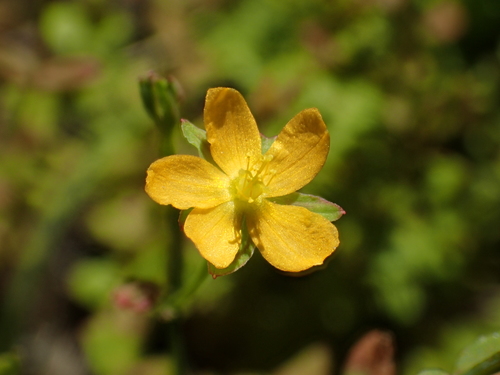
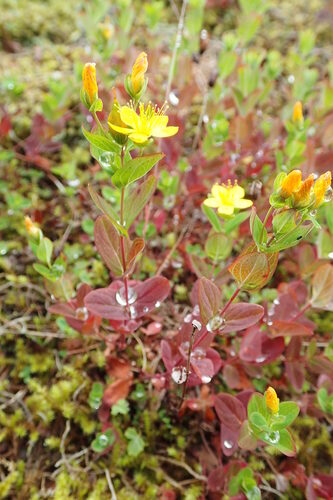
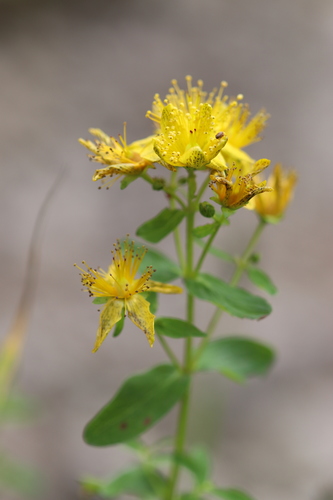
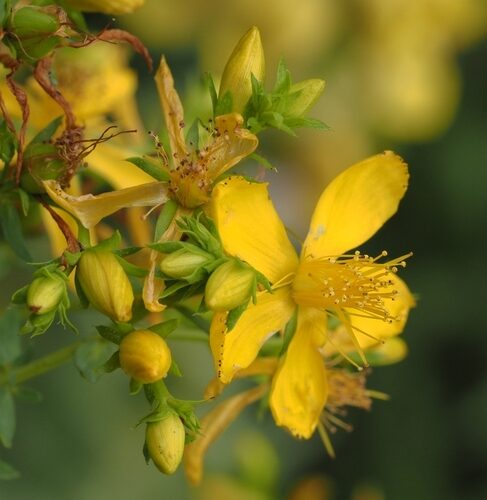
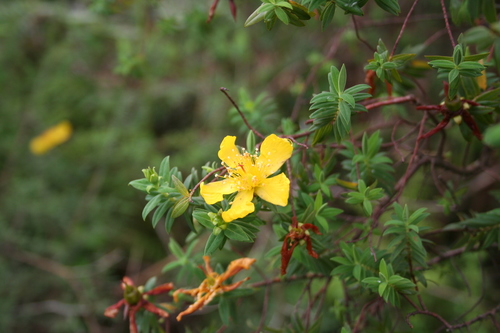
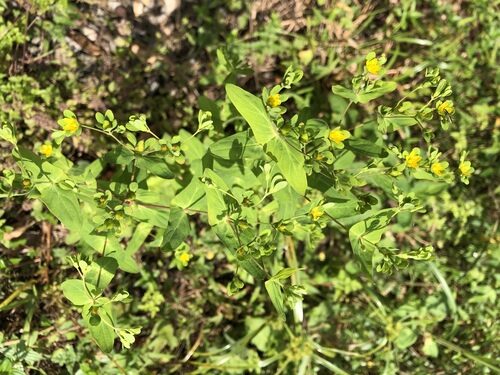
Vismia macrophylla
Kunth
iNaturalist· cc-by
(c) Nicolás Baresch Uribe, some rights reserved (CC BY), uploaded by Nicolás Baresch Uribe
iNaturalist· cc-by-nc
(c) MARLY SOLOZA OJEDA, some rights reserved (CC BY-NC)
Description
A small tropical tree of the Hypericaceae family with edible fruit.
This description is brief — help expand it
Edible Uses
The fruit is eaten.
Medicinal Uses
The inner bark is antifungal. It is boiled, and the water drunk as an antidiarrhoeal. Used externally, the powdered inner bark is inserted into the vagina as a treatment for genital herpes or for syphilis. The macerated inner bark is used for treating yeast infections and fungal infections. The inner bark and latex are used together as an anti-fungal. The orange latex from inner bark is antifungal. It is applied externally to treat a wide range of conditions that affect the skin including measles, ulcers, bush yaws, ringworm, athlete's foot, genital herpes, eczema, itching etc. The latex obtained from the fruit is used in treating yaws and leishmaniasis. The leaves are used in the treatment of diarrhoea. The fruit of Vismia spp. contains anthracene derivatives such as vismin, ferruginins A and B, haruganin and ferruanthrone. Species from Amazonian also contain vismiaquinone.
Distribution
It is a tropical plant.
Where It Grows
Belize, Bolivia, Brazil, Central America, Colombia, Costa Rica, Ecuador, French Guiana, Guatemala, Guyana, Honduras, Nicaragua, Peru, South America, Suriname, Venezuela,
Cultivation
A tree of moderate elevations in the moist tropics.
Other Uses
Although we have seen no specific information for this species, plants in this genus usually have a reddish to dark brown heartwood with a pinkish brown sapwood that often has a greyish cast, The wood is medium to fairly coarse textured; moderately light to medium in weight; inclined to be fibrous; brittle; easy to work; takes a fairly lustrous or lustrous finish; and is moderately durable. Because of its generally small size and low quality, it is only used locally - sometimes as a timber but more commonly for fuel.
Synonyms
Also Known As
Bisatamane, Palo santo, Sipo, Sirari, Sisi
References (3)
- Kew Plants of the World Online
- Roa, J. A. G. & Boada, D. S. G., 2018, Fundación para el Fortalecimiento de la Fruticultura y Plantas Alimenticias no Convencionales en Colombia.
- Zambrana, P, et al, 2017, Traditional knowledge hiding in plain sight – twenty-first century ethnobotany of the Chácobo in Beni, Bolivia. Journal of Ethnobiology and Ethnomedicine (2017) 13:57