Coprosma moorei
F. Muell. ex Rodway
Blue matcurrant, Turquoise Coprosma, Blue-fruited mat coprosma
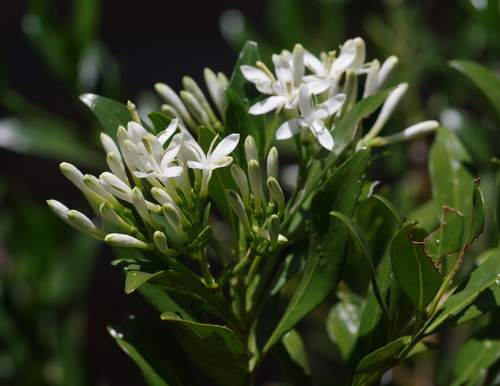
iNaturalist· cc-by-nc
(c) Nick Fitzgerald, some rights reserved (CC BY-NC), uploaded by Nick Fitzgerald
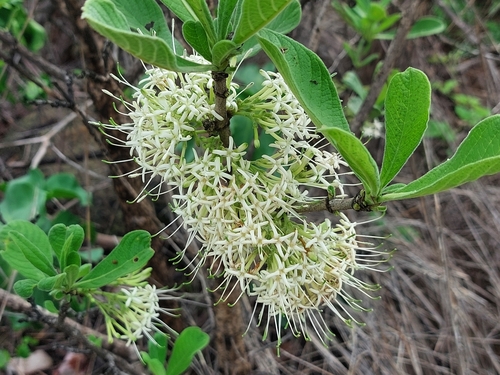
iNaturalist· cc-by-nc
(c) camilleeck, some rights reserved (CC BY-NC)
Summary
Source: WikipediaCoprosma moorei, commonly known as blue matcurrant or turquoise coprosma, is a small, mat forming, prostrate shrub in the Rubiaceae family. It is native to highland areas of Tasmania and Eastern Victoria.
Description
A small shrub which lies along the ground. It spread 50 cm wide. The stems are much branched. They form roots at the nodes. It forms mats. The leaves are 3-5 mm long by 2 mm wide. They are oval or sword shaped and thick. The flowers are about 6 mm across. They occur singly and are green. The ends short branches. The fruit is fleshy with a hard stone inside and is 5-6 mm across. They are blue.
Edible Uses
The bright blue fruit, about 7mm in diameter, can be eaten raw. It is succulent and sweet but has little flavour. The roasted seed makes an excellent coffee substitute.
Traditional Uses
The fruit are eaten.
This uses section is brief — help expand it
Medicinal Uses
None known.
Distribution
It is a temperate plant. It grows in sub-alpine regions above 300 m altitude. It grows in sphagnum moss. It must not be allowed to dry out. It needs well drained soil. Tasmania Herbarium. Arboretum Tasmania.
Where It Grows
Australia*, Tasmania*,
Cultivation
Requires a moist, very well-drained neutral to slightly acid soil in full sun or light shade. Succeeds in most soils, so long as they are well-drained. This species is proving to be very difficult to grow in Britain. Somewhat intolerant of frost, plants are only likely to succeed outdoors in the milder areas of Britain. Hybridizes freely with other members of this genus. Unlike most members of this genus, this species is hermaphrodite.
Propagation
Seed is probably best sown as soon as it is ripe in a greenhouse or cold frame. Stored seed should be sown in spring in a cold frame. Germination can be slow, often taking more than 12 months even with fresh seed. Prick seedlings out into individual pots once large enough to handle. Grow plants through at least their first winter under glass before planting out in late spring or early summer, and give some cold protection during their first winter outdoors. Cuttings of mature wood from the current year's growth can be taken in autumn and rooted in a frame.
Other Uses
A yellow dye is obtained from the wood and requires no mordant.
Notes
There are about 90 Coprosma species.
References (6)
- Hibbert, M., 2002, The Aussie Plant Finder 2002, Florilegium. p 72
- Kirkpatrick, J., 1997, Alpine Tasmania, An Illustrated guide to the flora and vegetation. Oxford, p 57
- Pap. & Proc. Roy. Soc. Tasmania 1893:179. 1894
- Plants for a Future database, The Field, Penpol, Lostwithiel, Cornwall, PL22 0NG, UK. http://www.scs.leeds.ac.uk/pfaf/
- Tasmanian Herbarium Vascular Plants list p 51
Show all 6 references Hide references
- Whiting, J. et al, 2004, Tasmania's Natural Flora. Tasmania's Natural Flora Editorial Committee PO Box 194, Ulverstone, Tasmania, Australia 7315 p 292