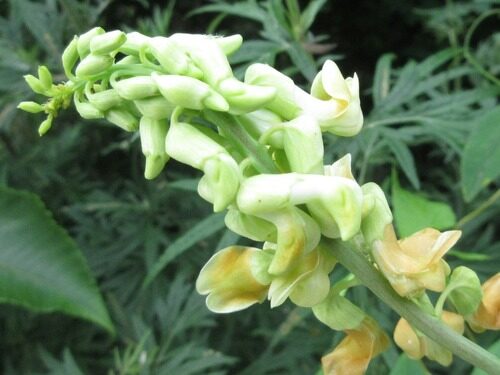
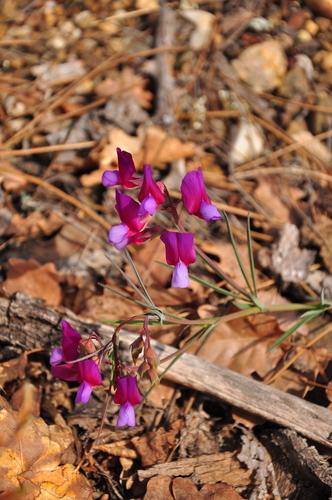
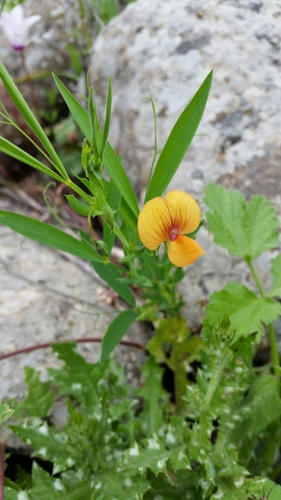
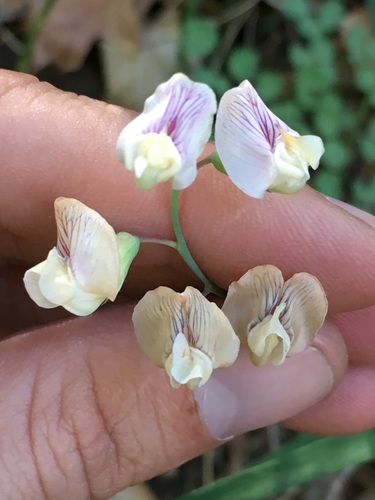
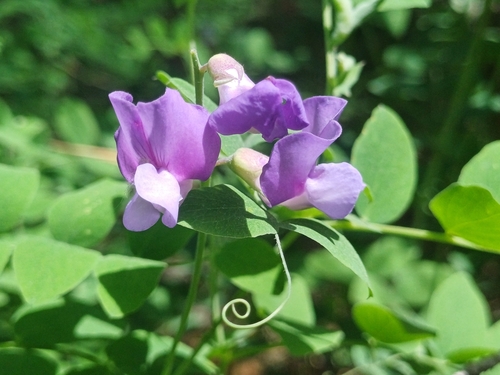
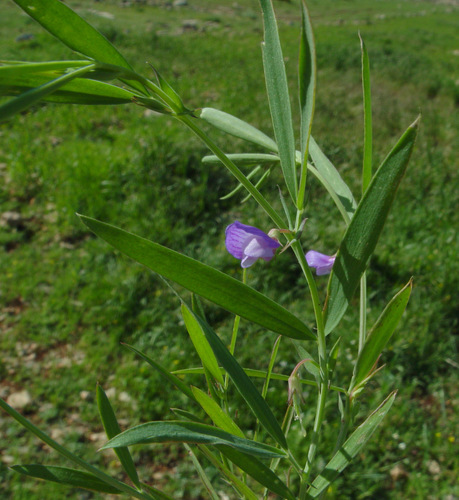
Indigofera hamiltonii
Duthie & Prain
gbif· cc0
GBIF
gbif· cc-by
Royal Botanic Gardens, Kew
gbif· cc-by
Royal Botanic Gardens, Kew
Description
A shrub.
This description is brief — help expand it
Medicinal Uses
Tephrosia purpurea is also used in folk medicine and has some anti-bacterial properties. According to Ayurveda, the plant is anthelmintic, alexiteric, restorative, and antipyretic. The leaves and the root have been used in traditional medicinal on bronchitis, cough, earache, wounds and bone fractures by herbalists in countries such as Oman and the United Arab Emirates. The ground leaves of Tephrosia purpurea are also insufflated in cases of nasal congestion, or boiled with water to make eardrops. Powdered bark can be mixed with water and poured into the ears of camels with ticks, and powdered leaves have been made into a paste to be smeared on wounds. It has also been rubbed on limbs in conjunction with Fagonia indica and Ocomim basilicum of people affected with polio, without any effect. It is used in the treatment of leprosy, ulcers, asthma, and tumors, as well as diseases of the liver, spleen, heart, and blood. A decoction of the roots is given in dyspepsia, diarrhea, rheumatism, asthma and urinary disorders. The root powder is salutary for brushing the teeth, where it is said to quickly relieve dental pains and stop bleeding. An extract, termed 'betaphroline' (not a systematic name) is claimed to promote release of endorphins, and finds use in certain cosmetic preparations. African shepherds use crushed plants to make an antidotal beverage for animals bitten by snakes. When dried, the leaves of Tephrosia purpurea were found to contain 4.4% moisture, 21.1% of crude protein, 19.8% of crude fiber, and 10.9% of ash. A chemical analysis found that it contains rotenoids, isolflavones, flavanones, chalcones, and flavones, The chloroform extract of the aerial part of Tephrosia purpurea also revealed seven new 8-prenylated flavonoids, including tephroapollin A-G (1-7). In 2006, researchers of Oman's Sultan Qaboos University published their findings from a chemical investigation into the leaves in which they found it contained semiglabrin, semigalbrinol, and a new flavanone named apollineanin. One 2014 study revealed that pseudosemiglabrin extracted from the aerial parts of Tephrosia purpurea had an antiproliferative effect on cancer cell lines. A study of Tephrosia purpurea from the Wadi Ejili, in Ras Al Khaimah, UAE, focusing on seeds collected from specimens of the traditional medicinal plant explored its exogenous production of silver nanoparticles. The study is thought to be the first time the antimicrobial activity of silver nanoparticles synthesized via living plants has been observed.
Known Hazards
Tephrosia purpurea is cited as "unpalatable", although the seeds of the plant are reportedly a favourite of sandgrouse inhabiting the scrub-desert of northern Sudan, and the butterfly Colias croceus is known to feed on it. This has allowed it to colonize the landscape in parts of the Middle East which have been overgrazed, especially at lower altitudes. The species is known to be toxic to goats; a study published in the early 1980s revealed that 11 out of 12 goats died after 1 to 40 days of daily oral dosing of Tephrosia purpurea shoots (fresh or dried), and that they displayed adverse reactions to ingesting it such as dyspnoea, weakness of the limbs and joints causing instability in movement, changes in fat composition, catarrhal enteritis, and hemorrhage in the heart, lungs, and intestinal mucosa. Rotenoids extracted from the seeds of the plant also caused complete mortality in Aphis craccivora, when applied at a concentration of 0.1% for 48 hours. Tephrosia purpurea is used as a fish poison for fishing. Its leaves and seeds contain tephrosin, which paralyzes fish. Larger doses are lethal to fish, but mammals and amphibians are unaffected.
Distribution
It is a temperate plant.
Where It Grows
Asia, Himalayas, India, Northeastern India, Sikkim,
Production
In Sikkim pods are available January and February.
References (1)
- Sundriyal, M., et al, 2004, Dietary Use of Wild Plant Resources in the Sikkim Himalaya, India. Economic Botany 58(4) pp 626-638