Conyza aegyptiaca
(L.) Aiton
Fleabane
iNaturalist· cc-by
(c) Eric Watts, some rights reserved (CC BY)
iNaturalist· cc-by
(c) Eric Watts, some rights reserved (CC BY)
iNaturalist· cc-by
(c) Eric Watts, some rights reserved (CC BY)
Description
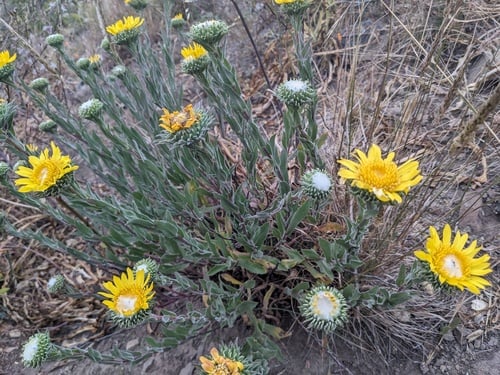
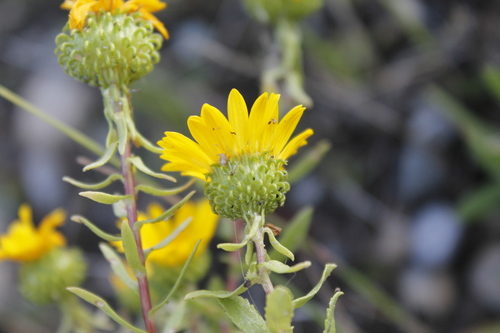
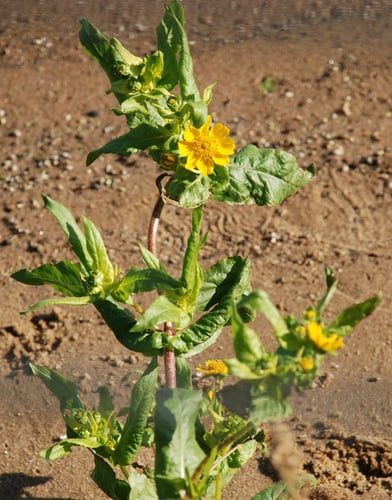
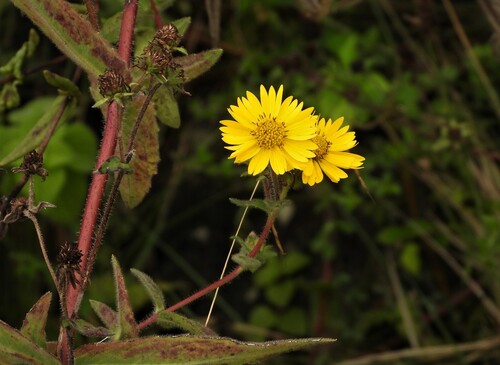
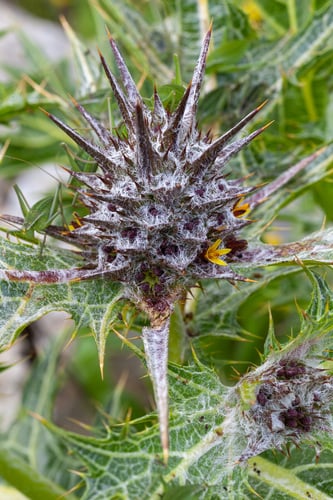
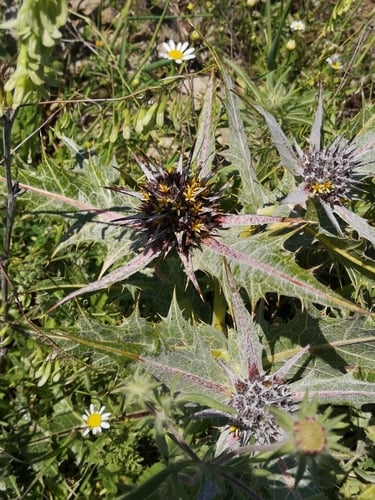
An erect annual herb. It has brittle, rather stiff, stems. There are few branches. It grows to 50-100 cm high. It has white hairs over all plant parts. The leaves do not have leaf stalks. They are long and narrow, and divided into lobes along its length. There are teeth around the edges of the leaf. The flower heads are at the top of the plant, and they are about 1 cm across. There is a ring of bracts around the base of this flower arrangement. The flowers around the edges are male, and the flowers nearer the centre are of both sexes. The fruit are about 1 mm long. They are flattened and light brown. There are long white hairs on the seed.
Edible Uses
The leaves have been eaten as a vegetable.
Traditional Uses
The leaves have been recorded as eaten.
This uses section is brief — help expand it
Distribution
A tropical plant. It grows in wet grassland savannah. In Papua New Guinea plants occur between 1,200 and 3,000 m altitude.
Where It Grows
Africa, Asia, Australia, Botswana, Central Africa, Congo, East Africa, Egypt, Eswatini, Guinea, Guinée, Guinea-Bissau, Madagascar, Myanmar, North Africa, Pacific, Papua New Guinea, PNG, SE Asia, Sierra Leone, South Africa, Southern Africa, Sudan, Swaziland, West Africa, Zambia, Zimbabwe,
Cultivation
It is mostly self sown from seed.
Other Information
It is not known if they are eaten in Papua New Guinea.
Notes
There are about 50 Conyza species.
Synonyms
Also Known As
Kelivoloina
References (8)
- W. Aiton, Hort. kew. 3:254. 1789
- Food Composition Tables for use in Africa FAO http://www.fao.org/infoods/directory No. 592
- Grubben, G. J. H. and Denton, O. A. (eds), 2004, Plant Resources of Tropical Africa 2. Vegetables. PROTA, Wageningen, Netherlands. p 560
- Henty, E.E., & Pritchard, G.S., 1973, Weeds of New Guinea and their control. Botany Bulletin No 7, Division of Botany, Lae, PNG. p 69
- Jardin, C., 1970, List of Foods Used In Africa, FAO Nutrition Information Document Series No 2.p 69
Show all 8 references Hide references
- Martin, F.W. & Ruberte, R.M., 1979, Edible Leaves of the Tropics. Antillian College Press, Mayaguez, Puerto Rico. p 184
- Pickering, H., & Roe, E., 2009, Wild Flowers of the Victoria Falls Area. Helen Pickering, London. p 35
- Swaziland's Flora Database http://www.sntc.org.sz/flora