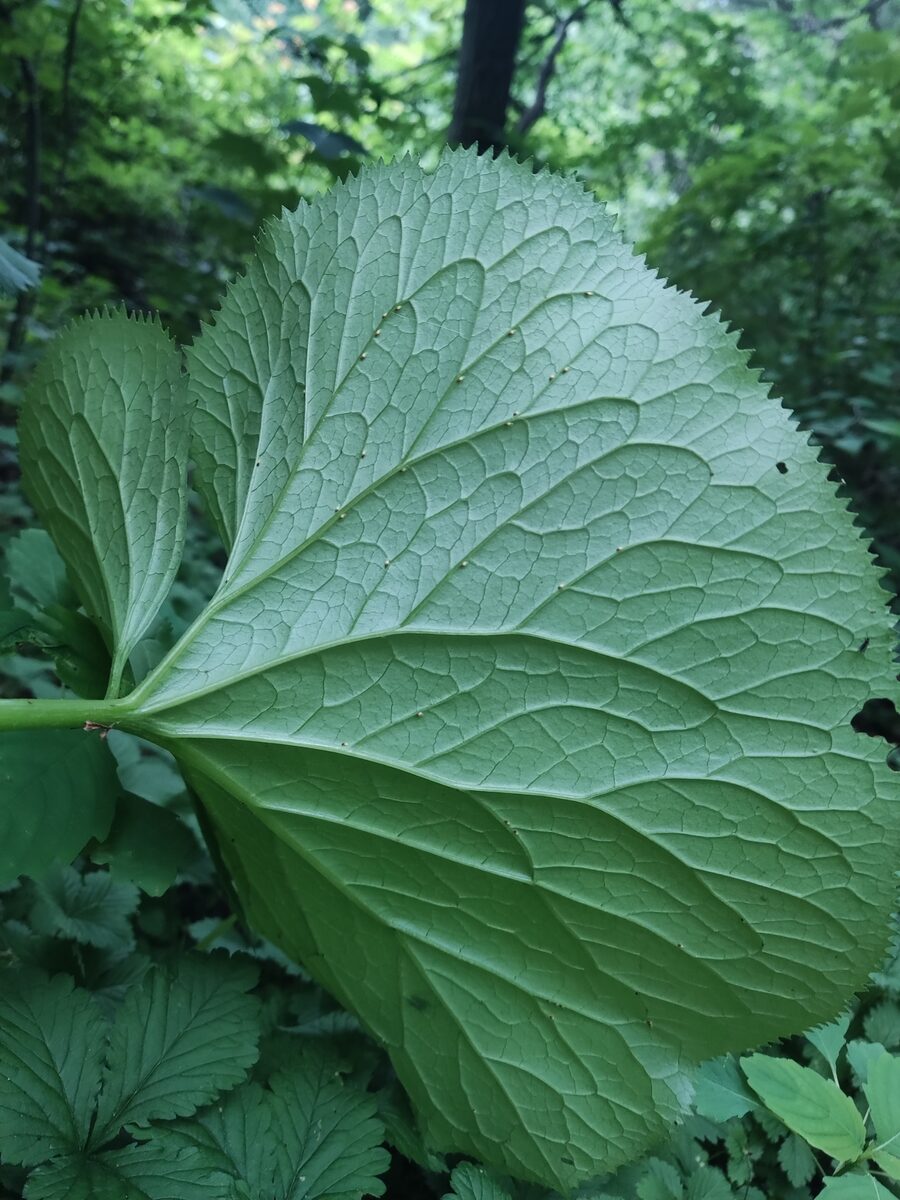
Gundelia tournefortii
L.
Tournefort's gundelia, Akkoub
iNaturalist· cc-by-nc
(c) Igal, some rights reserved (CC BY-NC)
iNaturalist· cc-by-nc
(c) קובי גביש, some rights reserved (CC BY-NC), uploaded by קובי גביש
Summary
Source: WikipediaA perennial herb reaching 0.6 m tall and 0.2 m wide, growing at a medium rate. Hermaphroditic flowers attract insects and support self-fertility. Notable for wildlife appeal. Thrives in light sandy and medium loamy soils with good drainage. Tolerates mildly acidic, neutral, and mildly alkaline conditions. Requires full sun and adapts to both dry and moist soils.
Description
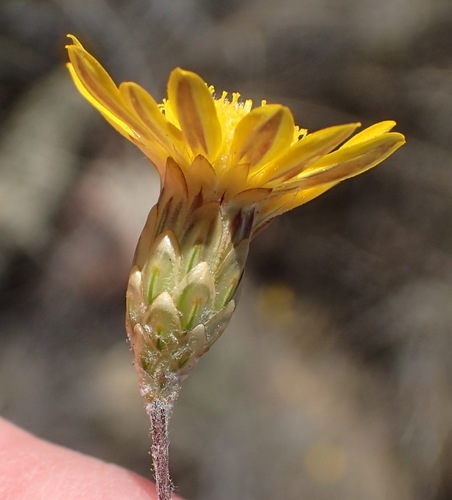
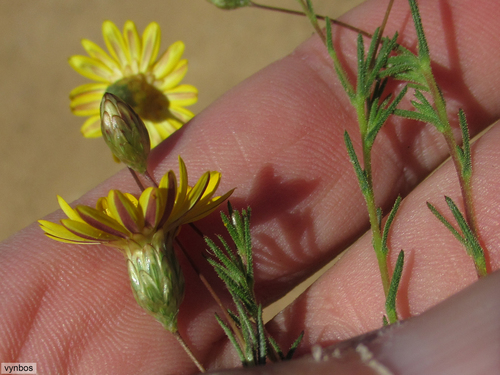
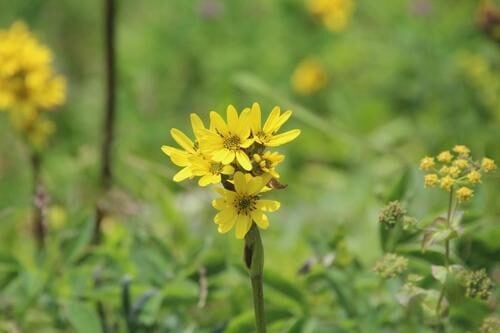
A thistle like herb which keeps growing from year to year. It is leafy and can have some hairs. The leaves are narrowly oval and divided into lobes along the stalk. The lower leaves have a stalk and the upper leaves do not have a stalk. The leaf blade often runs down the stem. The leaves have easy to see veins. The midrib is often purple and there are small yellow spines around the edge. The flower heads can be white, yellow, pink, purple or red. They are gathered into spiny heads. They are 4-5 cm across.
Edible Uses
The thick flowering stem, along with the young and still undeveloped flower buds, is sold in local markets in Jerusalem and is a sought-after vegetable. Immature flowering heads are cooked and used like globe artichokes. Leaves, roots, and seeds are also eaten cooked.
Traditional Uses
The young plant and the flower buds and stem are eaten as a vegetable. They are also used in pickles. Roots and stems can be peeled and eaten raw. They are also cooked in stews. Stems are cooked with chickpeas. The buds are boiled and sauteed in butter. The seeds are dried and ground and used as a coffee substitute.
Medicinal Uses
None known
Distribution
It is a Mediterranean plant. It grows along the coast. It can grow in dry and salty soils. It can grow in arid places.
Where It Grows
Africa, Armenia, Azerbaijan, Caucasus, Central Asia, Cyprus, Egypt, Europe, Georgia, Iran, Iraq, Israel, Jordan, Kazakhstan, Lebanon, Mediterranean, Middle East, North Africa, Palestine, Syria, Turkey, Türkiye,
Cultivation
Prefers a sandy peaty soil. Requires a sunny position and a well-drained soil. Cultivated in Jerusalem as a vegetable. Dislikes shady conditions. It can grow up to 3000m elevation on plains and mountains. Grows in batha, shrub-steppe, in Mediterranean woodland and shrubland, semi-steppe shrublands, shrub steppe, and montane vegetation. Tournefort’s Gundelia is generally self-fertile. Young shoots and immature flower heads are typically harvested in spring. Tournefort’s Gundelia flowers in late spring to early summer. Tournefort’s Gundelia has a moderate growth rate, establishing itself quickly in suitable conditions.
Propagation
Sow seed in spring in a cold frame. Prick seedlings into individual pots once large enough to handle and plant out in summer. Can also be propagated by division.
Other Uses
The plant can be used in natural landscaping and habitat restoration projects, particularly in Mediterranean environments, where its dense foliage provides wildlife cover. The flowers are rich in nectar and pollen, attracting bees and other pollinators. Young flower buds and leaves are consumed by wildlife, and the plant's structure can support nesting birds. It also offers some shelter for overwintering invertebrates, and its aromatic properties may help confuse or deter certain pests.
Other Information
The flower buds are sold in markets. It is an important food source in Anatolia in Turkey.
Nutrition
| Part | Moisture | kJ | kcal | Protein | Vit A | Vit C | Iron | Zinc |
|---|---|---|---|---|---|---|---|---|
| Root | 90.4 | 110 | 26 | 1.2 | — | 2 | 4 | 0.3 |
| Leaves | 95.3 | 56 | 13 | 1 | — | — | 0.8 | — |
Synonyms
Also Known As
A'kkub, Accoub, Akoob, Arkue, Cardi, Ergude, Gerenk, Hacub, Hersev, Kangr, Ka'oob, Kenger, Kengerotu, Kenger zer, Kereng, Kinger, Kingr, Knr, Silifa, Tumbleweed, Tumble thistle
References (43)
- Ahmad, S. A. & Askari, A. A., 2015, Ethnobotany of the Hawraman Region of Kurdistan Iraq. Harvard Papers in Botany, Vol. 20, No. 1, 2015, pp. 85–89.
- Ali-Shtayeh, M. S., et al, 2008, Traditional knowledge of wild edible plants used in Palestine (Northern West Bank): A comparative study. J Ethnobiol Ethnomed. 4: 13
- Al-Qura'n, S. A., 2010, Ethnobotanical and Ecological Studies of Wild Edible Plants in Jordan. Libyan Agriculture Research Center Journal International 1(4):231-243
- Ari, S., et al, 2015, Ethnobotanical survey of plants used in Afyonkarahisar-Turkey. Journal of Ethnobiology and Ethnomedicine 11:84
- Batal, M. & Hunter, E., 2007, Traditional Lebanese recipes based on wild plants: An answer to diet simplification? Food and Nutrition Bulletin, vol. 28, no. 2 (supplement) © 2007, The United Nations University.
Show all 43 references Hide references
- Blamey, M and Grey-Wilson, C., 2005, Wild flowers of the Mediterranean. A & C Black London. p 447
- Davis, S.D., Heywood, V.H., & Hamilton, A.C. (eds), 1994, Centres of plant Diversity. WWF. Vol 2. p 340
- Della, A., et al, 2006, An ethnobotanical survey of wild edible plants of Paphos and Larnaca countryside of Cyprus. J. Ethnobiol. Ethnomed. 2:34
- Dogan, A. & Tuzlaci, E., 2015, Wild Edible Plants of Pertek (Tunceli-Turkey). Marmara Pharmaceutical Journal 19: 126-135 (Also as var. tenuisecta)
- Dogan, Y., et al, 2004, The Use of Wild Edible Plants in Western and Central Anatolia (Turkey). Economic Botany 58(4) pp. 684-690
- Dogan, Y., 2012, Traditionally used wild edible greens in the Aegean Region of Turkey. Acta Societatis Botanicorum Poloniae 81(4): 329-342
- Ertug, F, Yenen Bitkiler. Resimli Türkiye Florası -I- Flora of Turkey - Ethnobotany supplement
- Facciola, S., 1998, Cornucopia 2: a Source Book of Edible Plants. Kampong Publications, p 38
- Food Composition Tables for the Near East. http://www/fao.org/docrep No. 342
- Galalaey, A. M. K., et al, 2021, Ethnobotanical study of some wild edible plants in Hujran Bason, Kurdistan Region of Iraq. ZANCO Journal of Pure and Applied Sciences. Salahaddin University-Erbil p 25 (As Gundelia rosea)
- Gunes, S. et al, 2018, Survey of wild food plants for human consumption in Karaisali (Adana-Turkey). Indian Journal of Traditional Knowledge. Vol. 17(2), April 2018, pp 290-298
- Hedrick, U.P., 1919, (Ed.), Sturtevant's edible plants of the world. p 334
- Hinnawi, N. S. A., 2010, An ethnobotanical study of wild edible plants in the Northern West Bank "Palestine". An-Najah National University. p 92
- http://cypruswildflowers.com
- Ibadullayeva, S., et al, 2011, Protection of some rare and endangered vegetable plants in the flora of the Nakhichevan AR. International Journal of Biodiversity and Conservation Vol. 3(6), pp. 224-229
- Jeambey, Z., et al, 2009, Perceived health and medicinal properties of six species of wild edible plants in north-east Lebanon. Public Health Nutrition: 12(10), 1902-1911
- Lim, T. K., Edible Medicinal and Non-Medicinal Plants Volume 7 Flowers
- Mayer-Chussuck, U & Lev, E., 2014, Wild Edible Plants in Israel Tradition Versus Cultivation. in Z. Yaniv, N. Dudai (eds.), Medicinal and Aromatic Plants of the Middle-East, Springer
- Mukemre, M., et al, 2016, Survey of wild food plants for human consumption in villages of Catak, (Van-Turkey), Indian Journal of Traditional Knowledge. Vol. 15(2) pp. 183-191
- Oran, S. A. S., 2015, Selected wild plant species with exotic flowers from Jordan. International Journal of Bioversity and Conservation. Vol. 7(5), pp 308-320
- Pieroni, A., et al, 2017, The spring has arrived: traditional wild vegetables gathered by Yarsanis (Ahl-e Haqq) and Sunni Muslims in Western Hawraman, SE Kurdistan (Iraq). Acta Soc Bot Pol 86(1):3519
- Plants for a Future database, The Field, Penpol, Lostwithiel, Cornwall, PL22 0NG, UK. http://www.scs.leeds.ac.uk/pfaf/
- Polat, R., et al, 2015, Survey of wild food plants for human consumption in Elazig (Turkey). Indian Journal of Traditional Knowledge. Vol. 1(1): 69-75
- Polat, R., et al, 2017, Survey of wild food plants for human consumption in Bingol, (Turkey). Indian Journal of Traditional Knowledge. Vol. 16(3) July 2017, pp. 378-384
- Rivera, D. et al, 2006, Gathered Mediterranean Food Plants - Ethnobotanical Investigations and Historical Development, in Heinrich M, Müller WE, Galli C (eds): Local Mediterranean Food Plants and Nutraceuticals. Forum Nutr. Basel, Karger, 2006, vol 59, pp 18–74
- Royal Botanic Gardens, Kew (1999). Survey of Economic Plants for Arid and Semi-Arid Lands (SEPASAL) database. Published on the Internet; http://www.rbgkew.org.uk/ceb/sepasal/internet [Accessed 11th April 2011]
- Senkardes, I & Tuzlaci, E., 2016, Wild Edible Plants of Southern Part of Nevsehir inTurkey. Marmara Pharmaceutical Journal 20:34-43
- Sp. pl. 2:814. 1753
- Sulamain, N., et al, 2023, The Importance of Becoming Tamed: Wild Food Plants as Possible Novel Crops in Selected Food-Insecure Regions. Horticulturae 2023,9,171.
- Terra, G.J.A., 1973, Tropical Vegetables. Communication 54e Royal Tropical Institute, Amsterdam, p 49
- Tukan, S. K., et al, 1998, The use of wild edible plants in the Jordanian diet. International Journal of Food Sciences and Nutrition. 49:225-235
- Tuncturk, M., et al, 2015, Chemical composition of some edible wild plants grown in Eastern Anatolia. American Journal of Essential Oils and Natural Products. 2(3):31-34
- Ulian, T., et al, 2020, Unlocking plant resources to support food security and promote sustainable agriculture. Plants, People, Planet. 2020;2:421–445.
- USDA, ARS, National Genetic Resources Program. Germplasm Resources Information Network - (GRIN). [Online Database] National Germplasm Resources Laboratory, Beltsville, Maryland. Available: www.ars-grin.gov/cgi-bin/npgs/html/econ.pl (10 April 2000)
- Wiersema, J. H. & Leon, B., 2013, World Economic Plants. A Standard Reference CRC Press. 2nd Ed. p 333
- World Checklist of Useful Plant Species 2020. Royal Botanic Gardens, Kew
- Yesil, Y., et al, 2019, Wild edible plants in Yeşilli (Mardin-Turkey), a multicultural area. Journal of Ethnobiology and Ethnomedicine (2019) 15:52
- Yesil, Y., et al, 2019, Traditional knowledge of wild edible plants in Hasankeyf (Batman Province, Turkey). Acta Societatis Botanicorum Poloniae. 88(3):3633